| Feature |  |  |
|---|---|---|
| Starting Price | Free | Free |
| Pricing Model | Free | Free |
| Free Tier | ||
| Free Trial | ||
| Best For | Startups | Startups |
| Tool Type |
BetaList vs Peerlist — Quick Summary
Who each tool is built for, what it does best, and how much effort it takes to get started.
At a Glance
What Each Tool Does
BetaList
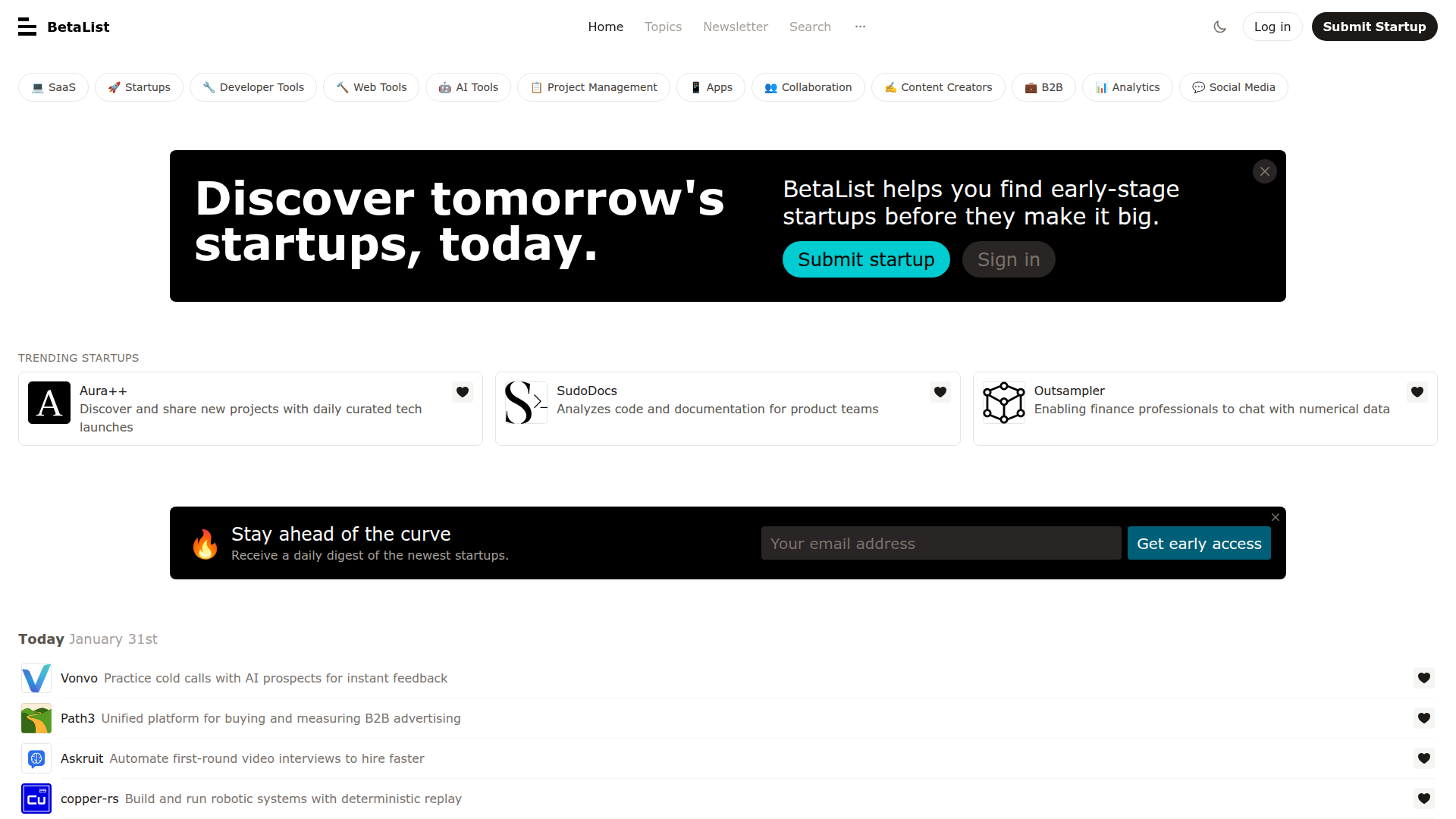
BetaList is a hub for discovering new startups before they become big. It's a place where you can find the latest in tech and innovation, focusing on early-stage companies. BetaList helps you spot trends and new ideas in the startup world.
Standout features:
- •Early access to new startups — be the first to discover them.
- •Daily digests — stay updated with the latest startups.
- •Wide range of categories — find startups in SaaS, AI, developer tools, and more.
Limitations:
- •Limited details on each startup — might need further research.
- •No direct interaction with startups — just a discovery tool.
Pricing: Free to browse, startup submissions might have a fee.
Peerlist
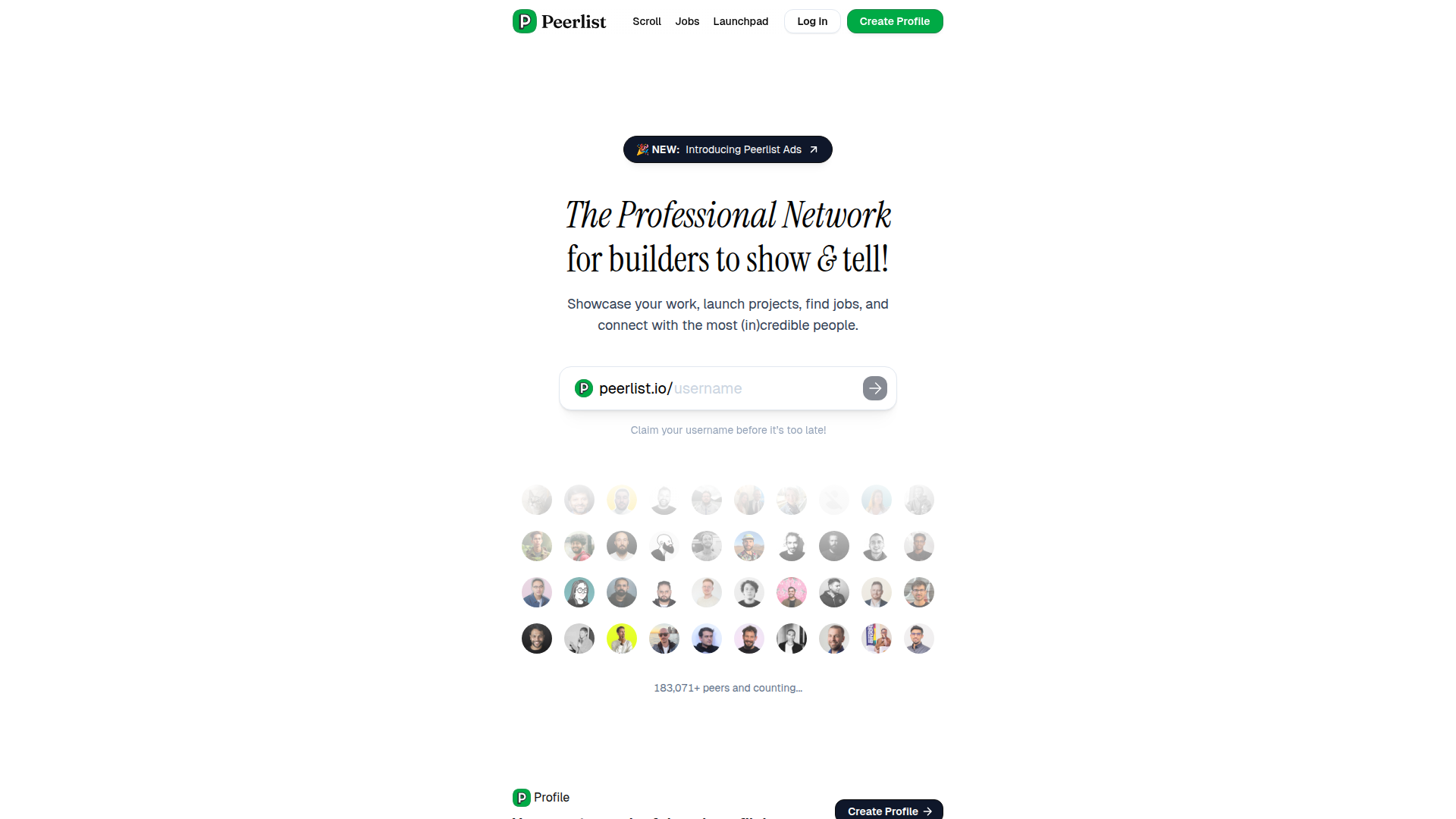
Peerlist is a network for builders to show off their work and connect with others. It's a place to launch projects, find jobs, and meet people who get it.
Standout features:
- •Profile as a portfolio — lets you showcase your work in a nice way.
- •Connect with credible people — find others who share your interests.
- •Job opportunities — discover new roles and projects.
Limitations:
- •Limited to builders — not useful for those outside tech or creative fields.
- •New platform — smaller user base compared to big networks.
Pricing: Free to join and use.
Growth Hacker Verdict
Skip it unless you're launching a deeply technical B2B tool and have zero Product Hunt clout — BetaList's audience is still quality early adopters, but the traffic has cratered enough that you're better off spending that submission energy on niche communities and cold outreach. The free listing is genuinely nice, but "free visibility" means nothing if nobody's actually scrolling the site anymore.
If you've got a consumer app, this is noise; if you're a dev tool with a specific ICP, it might grab you 20-50 qualified signups, which is worth 15 minutes of your time but not a strategy. Peerlist and Indie Hackers are doing the "pre-launch buzz" job better right now.
Use Peerlist if you're a founder, designer, or dev shipping public projects and want hiring inbound without the LinkedIn spam — it's basically a portfolio + credibility flex that actually gets seen by people who care. Skip it if you're job-hunting passively or your best work lives behind an NDA; the platform rewards people who ship publicly and constantly.
The real move is using it as a launch pad for side projects and open-source work to build narrative momentum before fundraising or recruiting.
TL;DR — BetaList vs Peerlist
Choose BetaList if you want a specialized tool that does one thing exceptionally well. Starts at Free. Free tier available — no credit card needed.
Choose Peerlist if you want a specialized tool that does one thing exceptionally well. Starts at Free.
When to Choose BetaList Over Peerlist
BetaList is a niche user acquisition tool built for startups, starting at Free. BetaList is a platform that showcases upcoming internet startups, giving users the opportunity to discover and gain early access to innovative new products.
Choose BetaList if:
- Early-stage startups — This is where BetaList shines. Specialized tool that does one thing exceptionally well.
- Setup effort: Low — You can be up and running in minutes, not days.
- Free tier available — You can test BetaList without a credit card. Try it alongside Peerlist and see which fits your workflow.
- Ideal for: Solo founders, SMBs, and early teams
See all Peerlist alternatives or browse the User acquisition directory.
When to Choose Peerlist Over BetaList
Peerlist is a niche user acquisition tool built for startups, starting at Free. Peerlist is a professional networking platform that allows users to display their work achievements and connect with top employers.
Choose Peerlist if:
- Early-stage startups — Specialized tool that does one thing exceptionally well.
- Setup effort: Low — Quick onboarding with minimal configuration needed.
- Pricing starts at Free — Compare what you get at each pricing tier, not just the starting price.
- Ideal for: Solo founders, SMBs, and early teams
See all BetaList alternatives or browse the User acquisition directory.
BetaList vs Peerlist: Pricing Breakdown
Let's talk money — because that's usually what drives the decision for startups and growth teams.
BetaList starts at Free. Free tier included. Priced for startups — won't wreck your runway.
Peerlist starts at Free. Startup-friendly pricing.
Our take: Pricing varies by plan and usage. Check the comparison table above for tier-by-tier details. We always list monthly billing rates — not the discounted annual price that makes everything look cheaper.
FAQ: BetaList vs Peerlist
Is BetaList better than Peerlist in 2026?
It depends on your team size, budget, and priorities. BetaList is a niche user acquisition tool built for startups, starting at Free. Peerlist is a niche option aimed at startups, starting at Free. See the feature comparison above for a detailed side-by-side.
Which is cheaper, BetaList or Peerlist?
BetaList starts at Free, while Peerlist starts at Free. Check the comparison table for tier-by-tier pricing. Keep in mind: the cheapest plan isn't always the best deal. Compare what you get at each tier, not just the starting price. We always list monthly billing rates, not discounted annual prices.
Can I use both BetaList and Peerlist together?
Both are launches/directories tools, so most teams pick one to avoid redundancy and extra costs. That said, some teams use both for different segments or use cases — just make sure the overlap doesn't waste your budget.
Does BetaList or Peerlist have a free tier?
BetaList offers a free tier, while Peerlist does not. If you want to test before buying, BetaList has the advantage here.
How do I switch from BetaList to Peerlist (or vice versa)?
Most user acquisition tools support data export. Start by exporting your data from your current tool, then check the new tool's import documentation. Many offer migration assistance or onboarding calls to help with the switch.

