| Feature |  |  |
|---|---|---|
| Starting Price | $89/month | $8.75/month |
| Pricing Model | Paid | Freemium |
| Free Tier | ||
| Free Trial | 14 days | |
| Best For | Startups | Startups |
| Tool Type | Niche |
Circle vs Slack — Quick Summary
Who each tool is built for, what it does best, and how much effort it takes to get started.
At a Glance
What Each Tool Does
Circle
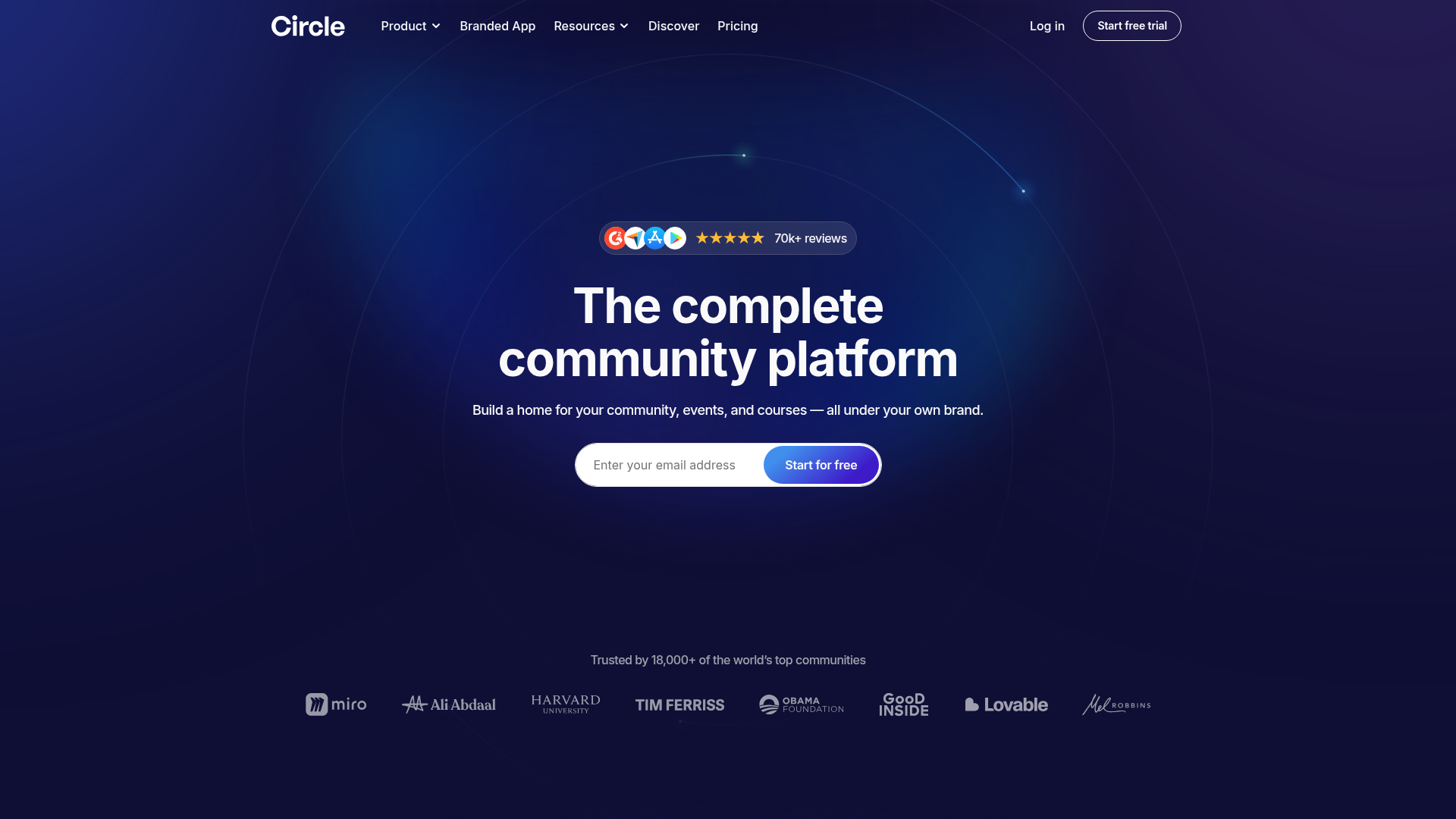
Circle is your community's online home. It's where you can host discussions, manage events, run courses, and more, all under your brand.
Standout features:
- •AI-powered agents — help manage your community with less effort.
- •Branded mobile app — boost your brand with a custom app.
- •Built-in payments — keep transactions easy and in one place.
Limitations:
- •Might be too advanced for small groups — small communities may not need all features.
- •Learning curve for new users — takes time to get used to all tools.
Pricing: Starts with a free trial, then tiered plans based on features.
Slack
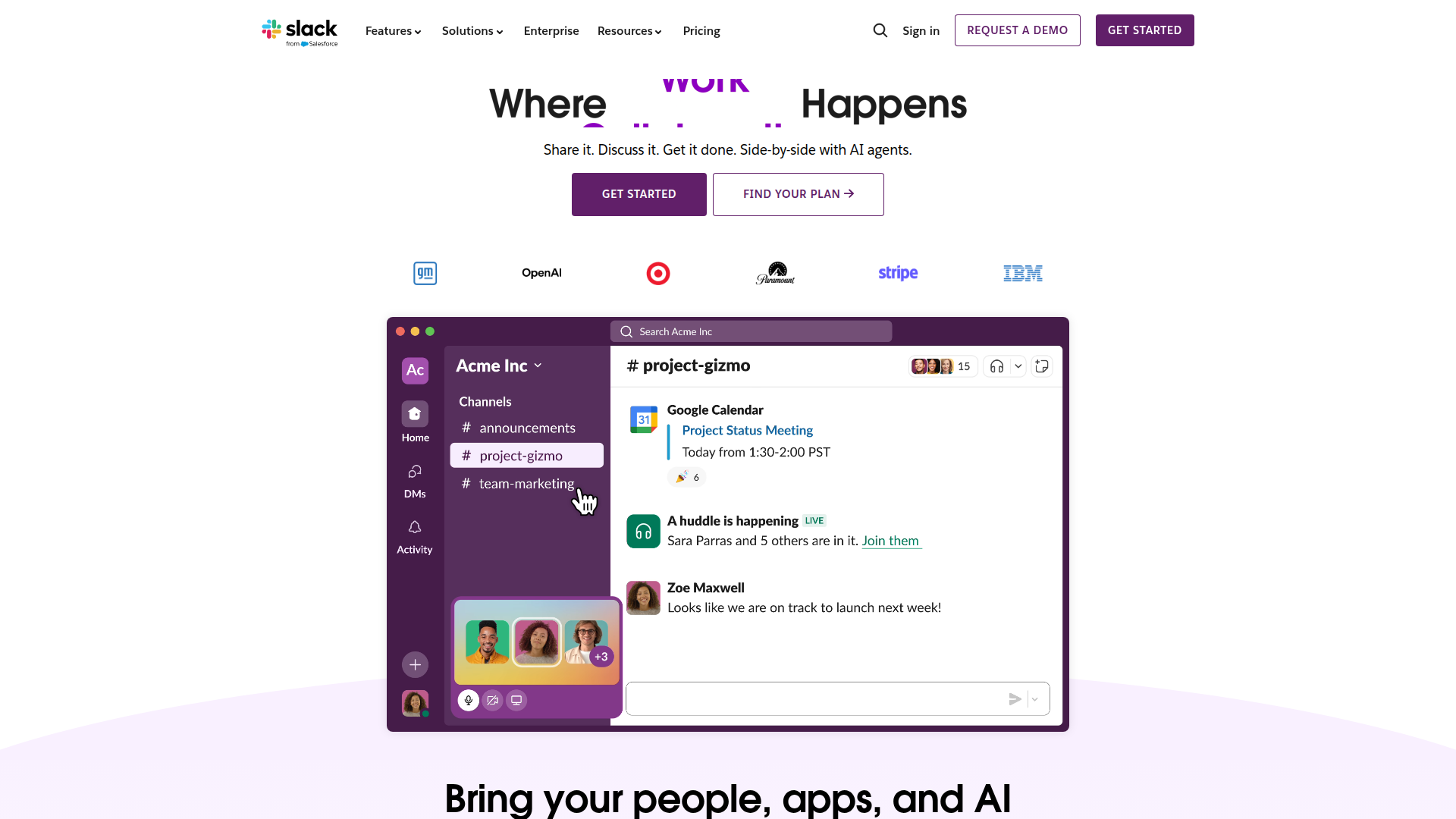
Slack is a chat tool for teams to talk and work together. Share files and ideas in one place.
Standout features:
- •Channels for organized chats — keeps conversations neat.
- •Integrates with apps like Google Drive and Zoom — everything in one spot.
- •Huddles for quick calls — no need to leave Slack.
Limitations:
- •Can be overwhelming for small teams — too many features for simple needs.
- •Requires internet — no offline access.
Pricing: Free plan available, paid plans start at $6.67 per user/month.
Growth Hacker Verdict
Circle is the move if you're monetizing a community and need built-in payment infrastructure—creators pulling $10k+ MRR from memberships will actually save money versus stitching together Discord + Stripe + email. Skip it if you're early-stage and just need a free gathering place; you're overpaying for features you won't use.
Best fit: coaches, cohort-based course creators, and subscription membership businesses where retention directly impacts revenue—not for communities that are just a free loyalty layer for a SaaS product. The structured nature kills the virality that makes Discord communities actually grow, so if word-of-mouth community growth is your play, go Discord and monetize later.
Slack is table stakes for sales and community teams, but only if you're actually piping signal data into it—the platform itself is just plumbing. Design Pickle's AEs went from spending 50% of their time prospecting to nearly zero by routing intent signals and deal intel directly into Slack channels, automating what would've lived in email threads.
The real ROI comes from bolting Slack to intent platforms like Common Room (which tracks 50+ signal sources), meeting intelligence tools like Attention, and your CRM—without those integrations, you're just paying for a chat app. Free tier works for small teams, but you're essentially renting integrations to move revenue.
Skip Slack if you're fully async or sub-5 people; everyone else running outbound, sales, or community motion needs it paired with signal infrastructure to justify the cost.
TL;DR — Circle vs Slack
Choose Circle if you want a specialized tool that does one thing exceptionally well. Starts at $89/month.
Choose Slack if you want maximum value for your money — does 80% of what the big names do at a fraction of the cost. Starts at $8.75/month. Free tier available — no credit card needed.
On price alone, Slack wins at $8.75/month. But cheaper isn't always better — check the feature breakdown above.
When to Choose Circle Over Slack
Circle is a niche retention tool built for startups, starting at $89/month. Circle is a community platform that empowers creators to build, manage, and engage their online communities seamlessly.
Choose Circle if:
- Early-stage startups — This is where Circle shines. Specialized tool that does one thing exceptionally well.
- Setup effort: Low — You can be up and running in minutes, not days.
- Pricing starts at $89/month — Factor this into your monthly burn rate and compare feature-for-feature.
- Ideal for: Solo founders, SMBs, and early teams
See all Slack alternatives or browse the Retention directory.
When to Choose Slack Over Circle
Slack is a best-value retention tool built for startups, starting at $8.75/month. Slack streamlines team collaboration with channels, integrations, and AI to enhance productivity and communication.
Choose Slack if:
- Early-stage startups — Strong features at a fraction of enterprise pricing.
- Setup effort: Medium — Some configuration required, but nothing that should block you for more than a few hours.
- Free tier available — Test Slack risk-free before committing any budget.
- Ideal for: Bootstrapped founders + indie hackers
See all Circle alternatives or browse the Retention directory.
Circle vs Slack: Pricing Breakdown
Let's talk money — because that's usually what drives the decision for startups and growth teams.
Circle starts at $89/month with 4 pricing tiers. 14-day free trial available. Priced for startups — won't wreck your runway.
Slack starts at $8.75/month with 4 pricing tiers. Free tier included. Startup-friendly pricing.
Our take: Slack is the more affordable option at $8.75/month vs $89/month. Check the feature comparison above to see if the savings come with trade-offs. We always list monthly billing rates — not the discounted annual price that makes everything look cheaper.
FAQ: Circle vs Slack
Is Circle better than Slack in 2026?
It depends on your team size, budget, and priorities. Circle is a niche retention tool built for startups, starting at $89/month. Slack is a best-value option aimed at startups, starting at $8.75/month. See the feature comparison above for a detailed side-by-side.
Which is cheaper, Circle or Slack?
Circle starts at $89/month, while Slack starts at $8.75/month. Slack is more affordable on paper. Keep in mind: the cheapest plan isn't always the best deal. Compare what you get at each tier, not just the starting price. We always list monthly billing rates, not discounted annual prices.
Can I use both Circle and Slack together?
Both are community tools, so most teams pick one to avoid redundancy and extra costs. That said, some teams use both for different segments or use cases — just make sure the overlap doesn't waste your budget.
Does Circle or Slack have a free tier?
Slack offers a free tier, while Circle does not. If risk-free testing matters, Slack has the edge.
How do I switch from Circle to Slack (or vice versa)?
Most retention tools support data export. Start by exporting your data from your current tool, then check the new tool's import documentation. Many offer migration assistance or onboarding calls to help with the switch.

