We found 12 analytics tools with free tiers — and 3 of them are completely free, no credit card needed. Not "free for 14 days" free. Actually, permanently free. Here's every option worth your time, sorted by how much you actually get for $0.
When we say "free," we mean it. Every tool on this list meets our criteria: no credit card required to start, no forced upgrade after a trial period, and a free tier that's genuinely usable for early-stage startups. Some have usage caps. Some limit features. But none of them bait-and-switch you.
| Tool | Free Tier | Upgrade From | Best For | Type | |
|---|---|---|---|---|---|
Microsoft Clarity100% free | Unlimited sites, Session recordings | N/A | Startups | Essential | Details |
Yandex Metrica100% free | Unlimited tracking, Session replay | N/A | Startups | Essential | Details |
GoatCounter100% free | — | N/A | Startups | Best-value | Details |
| 10K MTUs, up to 10M events, Out-of-the-box analytics and templates | $49/month | Startups | Essential | Details |
| 14-day trial | — | Startups | Best-value | Details |
| Up to 200k monthly sessions | $49/month | Startups | Best-value | Details |
| Track up to 50 videos / mo, Up to 5 campaigns | $99/month | Startups | Niche | Details |
| 1M monthly events | — | Startups | Essential | Details |
| Usage capped at free tier limits | — | Startups | Best-value | Details |
| 3,000 pageviews/m | $19/month | Startups | Best-value | Details |
| 100K events per month | $20/month | Startups | Best-value | Details |
| — | $84/month | Startups | Best-value | Details |
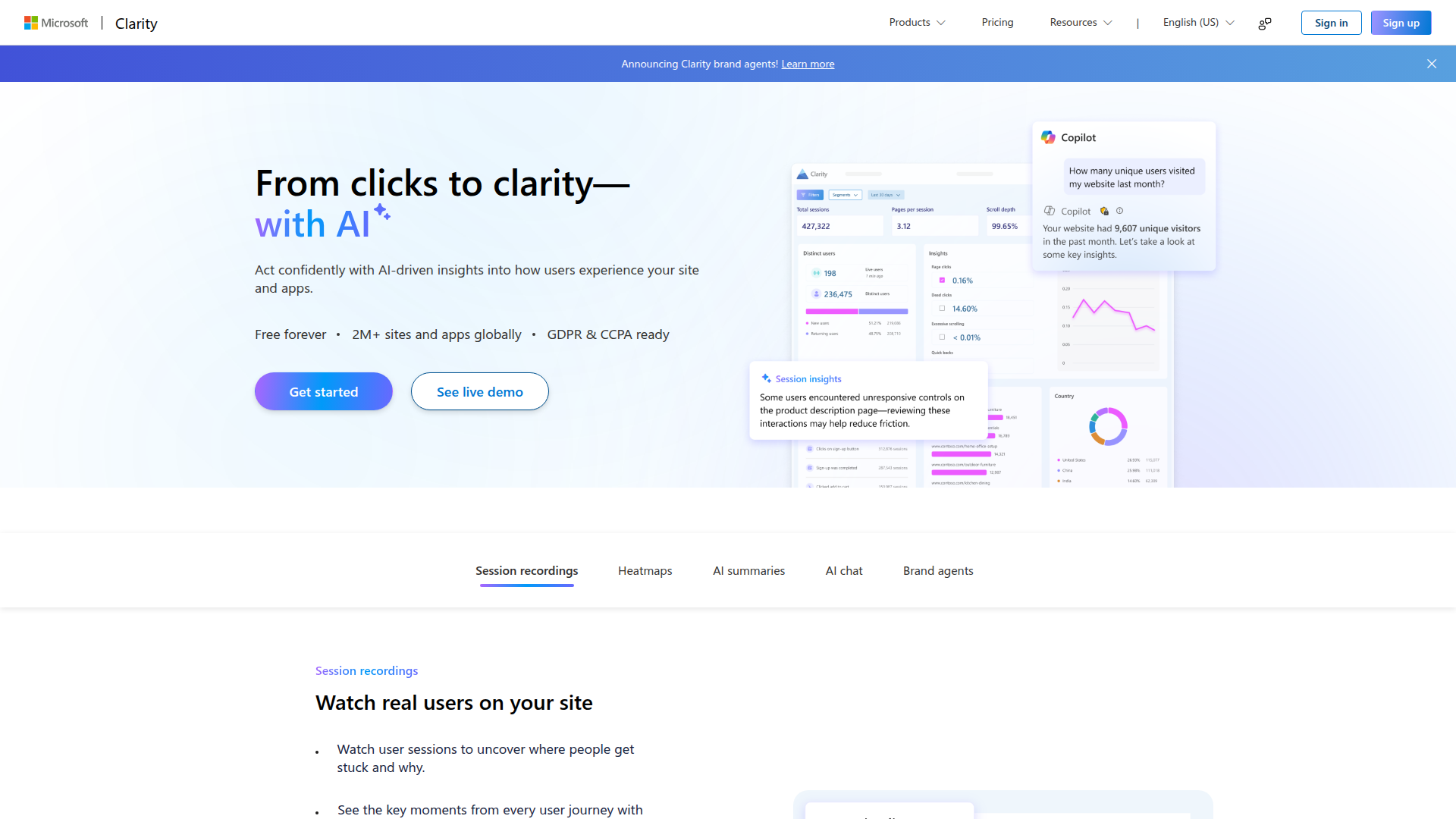
Microsoft Clarity is a free analytics tool that provides insights into user behavior on your website through session replays and heatmaps.
Yandex Metrica provides comprehensive web analytics to improve website performance and user experience.
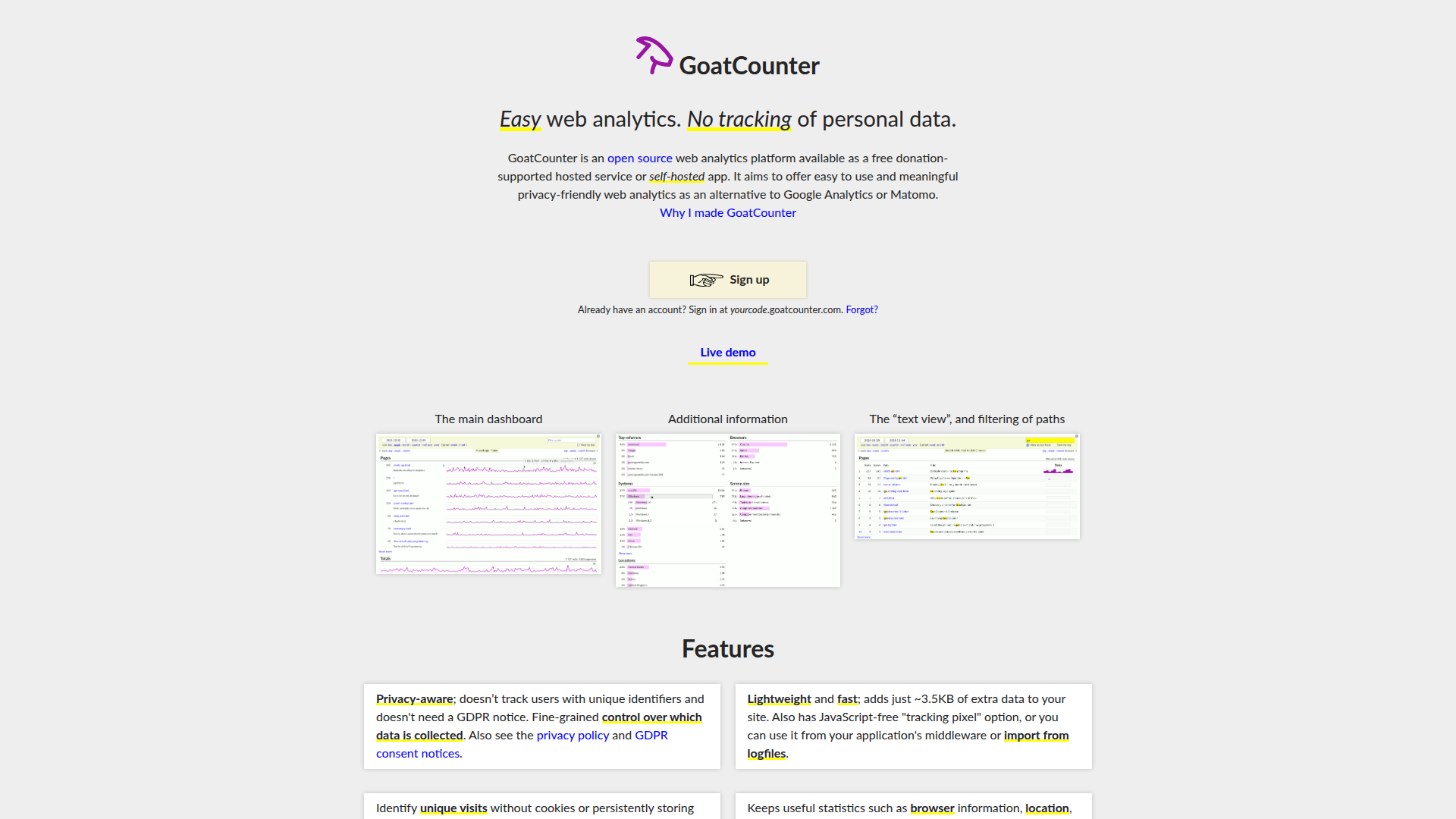
GoatCounter is an open-source web analytics tool designed for simple, privacy-focused tracking of website visitors.
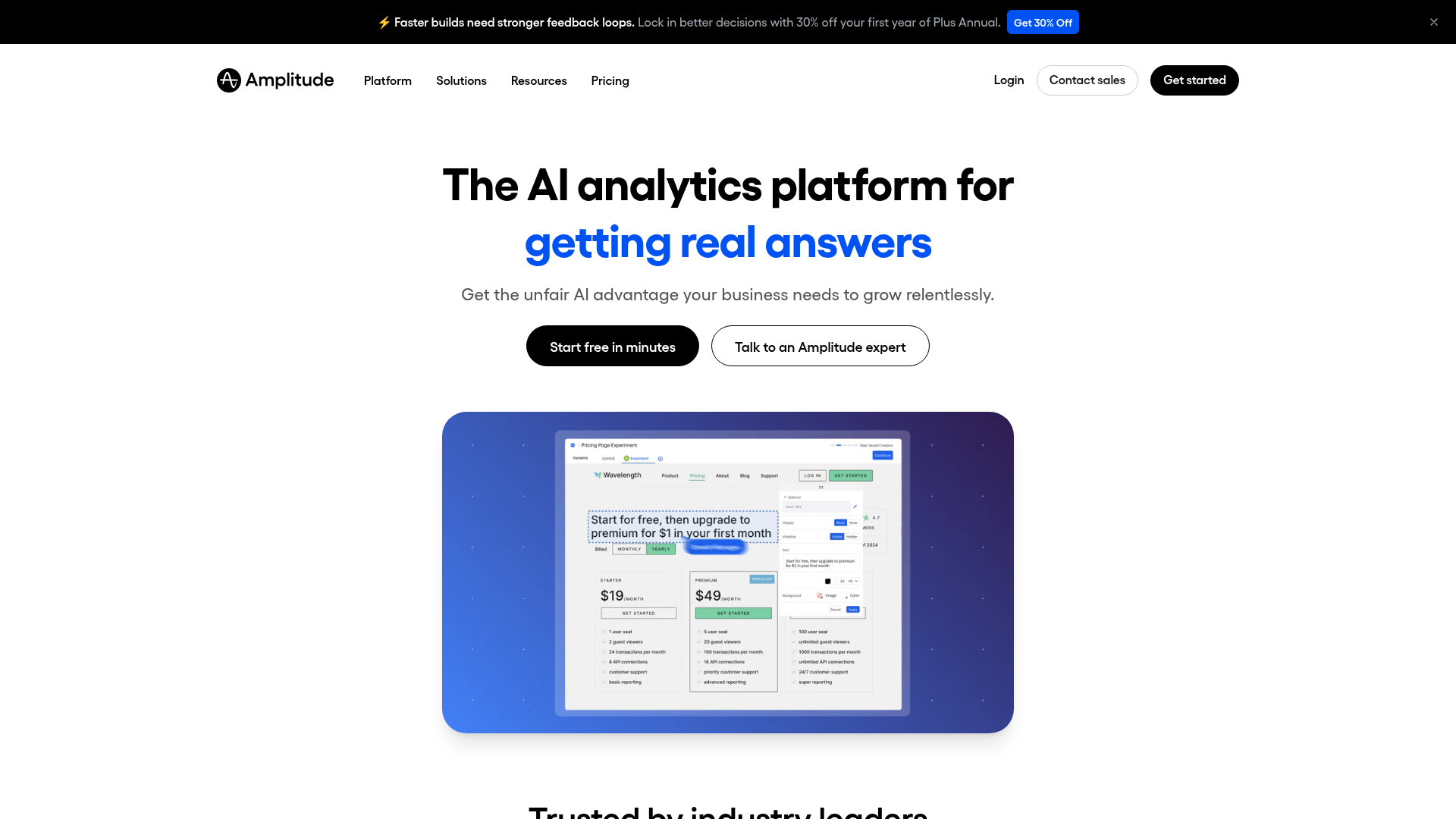
Amplitude is an AI-driven analytics platform offering comprehensive insights into user behavior and product performance.
Tracks marketing channels to boost business growth for marketers.
Hotjar is a powerful analytics and feedback tool that helps you understand user behavior on your website.
Track, analyze, and optimize influencer marketing campaigns for better ROI.
Mixpanel provides analytics that help teams transform user behavior insights into actionable decisions without delays.
PostHog provides product engineers with a comprehensive suite of tools for effective product development and analytics.
Analytics tool for privacy-focused businesses, offering cookieless and GDPR compliant tracking.
Umami is an open-source web analytics tool that provides privacy-focused insights without tracking personal data.
Usermaven is a comprehensive platform that enables marketing teams to track and analyze every customer interaction to optimize revenue generation.
Here's how free analytics tools compare at a glance:
| Tool | Best for | Strength | Setup effort | Ideal ICP |
|---|---|---|---|---|
| Session replay + heatmaps | Industry standard with the widest ecosystem | Low | Solo founders, SMBs, and early teams | |
| Early-stage startups | Industry standard with the widest ecosystem | Low | Solo founders, SMBs, and early teams | |
| Privacy-first teams | Strong features at a fraction of enterprise pricing | Low | Bootstrapped founders + indie hackers | |
| Early-stage startups | Industry standard with the widest ecosystem | Low | Solo founders, SMBs, and early teams | |
| Early-stage startups | Tracks marketing channels to boost business growth for marketers | Low | Bootstrapped founders + indie hackers | |
| User feedback + surveys | Strong features at a fraction of enterprise pricing | Low | Bootstrapped founders + indie hackers |
Screenshots don't lie. Here's what you're signing up for — no stock photos, no marketing mockups.
The analytics market has gone through a massive shift. What used to cost $500-2,000 per month is now available on a free tier. And not the "free for 14 days then surprise you with a bill" kind. Actually, permanently free.
Product-led growth changed the game. Analytics companies like PostHog, Mixpanel, and Amplitude realized that giving startups a generous free tier converts them into paying customers later. The result? Free tiers that would have been unthinkable three years ago. PostHog's 1 million free events per month. Amplitude's 10 million events. Mixpanel's 100,000 monthly tracked users. These aren't demos — they're fully functional products.
Open-source analytics went mainstream. PostHog raised $75M+ and now competes directly with Mixpanel and Amplitude. Umami hit 20k+ GitHub stars. Plausible became the default choice for privacy-conscious developers. Open source isn't the scrappy underdog anymore — it's winning.
Privacy regulations forced innovation. GDPR, CCPA, and the death of third-party cookies pushed analytics companies to build privacy-first products. A new generation of cookieless, privacy-friendly analytics tools don't need consent banners, don't get blocked by ad blockers, and give you more accurate data than Google Analytics. Ironic, isn't it?
Web analytics tools track what happens on your website — who visits, where they come from, what pages they view, and how they interact with your content. Here's the honest breakdown of every free option worth your time:
Google Analytics (GA4) remains the most widely used web analytics tool in the world, and it's free for most use cases. But "free" comes with a cost: your users' data is sent to Google, the interface has become notoriously complex since the GA4 migration, and ad blockers now block Google Analytics scripts on 30-40% of browsers. For startups that need Google Ads integration or e-commerce tracking, GA4 is still necessary. For everyone else, there are better options. Way better.
Umami is a lightweight, open-source, privacy-friendly web analytics tool that has quickly become a favorite among developers and indie hackers. It's free to self-host (a $5/month VPS handles it), gives you a clean dashboard focused on metrics that matter, and doesn't use cookies or collect personal data. Umami supports custom events, UTM tracking, and real-time data. If you can deploy a Docker container, Umami is the best free web analytics tool in 2026 — period.
Plausible Analytics is the premium privacy-focused analytics tool. Their cloud service starts at $9/month (not free), but the open-source version can be self-hosted for free. Plausible is known for its dead-simple interface — one dashboard page instead of GA4's labyrinth of reports. It's GDPR compliant by default, weighs less than 1KB, and doesn't slow down your site. For non-technical founders, the $9/month cloud version is worth it for the simplicity alone.
GoatCounter is the underdog we keep coming back to. Completely free for non-commercial use, open source, and so lightweight it makes other analytics tools look like resource hogs. Tracks pageviews, referrers, browsers, and screen sizes without cookies, JavaScript frameworks, or tracking pixels. Perfect for blogs, docs sites, and open-source projects where you just want numbers without the drama.
Microsoft Clarity is technically a session replay tool, but it also provides excellent web analytics dashboards including heatmaps, scroll maps, and user journey analysis. Completely free with no limits on traffic, recordings, or data retention. Every startup should have Clarity installed alongside their primary web analytics tool. There is genuinely no catch here — Microsoft just wants you in their ecosystem.
Product analytics tools track what happens inside your application — user journeys, feature adoption, conversion funnels, retention cohorts, and behavioral patterns. These tools answer "what are my users doing?" rather than "how did they get here?" — and that's the question that actually drives growth.
PostHog has established itself as the most complete free analytics platform in 2026. Their free tier includes product analytics (1M events/month), session replay (5,000 recordings/month), feature flags, A/B testing, and surveys. PostHog is open source, can be self-hosted for unlimited usage, and has the best developer experience of any analytics tool. For startups that want one tool to rule them all, PostHog is the answer. Their cloud free tier is generous enough for most startups until they're well past $10k MRR.
Mixpanel is the OG of product analytics, and their free tier remains competitive: 100,000 monthly tracked users with unlimited data history. Mixpanel's strength is its polished interface — funnel analysis, retention charts, and user flows are beautifully designed and easy for non-technical team members to use. If your team includes product managers or marketers who need self-serve analytics without writing SQL, Mixpanel is the better pick. The enterprise sales team might be annoying, but the product is solid.
Amplitude offers the most generous free tier on paper: 10 million events per month on their Starter plan. The product analytics capabilities are world-class — behavioral cohorts, predictive analytics, and journey mapping. The catch? Many advanced features (custom dashboards, unlimited team members, data export) are gated behind their paid plans, which jump to several hundred dollars per month. Free to expensive with nothing in between — classic enterprise pricing playbook.
Usermaven combines web analytics and product analytics in a single tool, targeting indie hackers and small startups who don't want to manage multiple tools. It's less powerful than PostHog or Amplitude for deep product analysis, but the simplicity is the point. One tool, one dashboard, one tracking script. If you don't need behavioral cohorts or complex funnel analysis, Usermaven keeps things simple.
Watching real users interact with your product is one of the fastest ways to find UX problems you'd never catch yourself. And in 2026, you can do it for free — which makes not doing it inexcusable.
Microsoft Clarity dominates the free session replay space. Unlimited recordings. Unlimited heatmaps. Unlimited projects. Genuinely free, no asterisks. The quality is good enough that many teams have dropped their paid Hotjar subscriptions entirely. They recently added AI-powered insights that surface interesting user behaviors automatically. If you're not using Clarity, install it today — it takes 2 minutes and the ROI is immediate.
Hotjar has a free tier, but it's limited compared to what it used to be. You get basic recordings and heatmaps, which is fine for getting started, but Clarity gives you more for nothing. Hotjar's real advantage is their survey and feedback widgets — if you need in-app NPS scoring or user feedback collection, Hotjar's free tier is worth it for that alone.
PostHog Session Replay gives you 5,000 recordings per month on the free tier. The killer feature is integration with your product analytics — you can go from a funnel chart showing where users drop off directly to recordings of those exact users. This workflow is incredibly powerful for debugging conversion issues and is something Clarity can't do.
The shift toward privacy-friendly analytics isn't just a European thing anymore. California's CCPA, Brazil's LGPD, and a growing wave of state-level privacy laws mean that cookie-based tracking is becoming a legal liability for every startup, not just the ones targeting EU customers.
Privacy-friendly analytics tools like Plausible, Fathom, Umami, and GoatCounter don't use cookies at all. They track pageviews and sessions without collecting personal data, which means:
For startups, this is a competitive advantage. Users are increasingly aware of tracking, and "we don't track you" is becoming a trust signal. Plus, cookieless analytics is actually more accurate — ad blockers let privacy-friendly scripts through while blocking 30-40% of Google Analytics requests. You've been making decisions on incomplete data this whole time.
If you have the technical chops (or a $5/month VPS), open source analytics tools are the ultimate free option. You own your data, you control the infrastructure, and you never hit a pricing wall. Here are the best options in 2026:
PostHog (open source) — The most complete open-source analytics suite. Product analytics, session replay, feature flags, A/B testing, surveys. Self-host on your own infrastructure for unlimited everything. The tradeoff is maintenance and scaling, but for teams with DevOps capacity, it's unbeatable value.
Umami (open source) — Lightweight, privacy-focused web analytics. Takes 5 minutes to deploy on Vercel or a VPS. Perfect if you just need pageview tracking without the bloat. The codebase is clean, the community is active, and updates ship regularly.
Plausible (open source) — Also open source, though the self-hosted version requires more setup than Umami. Their cloud version starts at $9/month and is honestly worth it for most people who don't want to manage infrastructure.
The tradeoff with self-hosting is maintenance. You're responsible for updates, backups, and scaling. For most non-technical founders, the cloud-hosted free tiers are the better bet. But for developers building side projects or funded startups with a DevOps person? Self-hosting saves you thousands per year as you scale.
Here's exactly what we recommend based on your startup stage:
Stage 1: Pre-launch (0 users)
Stage 2: Post-launch (1-1,000 users)
Stage 3: Growing (1,000-10,000 users)
Stage 4: Scaling (10,000+ users)
The key insight: at every stage, there's a way to get what you need without overpaying. You don't need to pay for analytics until your product is generating revenue. And even then, the best-value analytics tools are surprisingly affordable compared to what enterprise teams pay.
Let's be specific about what free tiers don't include — because the marketing pages sure won't tell you:
Custom dashboards — Most free tiers give you pre-built reports. Custom dashboards with drag-and-drop widgets are typically a paid feature. Amplitude and Mixpanel both gate this.
Team collaboration — Free tiers usually limit you to 1-3 team members. When your team grows past 5 people who need analytics access, you'll need a paid plan.
Data export and API access — If you want to pipe analytics data into external tools like Looker or Metabase, you usually need paid plan API access. PostHog is the exception here — they allow exports on free.
Advanced segmentation — Behavioral cohorts, predictive analytics, and custom formulas are typically paid features. For most pre-Series A startups, you don't need them yet.
Priority support — Free means community support. If your analytics goes down at 2am, you're on your own. For most startups, this is fine. For companies with SLA requirements, it's not.
Here's the honest take: for most startups pre-Series A, the free tier column covers everything you need. Don't pay for features you won't use for 6 months. That money is better spent on literally anything else.
We've seen founders waste weeks on analytics setup. Here are the mistakes that cost the most time:
Mistake #1: Installing every tool at once. Each tracking script adds load time to your site. Start with one web analytics and one product analytics tool. Adding five different tracking scripts gives you conflicting data and a slower site. Pick two. Ship. Iterate later.
Mistake #2: Ignoring event limits until you lose data. Check your free tier usage monthly. If you're at 80% of your cap, start evaluating upgrade options before events start dropping silently. PostHog and Mixpanel both stop collecting when you hit limits — they don't warn you nicely.
Mistake #3: Choosing based on features you'll "eventually" need. You don't need AI-powered predictive analytics when you have 50 users. Pick the simplest tool that answers your current questions. You can always switch — and most analytics tools make switching easier than your phone carrier does.
Mistake #4: Not setting up conversion tracking from day one. Pageview data without conversion context is like a GPS without a destination. Set up your funnel (visit → signup → activation → retention) before you launch. Even on free tools, this data is priceless for product decisions.
Mistake #5: Tracking everything. Tracking every button click, scroll event, and mouse hover burns through your free tier limits fast and gives you data paralysis. Be intentional: track the 10-15 events that answer your most important product questions. More data is not better data.
You don't need to pay for analytics to build a data-driven startup. The free analytics tools available in 2026 — PostHog, Mixpanel, Amplitude, Umami, Microsoft Clarity, and others listed above — provide more than enough capability for early-stage companies to understand their users, find product-market fit, and grow.
Our top recommendation: start with PostHog (product analytics + session replay) and Umami (web analytics). This combination gives you comprehensive analytics for $0, with the flexibility to upgrade individual tools as your needs grow. Add Microsoft Clarity for unlimited session replays on top.
Browse the comparison table above to see free tier limits, upgrade pricing, and our verdicts for each tool. And if you need help choosing between two specific tools, compare them head-to-head on our comparison page.
Now stop reading about analytics and go install something. Your users are doing weird things right now and you have no idea.
Based on our testing, Microsoft Clarity stands out for its generous free tier and overall feature set. Yandex Metrica is a strong runner-up, especially if you need a different feature mix. The "best" pick depends on your specific needs — check the comparison table above to match tools to your use case.
For pre-revenue startups and teams under 10 people, free tiers are usually more than enough. Most tools on this list serve thousands of startups on their free plans. The real question is when to upgrade — and we've included upgrade pricing in the table above so you can plan ahead. Don't pay for features you won't use for 6 months.
The most common free tier limits are usage caps (events tracked, emails sent, team members), reduced integrations, and community-only support. Some tools also add branding to your output on free plans. We've listed specific limits in the comparison table — the devil is in the details.
Every tool on this list can be started without a credit card. That's one of our criteria for inclusion. Some may ask for payment info when you upgrade, but the free tier itself is always no-strings-attached.
Upgrade when you consistently hit the free tier limits, need features only available on paid plans (like advanced integrations or team collaboration), or when the tool becomes critical to your workflow and you need priority support. Until then, save your money.
Need more options? Browse all analytics tools, including paid ones with free trials.