| Feature |  |  |
|---|---|---|
| Starting Price | Free | $10/month |
| Pricing Model | Free | Freemium |
| Free Tier | ||
| Free Trial | ||
| Best For | Startups | Startups |
| Tool Type |
unDraw vs Canva — Quick Summary
Who each tool is built for, what it does best, and how much effort it takes to get started.
At a Glance
What Each Tool Does
unDraw
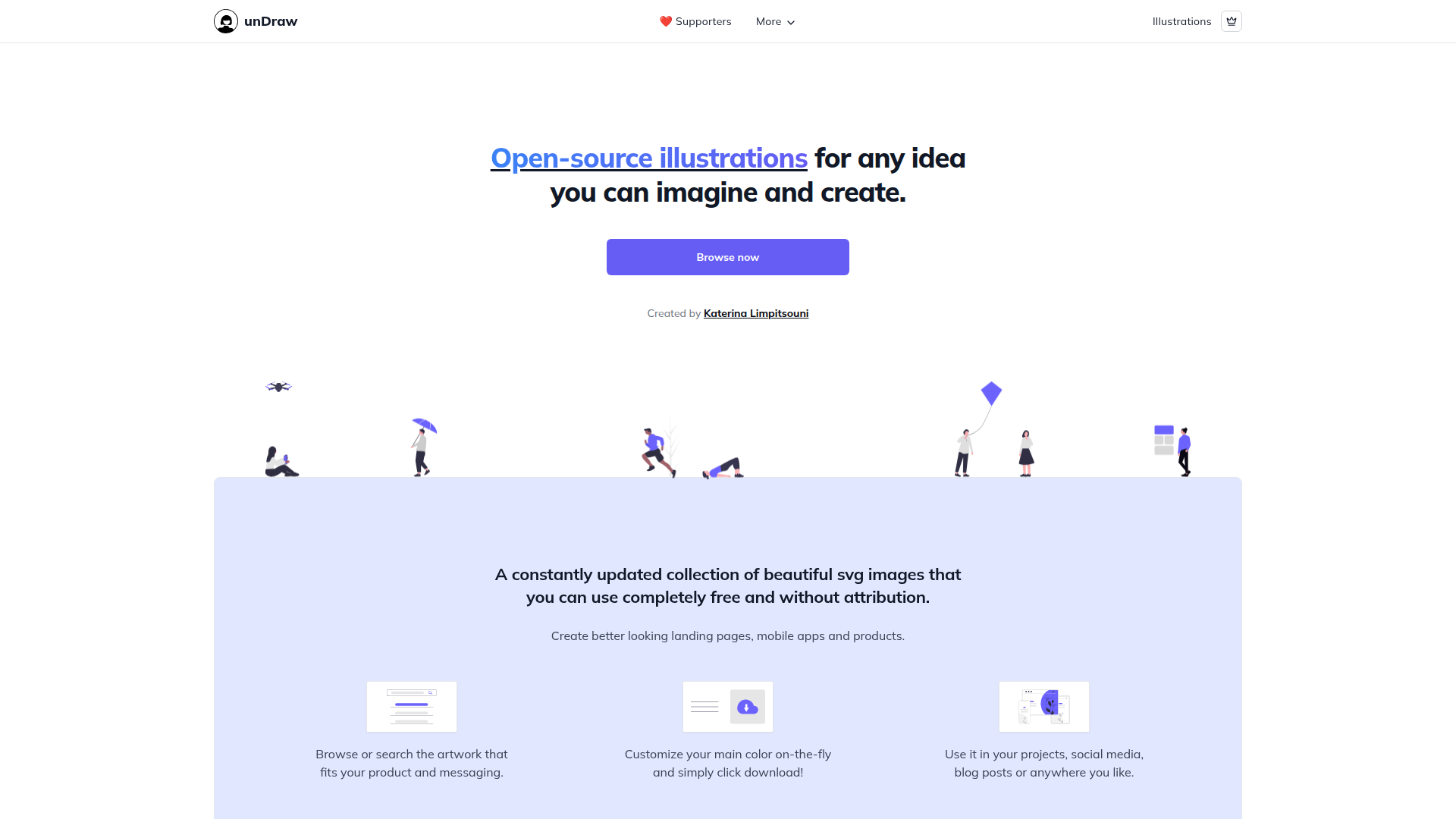
unDraw offers open-source illustrations for any idea you can think of. All images are free to use, no credit needed. Great for landing pages, apps, and products.
Standout features:
- •Free SVG images — no cost, no attribution.
- •Customize colors — match your brand easily.
- •Scalable SVGs — no loss in quality when resized.
Limitations:
- •Limited to existing styles — might not fit all brand aesthetics.
- •No advanced editing — basic color change only.
Pricing: Completely free.
Canva
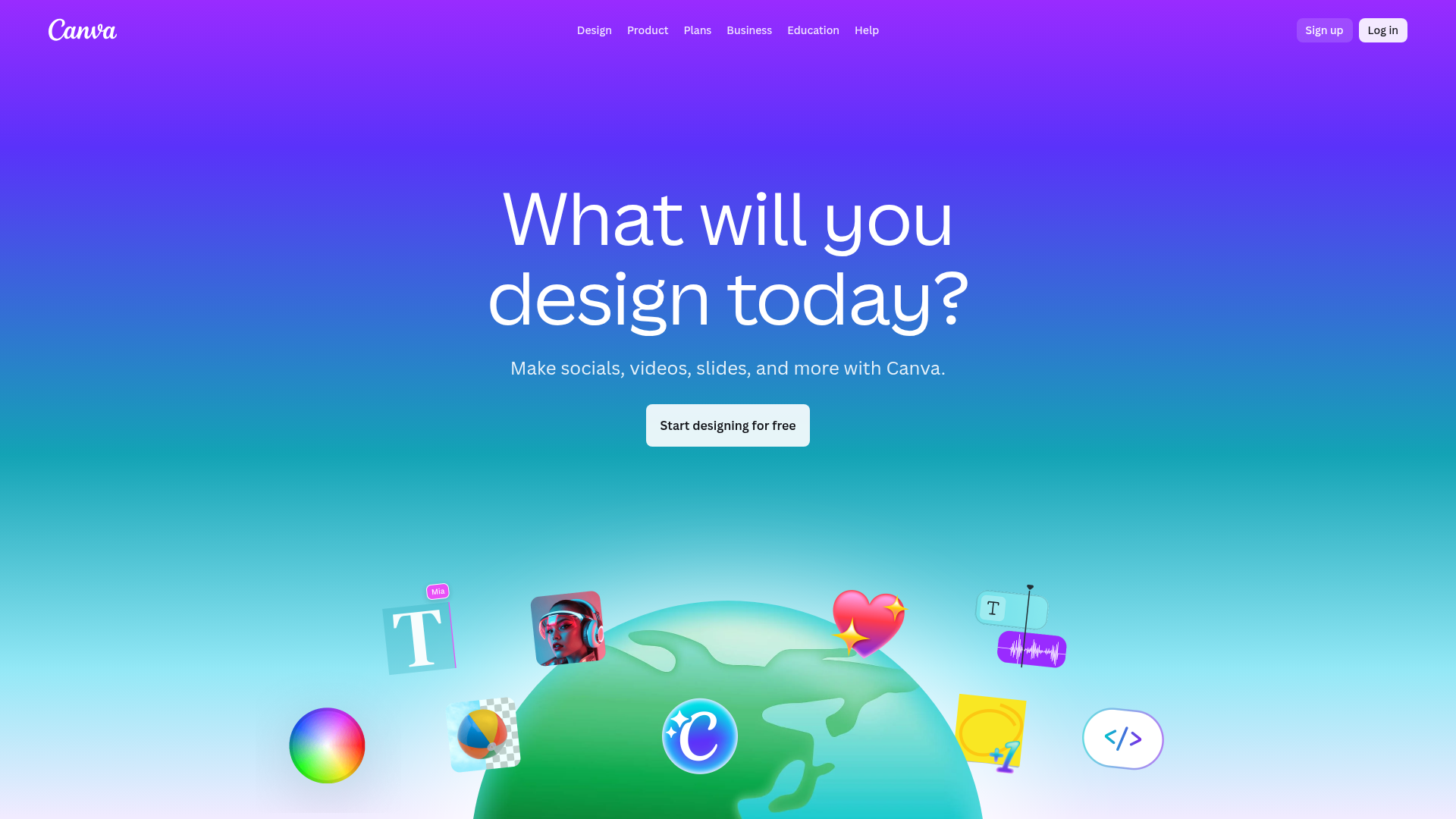
Canva is a design tool that lets you create social media posts, videos, presentations, and more. It's great for people who want to design but don't have professional skills.
Standout features:
- •Easy drag-and-drop editor — no design skills needed.
- •Huge library of templates — saves time and sparks ideas.
- •Collaboration tools — work with your team in real-time.
Limitations:
- •Some features need internet — offline users might struggle.
- •Free version has limited templates — serious users might need to pay.
Pricing: Free with optional paid plans for more features.
Growth Hacker Verdict
unDraw is a cheat code for B2B SaaS landing pages and onboarding flows where you need polished, on-brand illustrations fast—grab a bunch of SVGs, recolor them to match your palette, and ship in hours instead of weeks waiting on a designer. Skip it if you need photorealistic or heavily stylized visuals; the illustration style is distinctive enough that you'll see the same assets across dozens of sites, which kills differentiation if that matters to your brand.
Best play: pair it with a simple design system tool (Figma, Penpot) and batch-customize a full library during a sprint—way more efficient than hunting individual images. Free pricing means zero friction to test, so the only reason not to use it is aesthetic preference or needing true custom work.
Canva's your velocity play for shipping social content without becoming a design bottleneck — founders doing 1,400+ posts/year (looking at you, Taplio users) aren't spending cycles on pixel-perfect graphics, they're templating and automating. But it's a commodity tool now, so if your GTM lives on visual differentiation (custom UI, branded systems, proprietary aesthetics), Canva templates will make you indistinguishable from your competitors.
Stack it with Taplio ($30/mo) for the content-to-schedule pipeline and grab the $120/year plan — it's table stakes for LinkedIn and social. Only skip it if design *is* your moat or you're already deep in Figma for product work.
TL;DR — unDraw vs Canva
Choose unDraw if you want a specialized tool that does one thing exceptionally well. Starts at Free. Free tier available — no credit card needed.
Choose Canva if you want the industry standard with the widest ecosystem and integrations. Starts at $10/month. Free tier available — no credit card needed.
On price alone, unDraw wins at Free. But cheaper isn't always better — check the feature breakdown above.
When to Choose unDraw Over Canva
unDraw is a niche create content tool built for startups, starting at Free. unDraw offers open-source, customizable SVG illustrations for any creative project, free of charge.
Choose unDraw if:
- Self-hosting + full control — This is where unDraw shines. Specialized tool that does one thing exceptionally well.
- Setup effort: High — There's a meaningful setup investment, but you get more control and customization.
- Free tier available — You can test unDraw without a credit card. Try it alongside Canva and see which fits your workflow.
- Ideal for: Solo founders, SMBs, and early teams
See all Canva alternatives or browse the Create content directory.
When to Choose Canva Over unDraw
Canva is a essential create content tool built for startups, starting at $10/month. Canva is a versatile design tool enabling users to create stunning visuals with ease.
Choose Canva if:
- Early-stage startups — Industry standard with the widest ecosystem.
- Setup effort: Low — Quick onboarding with minimal configuration needed.
- Free tier available — Test Canva risk-free before committing any budget.
- Ideal for: Solo founders, SMBs, and early teams
See all unDraw alternatives or browse the Create content directory.
unDraw vs Canva: Pricing Breakdown
Let's talk money — because that's usually what drives the decision for startups and growth teams.
unDraw starts at Free. Free tier included. Priced for startups — won't wreck your runway.
Canva starts at $10/month with 4 pricing tiers. Free tier included. Startup-friendly pricing.
Our take: unDraw is the more affordable option at Free vs $10/month. But cheaper isn't always better — compare what you get at each tier before deciding. We always list monthly billing rates — not the discounted annual price that makes everything look cheaper.
FAQ: unDraw vs Canva
Is unDraw better than Canva in 2026?
It depends on your team size, budget, and priorities. unDraw is a niche create content tool built for startups, starting at Free. Canva is a essential option aimed at startups, starting at $10/month. See the feature comparison above for a detailed side-by-side.
Which is cheaper, unDraw or Canva?
unDraw starts at Free, while Canva starts at $10/month. unDraw is more affordable on paper. Keep in mind: the cheapest plan isn't always the best deal. Compare what you get at each tier, not just the starting price. We always list monthly billing rates, not discounted annual prices.
Can I use both unDraw and Canva together?
Both are design tools, so most teams pick one to avoid redundancy and extra costs. That said, some teams use both for different segments or use cases — just make sure the overlap doesn't waste your budget.
Does unDraw or Canva have a free tier?
Both unDraw and Canva offer free tiers. You can try each without a credit card and see which fits your workflow before spending anything.
How do I switch from unDraw to Canva (or vice versa)?
Most create content tools support data export. Start by exporting your data from your current tool, then check the new tool's import documentation. Many offer migration assistance or onboarding calls to help with the switch.

