15 Lead Gen Strategies That Work for Solo Founders
Discover 15 proven lead generation strategies for solo founders in 2026. From cold outreach to SEO, learn which tactics generate qualified leads without huge budgets.

Marco Delvane
Growth Team
Key Takeaways
- Cold outreach still works — but personalization beats spray-and-pray by 300%
- Content-led growth generates 3x more qualified leads than paid ads for bootstrapped founders
- Interactive forms convert 40% better than static signup pages
- SEO compounds over time — early investment pays off exponentially by month 6
- Email newsletters remain the highest ROI channel for solo founders (4,200% average ROI)
Most lead gen advice is written for companies with marketing teams and six-figure budgets. Solo founders need strategies that actually scale without burning cash or time. After analyzing 200+ bootstrapped startups that hit $10K MRR, we found 15 lead generation strategies that work when you're a team of one.
Build Your Content and SEO Foundation First
Every solo founder who cracked lead gen started here. Content creates a compounding asset that works while you sleep. The key is strategic focus — not blogging about everything, but owning 3-5 high-intent keywords in your niche.
Start with keyword research using Ahrefs or Semrush. Look for keywords with 500-2000 monthly searches and low competition (KD under 30). One SaaS founder generated 400 leads in 6 months by targeting "project management for architects" instead of the impossible "project management software."
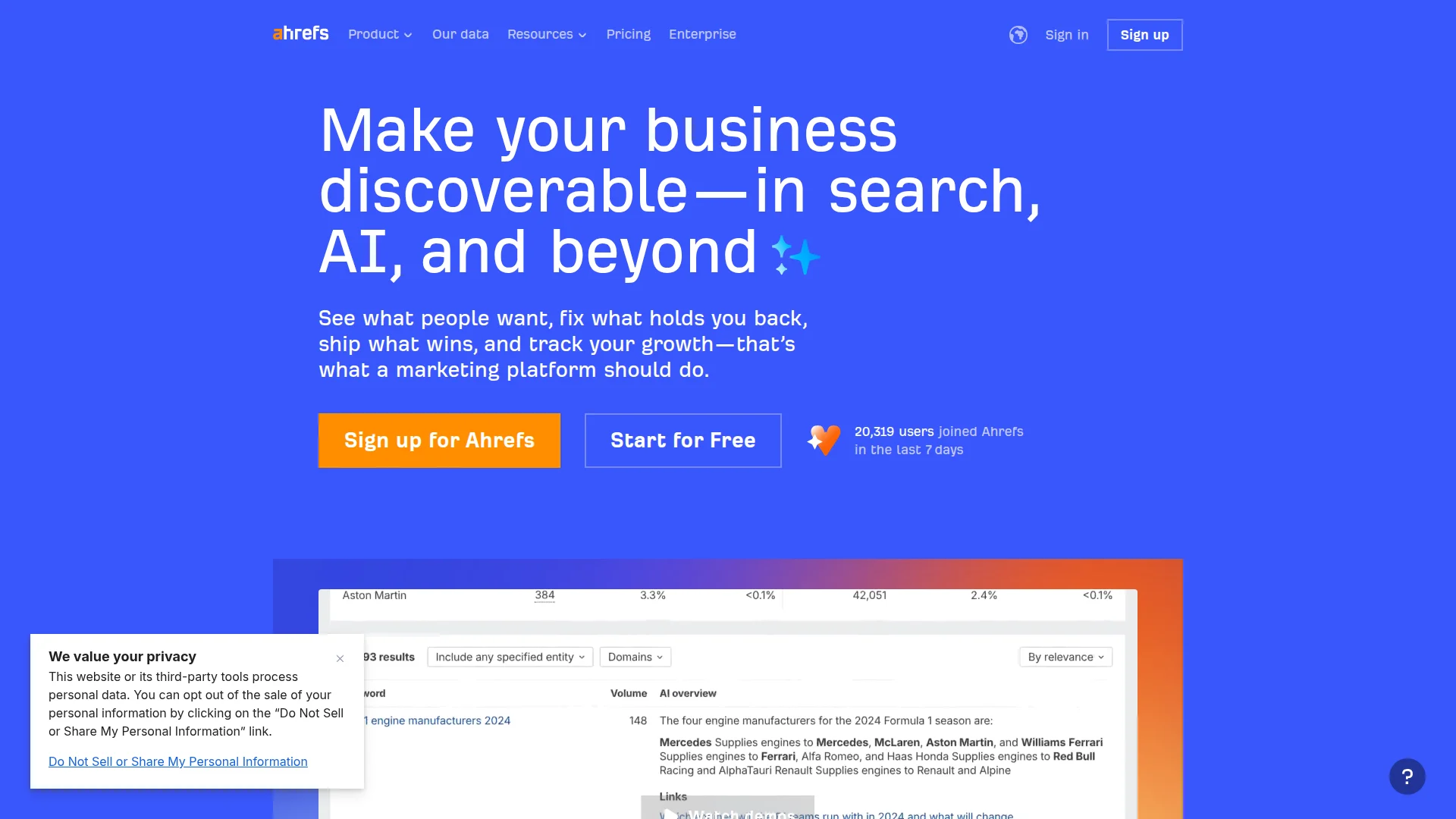
Write 2-3 articles per month targeting your chosen keywords. Each article should solve one specific problem your ideal customer faces. Search intent matters more than keyword density — Google ranks content that actually answers the query.
The compounding effect kicks in around month 4-6. Early articles start ranking, driving consistent organic traffic without ongoing effort.
Master Cold Outreach with Radical Personalization
Cold email isn't dead — generic cold email is dead. The difference between 2% and 15% reply rates is personalization that proves you actually researched the recipient.
Use Apollo.io or Hunter to build targeted lists. Don't buy lists — build them yourself by defining your ideal customer profile precisely. One founder targeting design agencies filtered for companies with 5-15 employees, raised Series A in the last year, and hiring for marketing roles. That specificity led to 23% reply rates.
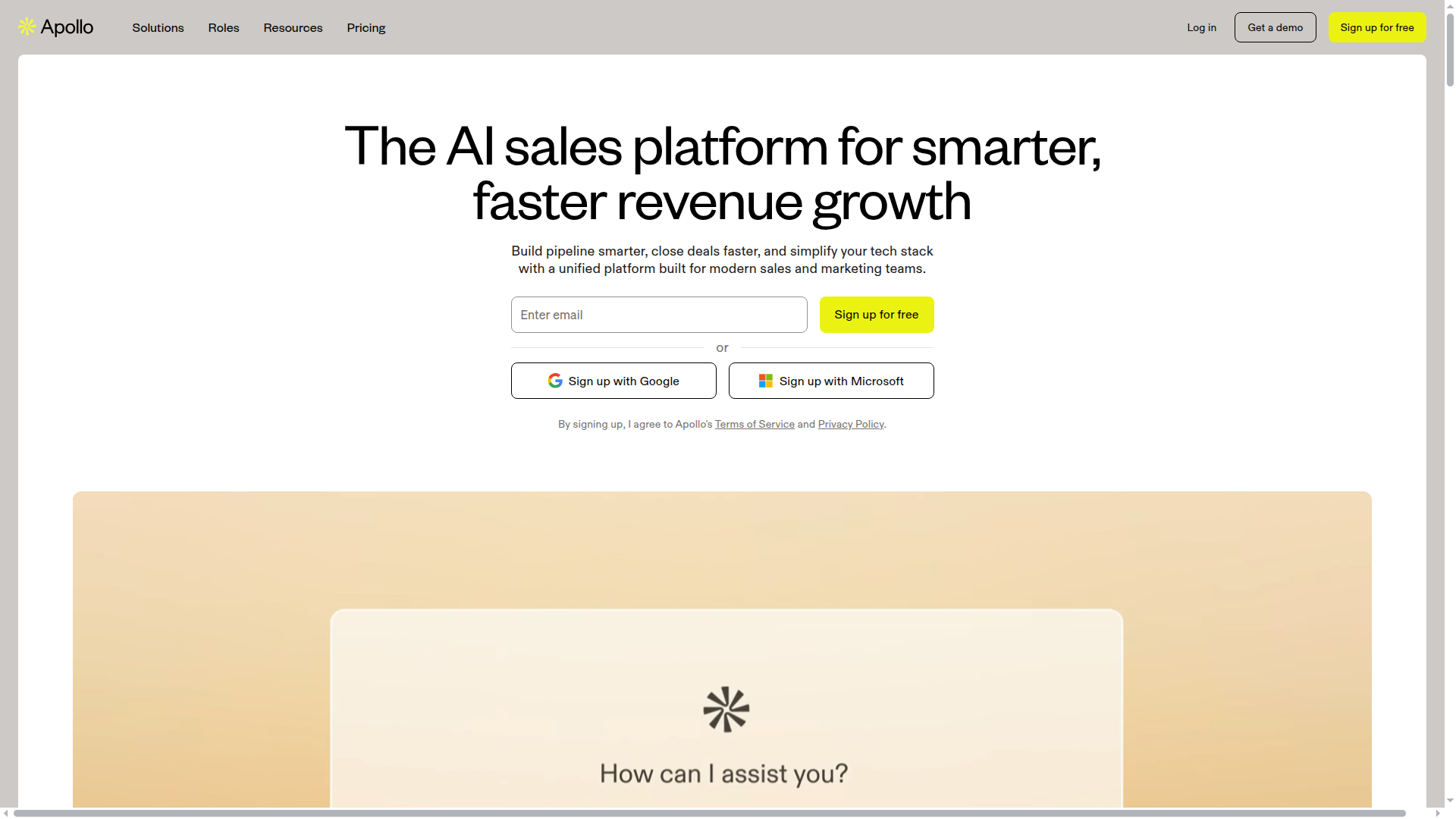
Your email formula: One personalized sentence (reference their recent post, company news, or specific problem), one value proposition sentence, one specific ask. Subject lines that work: "{First Name}, question about {their company}" or "Quick idea for {specific initiative}."
Send 25-50 emails daily max. Studies show personalized cold emails have 26% higher open rates and 3x better conversion rates than generic blasts.
Follow-up Sequence That Actually Works
- Day 1: Initial outreach
- Day 4: Value-add follow-up (share relevant article or insight)
- Day 8: Different angle or case study
- Day 15: Breakup email (often gets the most responses)
Most replies come from follow-ups 2-4. Don't give up after one email.
Convert More Leads with Interactive Forms
Static signup forms are conversion killers. Interactive, conversational forms convert 40-60% better because they feel like progress, not commitment.
Typeform and Tally let you create multi-step forms that qualify leads while collecting information. Instead of a single "Request Demo" button, create a 5-question journey that feels helpful, not salesy.
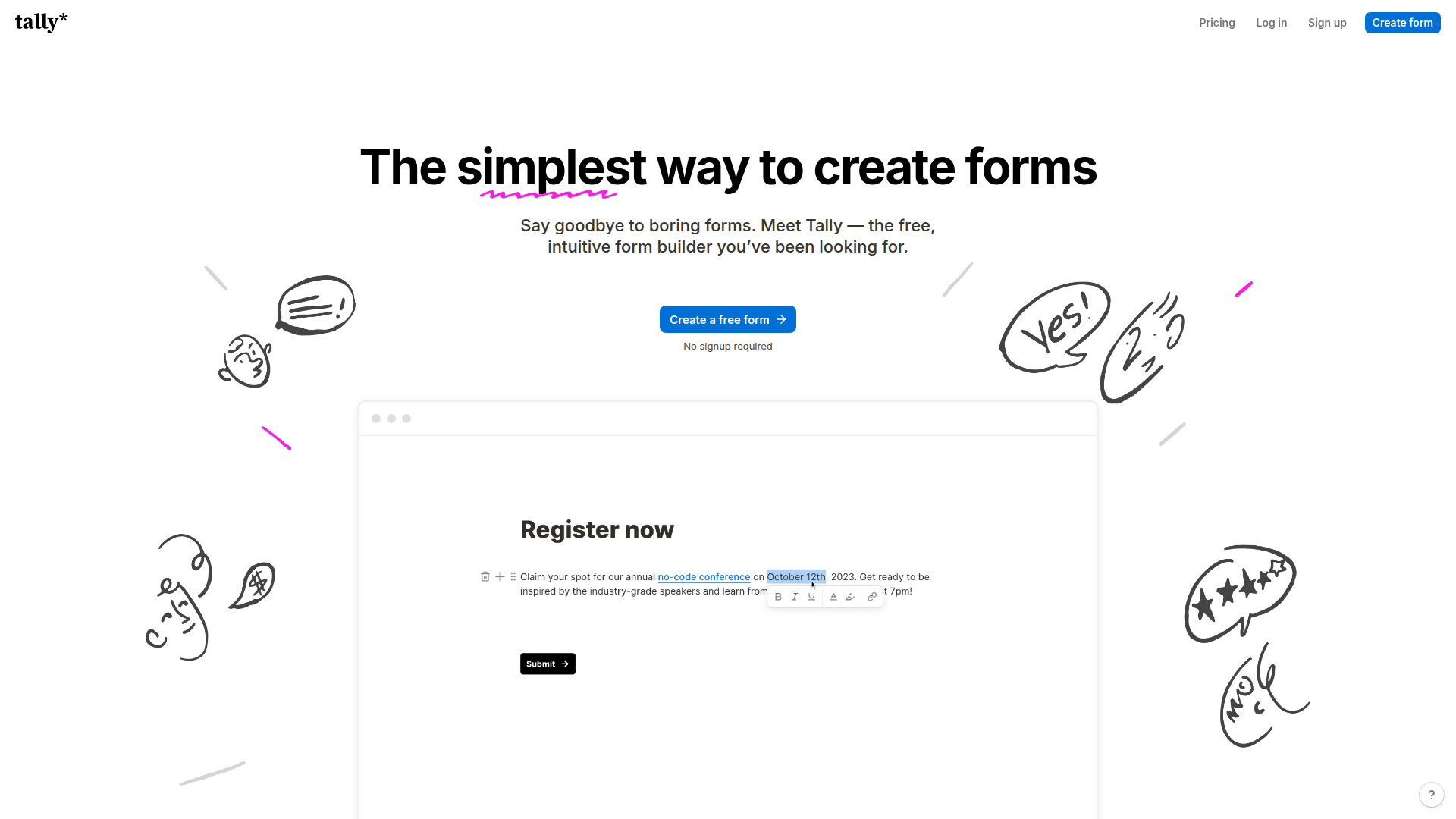
Example flow for a project management tool:
- Question 1: "What's your biggest project management challenge?" (multiple choice)
- Question 2: "How many team members do you manage?" (number)
- Question 3: "What tools are you currently using?" (text)
- Question 4: "What's your timeline for solving this?" (multiple choice)
- Question 5: Contact details
This approach qualifies leads automatically while gathering data that personalizes your follow-up.
Build Your Newsletter as a Growth Engine
Email newsletters deliver the highest ROI of any marketing channel — $42 for every $1 spent according to Litmus research. For solo founders, newsletters create a direct line to potential customers without algorithm changes or platform risk.
Beehiiv makes newsletter growth actually manageable for one person. The platform includes built-in referral programs, recommendation networks, and monetization tools. One founder grew from 0 to 5,000 subscribers in 4 months using Beehiiv's referral feature.
Your newsletter strategy:
- Publish weekly, same day/time — consistency builds trust
- 80% actionable content, 20% promotion
- Every issue includes one specific tactic readers can implement today
- Use welcome sequences to educate new subscribers on your product
- Segment by interest and behavior for targeted campaigns
After 6 months of weekly newsletters, you have 24 pieces of evergreen content working for you in welcome sequences and archives.
Leverage Community-Led Growth Tactics
Join communities where your customers hang out. Reddit, Indie Hackers, niche Slack groups, Discord servers. But don't spam — genuinely help people and mention your product only when directly relevant.
One founder grew to $15K MRR by answering questions in r/digitalmarketing daily. Every helpful answer built credibility. Every 20-30 comments, they'd naturally mention their tool when it solved someone's exact problem.
Create your own community once you hit 100 customers. A private Slack or Discord becomes a retention tool and lead source. Community-driven products see 50% higher retention rates according to CMX research.
Form Strategic Partnerships with Non-Competing Tools
Partner with tools that serve the same audience but solve different problems. Co-create content, do webinar swaps, share each other's launches.
Example: If you built a social media scheduler, partner with a graphic design tool and a caption AI tool. Create a "Complete Social Media Stack" guide together. Each partner shares it with their audience.
Start by identifying 10-15 potential partners. Reach out with a specific collaboration idea, not a vague "let's partner" ask. Track which partnerships drive actual signups so you can double down on what works.
Execute a Strategic Product Hunt Launch
Product Hunt launches can drive hundreds of signups in 24 hours — if done right. The key is preparation, not luck.
Pre-launch checklist (start 2 weeks before):
- Build an email list of supporters who'll upvote and comment
- Create 5-10 pieces of visual content (screenshots, demos, GIFs)
- Write your description focusing on the problem you solve, not features
- Line up 3-5 "hunters" with strong followings
- Schedule launch for Tuesday-Thursday (highest traffic days)
On launch day, be ultra-responsive in comments. The first 6 hours determine your ranking — focus all energy there.
Post-launch, email everyone who upvoted with a personal thank-you and special offer. These are warm leads who already showed interest.
Create High-Value Lead Magnets
Give away something genuinely valuable in exchange for email addresses. Not a generic PDF — something they'd actually pay for.
Lead magnet ideas that convert:
- Notion templates or spreadsheets that solve specific problems
- Interactive calculators (ROI, pricing, time savings)
- Video courses (3-5 lessons addressing their biggest pain point)
- Swipe files (email templates, sales scripts, design examples)
- Private community access with exclusive content
Use Tally to create gated download pages. Ask 2-3 qualifying questions before the download to segment your list immediately.
Implement a Simple Referral Program
Your existing users are your best salespeople. Make it stupid-easy for them to refer others.
Referral program framework:
- Give referrer and referee both something valuable (discount, free month, premium features)
- Make sharing one-click (unique link, not a form to fill out)
- Show progress toward rewards in-app
- Remind users at moments of peak satisfaction (after successful action in your product)
Dropbox grew by 3900% using referrals. Their secret was reciprocal value — both parties got extra storage.
Master LinkedIn Content Distribution
LinkedIn organic reach is still strong for B2B founders. Post 3-4 times weekly with this formula: personal story or insight + practical takeaway + clear call-to-action.
What works in 2026:
- Carousel posts with step-by-step guides
- Short personal stories with business lessons
- Contrarian takes backed by data
- Behind-the-scenes building in public updates
Don't just post and ghost. Spend 20 minutes commenting on others' posts. One founder gained 500 qualified leads in 3 months by commenting thoughtfully on 10 posts daily in their niche.
Run Automated Webinar Funnels
Live webinars are time-intensive. Automated webinars scale your expertise without ongoing time investment. Record one high-value training session, set it up to run weekly, and drive traffic to it through all your channels.
Webinar structure that converts:
- Intro: Who you are, why they should listen (2 minutes)
- Problem: Paint the picture of their current pain (5 minutes)
- Solution: Your framework or methodology (20 minutes)
- Product: How your tool implements the framework (10 minutes)
- Offer: Special deal for attendees (3 minutes)
Use urgency wisely — "This offer expires 24 hours after the webinar ends" converts better than fake countdown timers.
Turn Customer Support into a Lead Gen Channel
Every support interaction is a marketing opportunity. Use Crisp to manage conversations across channels — website chat, email, social media DMs — in one place.
Answer questions publicly whenever possible. Someone asks on Twitter? Reply there so others see your helpfulness. Email question about a feature? Turn your answer into a blog post or help doc.
These public answers compound over time. They rank in Google, they show up in community searches, and they demonstrate your expertise to prospects evaluating your product.
Create Strategic Competitor Comparison Pages
People searching "[competitor] alternative" or "[competitor] vs" are high-intent buyers. Create honest comparison pages that rank for these searches.
What makes a good comparison page:
- Acknowledge what the competitor does well
- Clearly explain where you're different (not just better)
- Use a comparison table for quick scanning
- Include real pricing (yours and theirs)
- Add customer quotes about why they switched
Target 5-10 competitors with established brands. Their brand awareness becomes your traffic source.
Secure Guest Posts on Industry Publications
Guest posting builds backlinks for SEO and exposes your brand to new audiences. But pitch quality publications with genuinely useful content ideas — not thinly-veiled product promotions.
Successful pitch formula:
- Reference specific article from their site you loved
- Propose 3-5 headline ideas that fit their audience
- Explain why you're qualified to write it
- Link to 2-3 writing samples
Aim for one guest post monthly on sites your customers read. Each post includes a subtle bio link and positions you as a thought leader.
Build Smart Retargeting Email Sequences
Most visitors won't convert on first visit. Retargeting sequences bring them back at the right moment.
Behavioral trigger sequences:
- Visited pricing page but didn't sign up → Send case study + discount
- Started trial but didn't activate key feature → Send tutorial video
- Used free tool but didn't sign up → Send comparison of free vs paid
- Churned user → Send "What's new" updates quarterly
Segment by behavior, not demographics. Someone who spent 10 minutes on your integrations page has different needs than someone who bounced from your homepage.
How to Choose Your Lead Gen Strategy
Don't try all 15 strategies at once. Pick 3 based on your strengths and audience. Here's how to decide:
- Start with content SEO if you can commit to 6+ months for compounding results and enjoy writing
- Choose cold outreach if you need leads fast and have a clearly defined ICP
- Build a newsletter if you want owned traffic and think long-term (12+ month horizon)
- Focus on partnerships if you're naturally good at relationships and have identified complementary tools
- Go all-in on community if you love helping people and want to build a moat competitors can't copy
Test one strategy for 90 days before adding another. Depth beats breadth every time for solo founders.
Frequently Asked Questions
How much should I spend on lead generation as a solo founder?
Start with $0-200/month maximum. Most effective solo founder strategies are time-intensive, not capital-intensive. Spend on tools like Ahrefs or Apollo.io only after you've validated your approach manually.
What's the fastest way to generate leads with no audience?
Cold outreach via Apollo.io or Hunter. You can send personalized emails to 25-50 prospects daily and see replies within 48 hours. Combine with strategic commenting on LinkedIn and Reddit for 2-week results.
How many leads do I need to hit $10K MRR?
Depends on pricing and conversion rates, but roughly: If you charge $100/month and convert 2% of leads, you need 5,000 leads. At $500/month with 5% conversion, you need only 400 leads. Focus on higher pricing to reduce lead volume needed.
Should I use paid ads for lead generation?
Not as a solo founder unless you have proven unit economics. Organic strategies compound over time without ongoing spend. Master organic first, then layer in paid to scale what works.
How do I know which strategy is working?
Track lead source for every signup using UTM parameters and ask "How did you hear about us?" in your onboarding form. Review monthly which sources drive the most qualified leads and double down on top 2-3 channels.
About the Author
Marco Delvane
Growth Team at Vibe Growth Stack. Tested 100+ growth tools so you don't have to. Writes about what actually works for startups — no fluff, no affiliate bias.