Vibe Marketing Stack: Build Growth Engine with AI
Learn how to build a complete AI-powered marketing stack without coding. Discover the no-code tools and Claude automation strategies that scale growth.

Marco Delvane
Growth Team
Key Takeaways
- Vibe marketing isn't about big budgets — it's about using AI and no-code tools to automate your growth stack and focus on creating genuine connections with your audience.
- Claude can write your entire marketing stack — from landing pages to email sequences, AI tools like Claude and v0.dev can generate production-ready code in minutes.
- The best growth engine combines 3 layers — analytics to understand users, automation to scale outreach, and retention tools to keep customers coming back.
- Start with Umami + Resend + Tally — this trio costs $0-20/month and covers 80% of what early-stage startups need.
- You don't need to code — every tool in this stack has either a no-code interface or AI-generated components you can copy-paste.
You know that feeling when you see a founder casually mention their "marketing stack" and you're like... what stack? You've got a Twitter account and maybe a Mailchimp login you share with your co-founder.
Here's the thing: in 2026, you don't need a marketing team or a CS degree to build a legit growth engine. You need the right tools, a bit of AI magic, and the willingness to ship fast.
This is your guide to building a vibe marketing stack — the AI-first, no-code approach that lets you compete with funded startups while bootstrapping on a shoestring budget.
Why "Vibe Marketing" Actually Works in 2026
Traditional marketing feels like shouting into the void. Vibe marketing flips this: you build systems that feel human, automate the boring parts, and use AI to personalize at scale.
The shift happened when tools like Claude and GPT-4 got good enough to write actual marketing copy that doesn't sound like a robot. But AI isn't the whole stack. You need:
- Analytics tools to understand what's working
- Automation platforms to capture leads and nurture them on autopilot
- Communication tools to actually talk to customers when they need you
- Retention systems to keep people coming back
Quick Comparison: Essential Vibe Marketing Tools
| Tool | Price | Best For | AI Features? | VGS Verdict |
|---|---|---|---|---|
| Umami | Free | Privacy-first analytics | No | Must-have for tracking without creepiness |
| Resend | Free-$20/month | Developer-friendly email API | No (but pairs with Claude) | Best email tool if you can copy-paste code |
| Tally | Free-$29/month | Beautiful forms, zero code | No | Typeform killer, actually free |
| Crisp | Free-$25/month | Customer support + live chat | Yes (AI chatbot) | Intercom alternative without the price tag |
| PostHog | Free-$450/month | Product analytics + experiments | Yes (AI insights) | Overkill for MVPs, perfect for growth stage |
| Plausible | $9-$69/month | Simple, privacy-focused analytics | No | If Umami feels too technical, use this |
Layer 1: Analytics That Don't Make You Feel Gross
Google Analytics is dead. Well, not dead, but it's bloated, confusing, and tracks users like you're running a surveillance operation. The vibe marketing approach uses privacy-first analytics.
1. Umami — Your Free, Open-Source Analytics Foundation
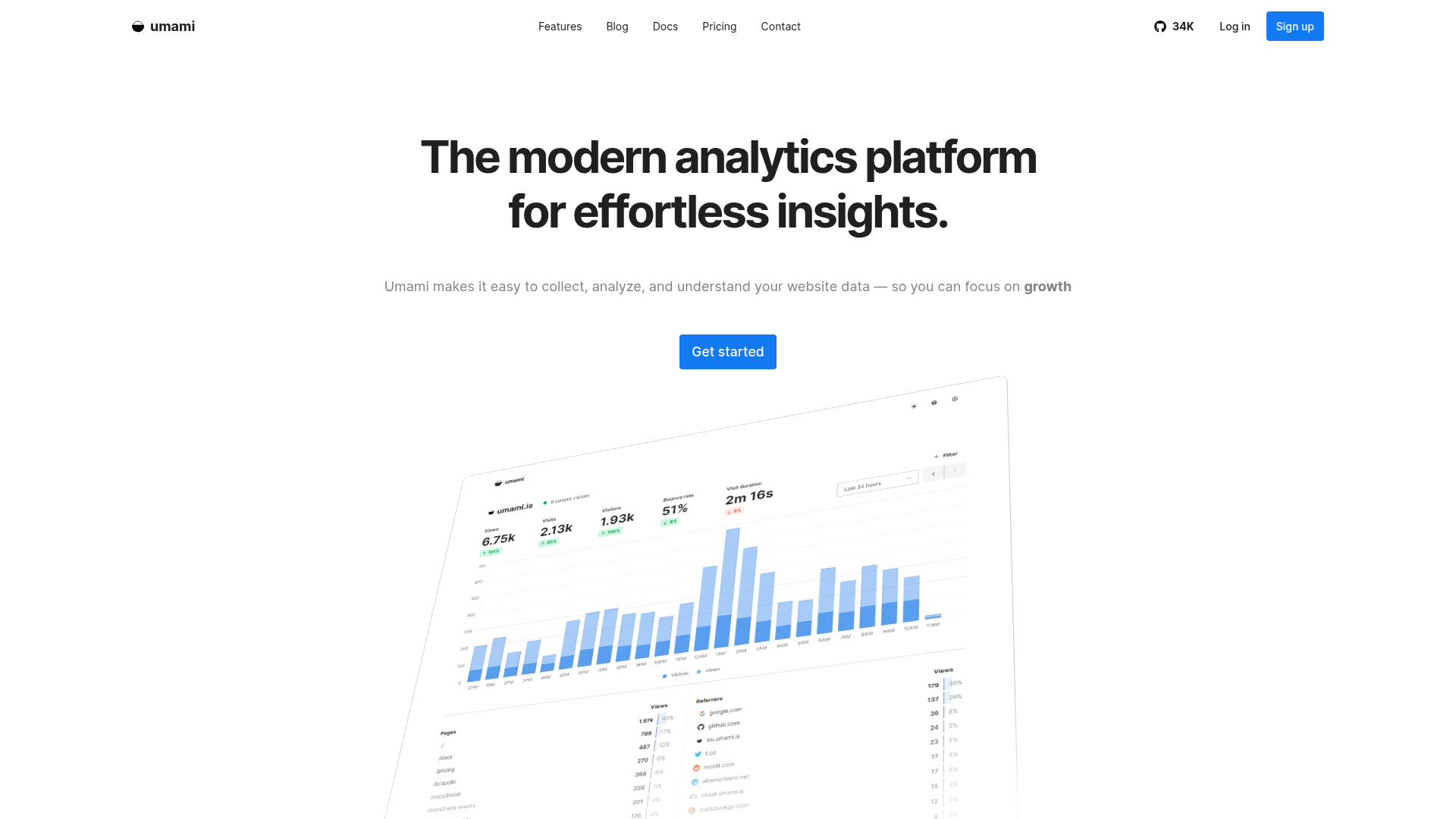
Price: Free (self-hosted) or $9/month (cloud)
Umami is the anti-Google Analytics. It tracks page views, referrers, and user behavior without cookies or personal data. Self-host it on Vercel or Railway for free, or pay $9/month for their cloud version. Setup takes 10 minutes.
What We Liked
- Completely free if you self-host on Vercel (takes 5 minutes)
- No cookie banners required — GDPR compliant by default
- Clean, intuitive dashboard that actually makes sense
- Open-source with active community and regular updates
What Could Be Better
- Limited AI features — you're analyzing the data yourself
- Self-hosting requires basic dev knowledge (or AI to help)
- No built-in A/B testing or advanced funnels
Growth Hacker Take: If you're shipping an MVP, Umami is non-negotiable. Free, fast, and you'll never worry about privacy lawsuits.
Umami Analytics Setup Tutorial
External links: Umami Pricing | GitHub Repo
2. PostHog — When You Need Product Analytics That Scale
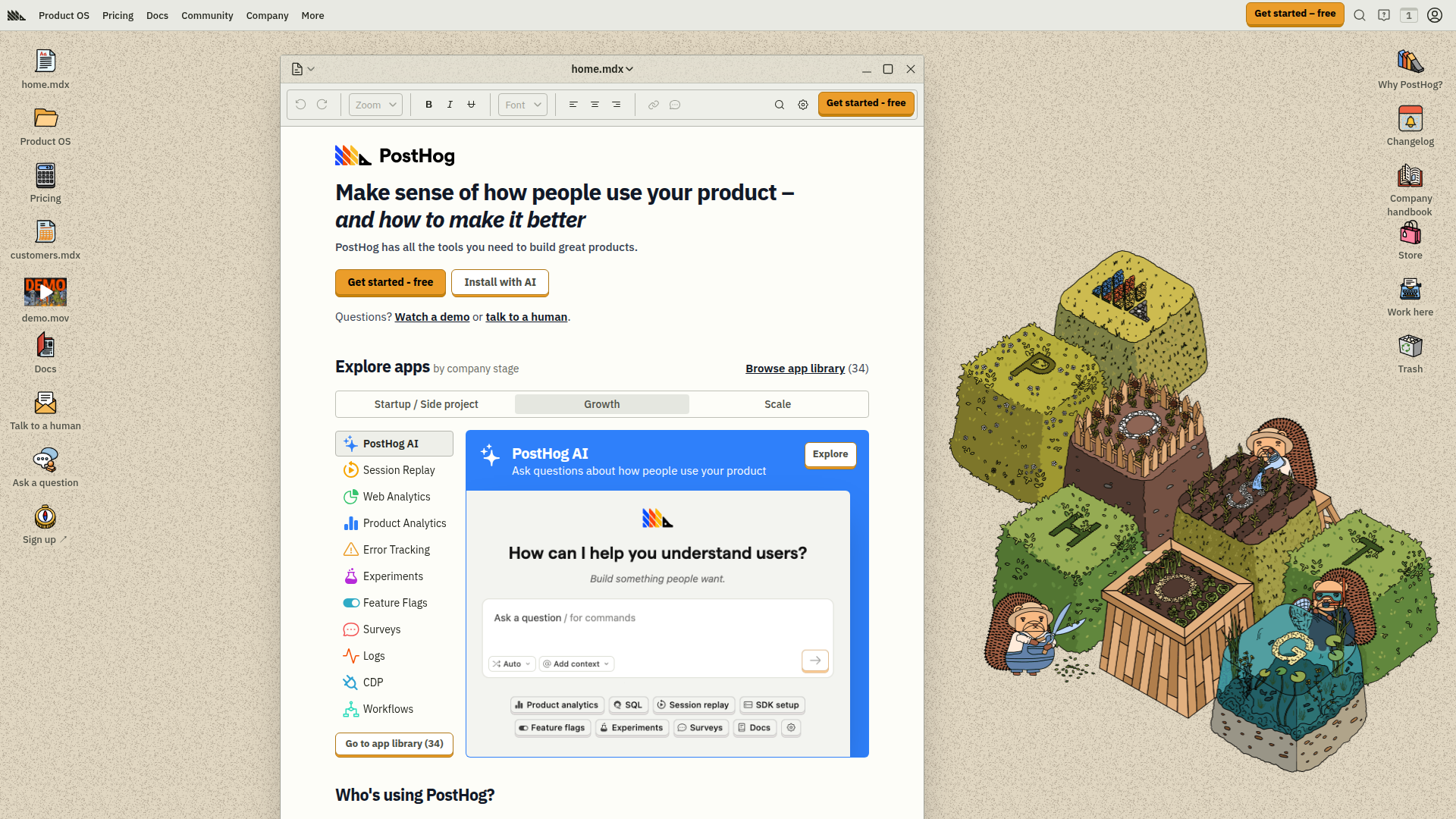
Price: Free up to 1M events/month, then usage-based
PostHog combines analytics, feature flags, session replay, and A/B testing in one platform. The free tier covers most early-stage startups, and the AI features help you spot trends automatically.
What We Liked
- Session replay shows exactly where users drop off
- Feature flags let you test features with select users first
- AI insights automatically flag unusual patterns
- Open-source and self-hostable if you want full control
What Could Be Better
- Overkill if you're pre-product/market fit
- Pricing can get expensive once you hit scale
- Steeper learning curve than Umami or Plausible
Growth Hacker Take: Wait until you have 1,000+ active users, then switch from Umami to PostHog. The session replays alone are worth it.
External links: PostHog Pricing | G2 Reviews
Layer 2: Automation Tools That Feel Human
This is where AI shines. You're capturing leads, sending emails, and nurturing prospects — all on autopilot, all with copy that sounds like you actually wrote it.
3. Resend — Email That Developers Actually Enjoy Using
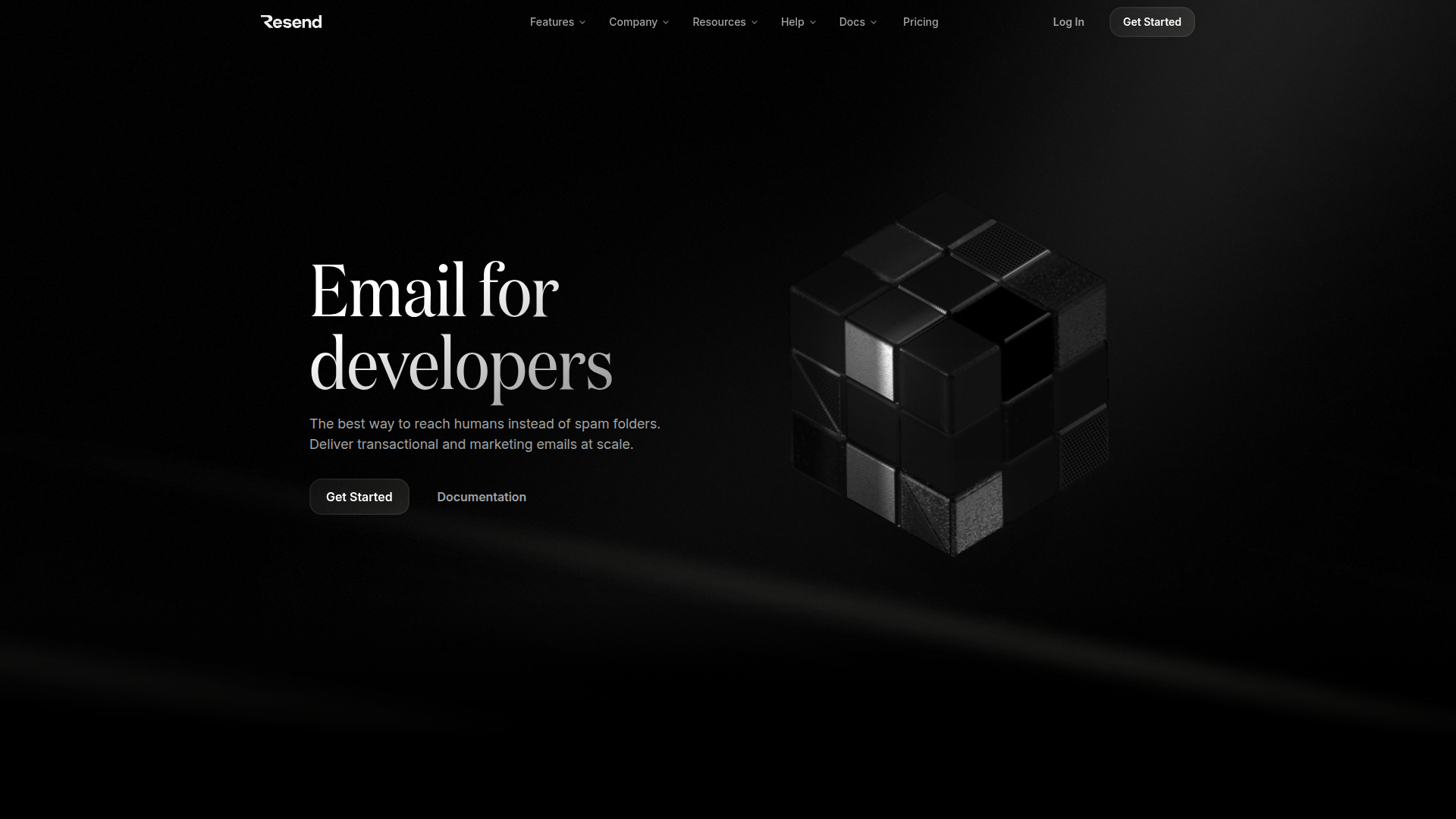
Price: Free up to 100 emails/day, then $20/month for 50K emails
Resend is what happens when developers get tired of Mailchimp's bloated UI. It's an email API with React components. Pair it with Claude to generate email sequences, and you've got marketing automation for $0-20/month.
What We Liked
- React Email components make designing emails actually fun
- 100 free emails/day is perfect for MVP launches
- Docs are phenomenal — Claude can generate working code in seconds
- Built-in analytics without needing external tracking pixels
What Could Be Better
- Requires basic coding knowledge (or AI assistance)
- No visual email builder for non-technical users
- Limited automation workflows compared to full-featured ESPs
Growth Hacker Take: If you're comfortable with code (or asking Claude for help), Resend is a no-brainer. Your emails will look better and cost less.
Resend Email API Tutorial
External links: Resend Pricing | Documentation
4. Tally — Forms That Don't Look Like Forms
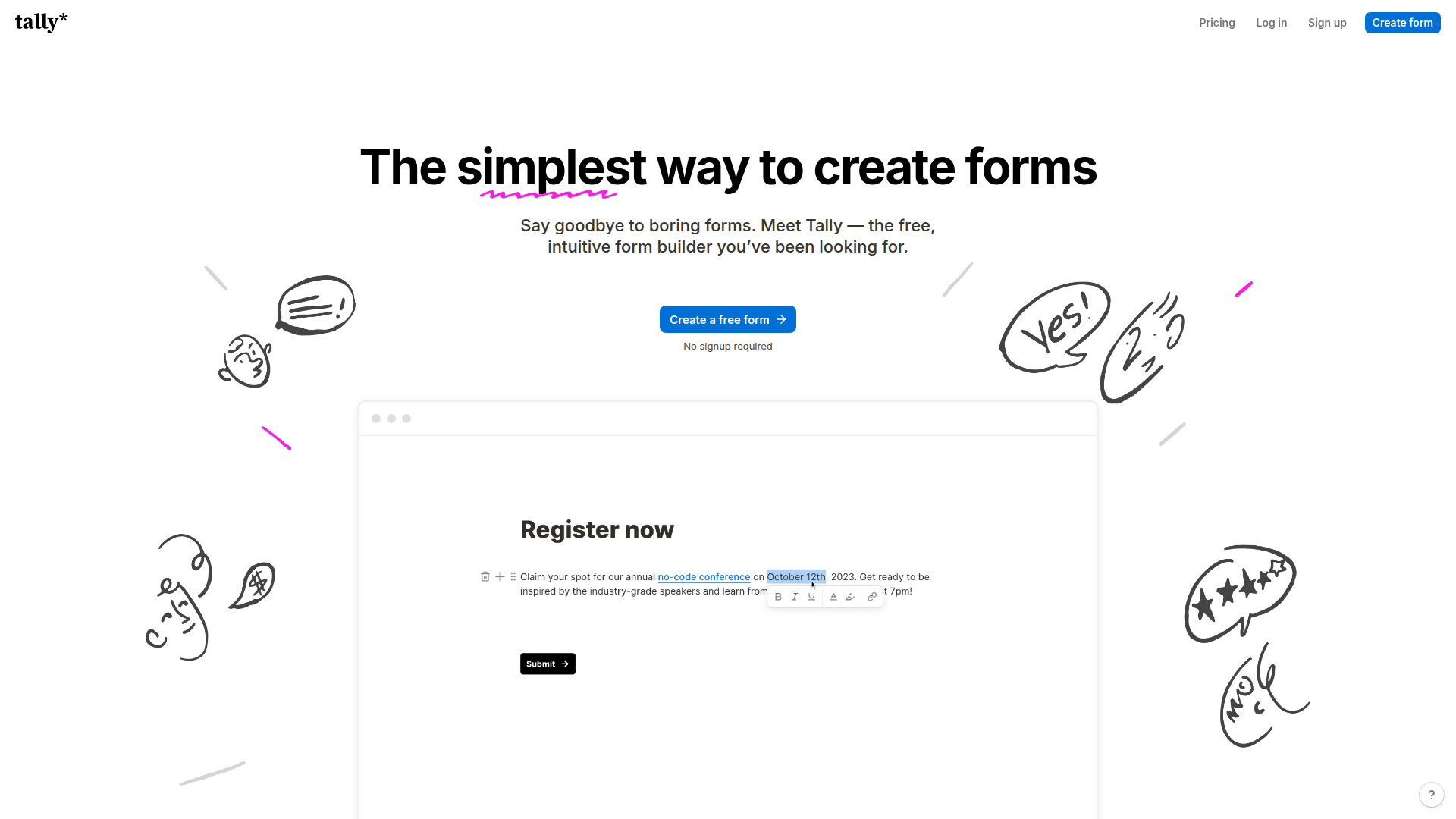
Price: Free (unlimited forms), Pro at $29/month
Tally is Typeform if Typeform wasn't trying to charge you $25/month for 10 responses. It's completely free for unlimited forms and submissions, with a beautiful interface. The Pro plan adds custom domains, file uploads, and payments, but the free tier covers most use cases.
What We Liked
- Actually free — no limits on forms or submissions
- Beautiful templates that you can customize without code
- Conditional logic and calculations built-in
- Webhook support means you can connect it to anything
What Could Be Better
- No native integrations (you'll need Zapier or Make for automation)
- Limited analytics compared to dedicated form builders
- File uploads and payments require Pro plan
Growth Hacker Take: Stop paying for Typeform. Tally does the same thing, looks just as good, and costs $0 for most use cases.
External links: Tally Pricing | Product Hunt Reviews
Layer 3: Retention Tools That Keep Customers Around
Getting users is hard. Keeping them is harder. The vibe marketing stack includes tools that help you stay connected without being annoying.
5. Crisp — Customer Support That Doesn't Require a Support Team
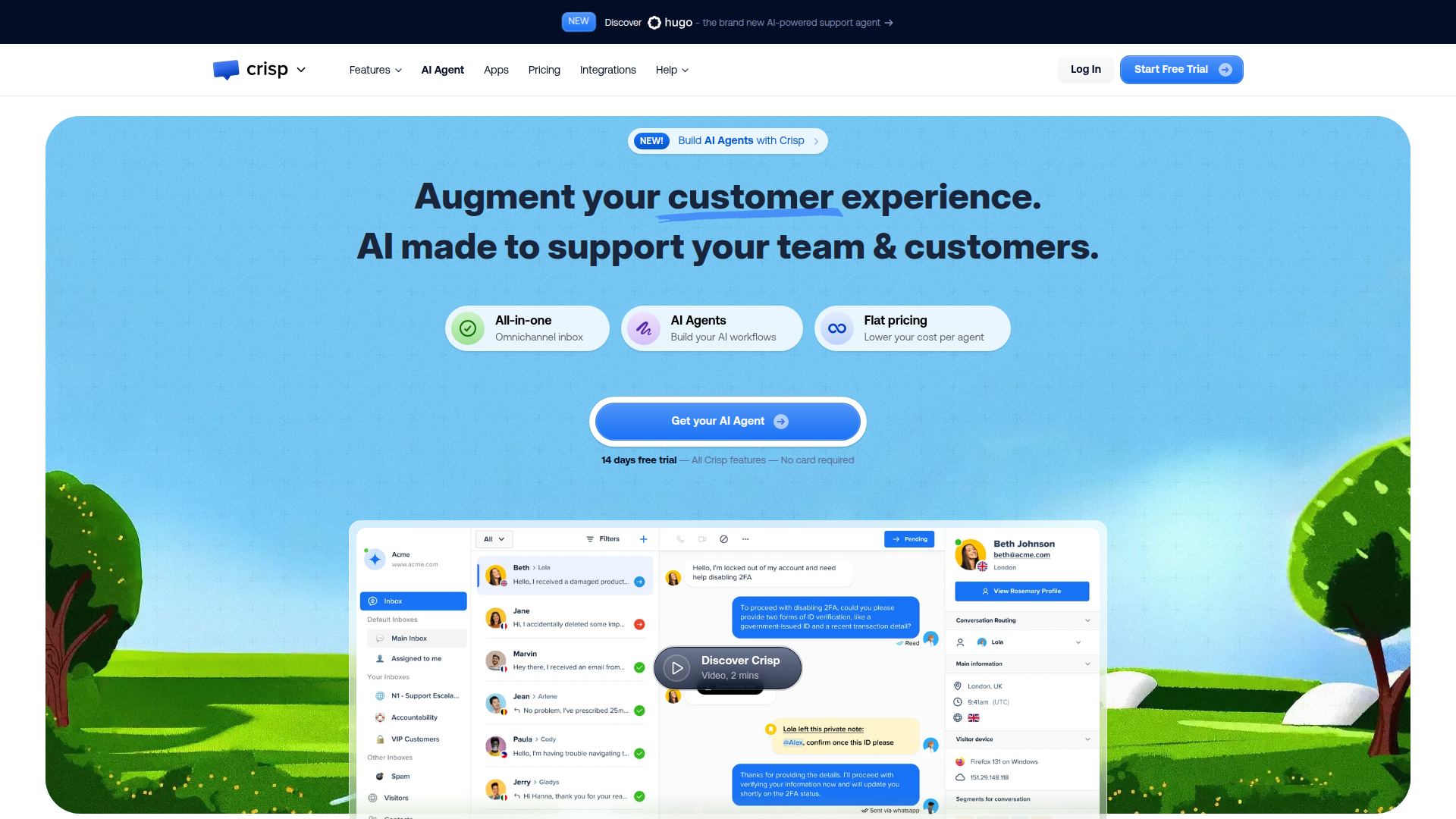
Price: Free for 2 seats, Pro at $25/month per workspace
Crisp is live chat, email, and AI chatbot rolled into one. The free tier includes unlimited conversations. You can train the AI bot on your docs and FAQs to handle 60-70% of basic questions automatically.
What We Liked
- Free tier includes AI chatbot and unlimited conversations
- Shared inbox keeps your team organized
- Mobile apps mean you can respond from anywhere
- Co-browsing feature helps you debug issues with users in real-time
What Could Be Better
- AI bot requires training — it's not plug-and-play
- Advanced features require Pro plan
- Free tier limits you to 2 team members
Growth Hacker Take: Install Crisp on day one. Even if you have zero customers, having a live chat widget builds trust.
Crisp Setup and AI Bot Configuration
External links: Crisp Pricing | G2 Reviews
6. Plausible Analytics — The Umami Alternative for Non-Devs
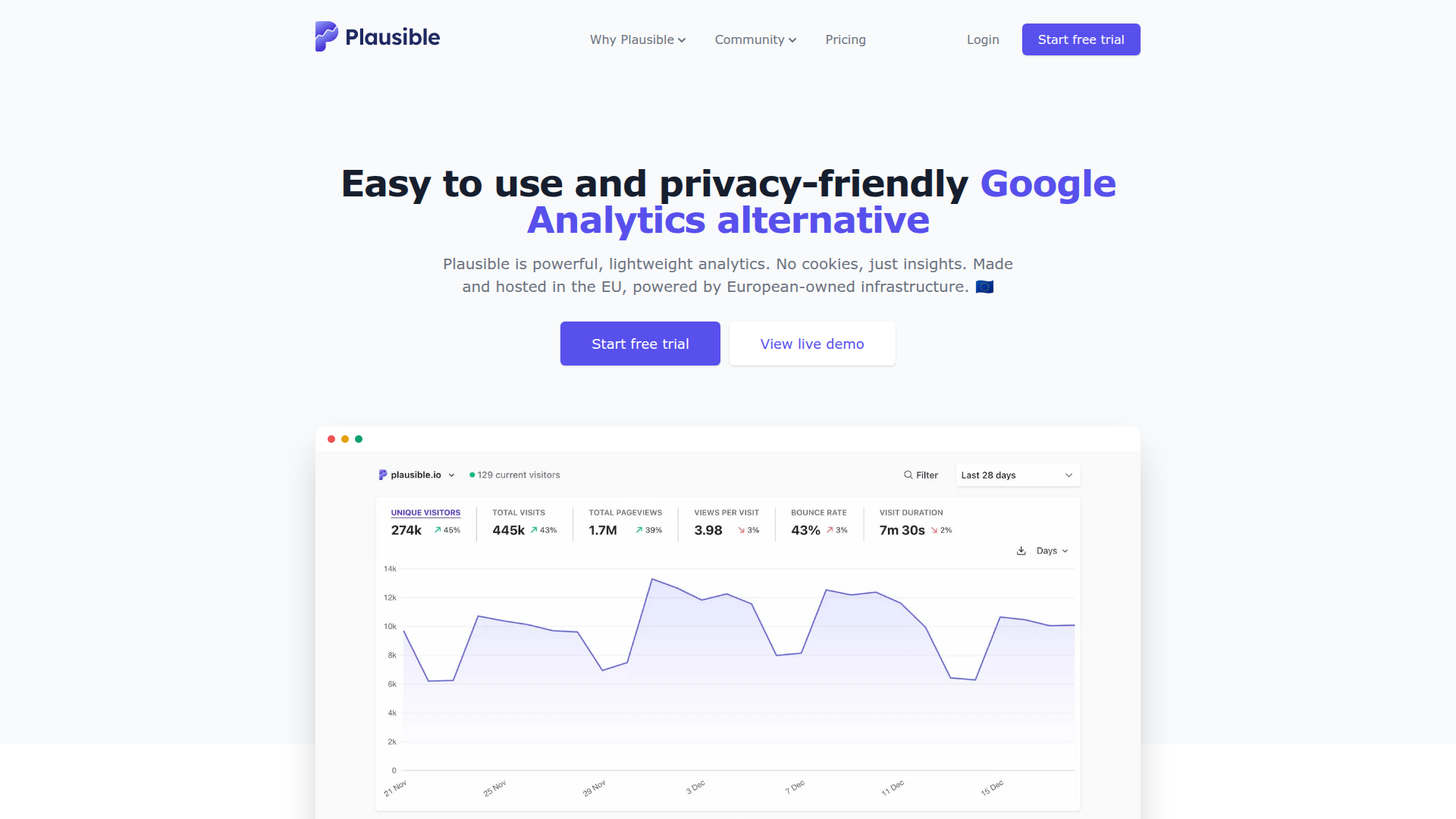
Price: $9/month for 10K monthly visitors
If self-hosting Umami sounds like too much work, Plausible is your plug-and-play alternative. It's privacy-focused, lightweight (under 1KB script), and setup takes 60 seconds.
What We Liked
- Lightest analytics script on the market (under 1KB)
- Setup takes literally 60 seconds
- Open-source and self-hostable if you change your mind later
- Email reports keep you updated without logging in daily
What Could Be Better
- No free tier — you're paying $9/month minimum
- Limited segmentation compared to PostHog
- No session replay or heatmaps
Growth Hacker Take: Choose Plausible if you want analytics that "just work" without thinking about hosting or configuration.
External links: Plausible Pricing | GitHub Repo
How to Choose the Right Tools for Your Vibe Marketing Stack
Building your stack depends on where you are in your journey:
- Pre-launch MVP: Umami + Tally + Resend. Total cost: $0-20/month.
- First 100 customers: Add Crisp for customer support.
- Growing to 1,000+ users: Upgrade to PostHog for deeper analytics and session replays.
- Scaling past $10K MRR: Consider paid tiers as revenue grows.
Every tool has a generous free tier or low entry price. Start with $0-30/month and scale gradually.
Frequently Asked Questions
Can I really build a marketing stack without coding?
Yes. Tools like Tally, Crisp, and Plausible are completely no-code. Resend and Umami require copy-pasting code snippets, but Claude can generate everything you need.
What's the minimum monthly budget for a vibe marketing stack?
$0-30/month covers most early-stage startups. Self-host Umami on Vercel (free), use Tally's free tier, stay under Resend's 100 emails/day limit, and use Crisp's free plan.
How does this compare to all-in-one platforms like HubSpot?
HubSpot costs $45-800/month. The vibe marketing stack is modular — you pay only for what you need and can swap pieces without migrating your entire system.
Which analytics tool should I start with — Umami or Plausible?
If you're comfortable with basic deployment, use Umami — it's free. If you want zero setup and don't mind paying $9/month, go with Plausible.
Can AI actually write good marketing copy?
Claude and GPT-4 can write copy that's 80-90% there if you give them context. You'll still need to edit for authenticity, but they eliminate the blank page problem.
How do I integrate these tools together?
Start with one tool per layer. Get comfortable with each before adding more. Use webhooks to connect them (Tally form → Resend email → Umami tracking). Claude can help you write integration code.
Ready to build your vibe marketing stack? Start with the free tier of each tool, ship your MVP, and scale as you grow. The best marketing stack is the one you actually use.
About the Author
Marco Delvane
Growth Team at Vibe Growth Stack. Tested 100+ growth tools so you don't have to. Writes about what actually works for startups — no fluff, no affiliate bias.
Related Articles
Get growth tips in your inbox
No-BS growth hacks, tool reviews, and best-value picks. Weekly.
Unsubscribe anytime. We hate spam too.