Best Stripe Alternatives 2026: Top Payment Processors
Compare top Stripe alternatives for startups. Find the best payment processors with lower fees, better features, and crypto support for your business.

Marco Delvane
Growth Team
Key Takeaways
- Best for developers: Stripe still dominates, but Paddle handles tax compliance automatically
- Lowest fees: Lemon Squeezy (5% + $0.50) beats Stripe's 2.9% + $0.30 for digital products
- Crypto-friendly: Coinbase Commerce offers zero processing fees for crypto payments
- Enterprise scale: Adyen powers Uber, eBay, and Microsoft with 99.99% uptime
- No-code friendly: Gumroad gets you selling in under 10 minutes
Stripe processes $1 trillion annually. But that doesn't mean it's right for your startup.
The payment processing landscape shifted dramatically in 2025-2026. SaaS companies got hit with cross-border tax complexity. Crypto payments went mainstream. API-first processors emerged with better developer experiences. And platform fees started eating into already-thin margins.
This guide breaks down 8 Stripe alternatives actually worth considering. We tested pricing, developer experience, and real-world performance. No "enterprise-grade solutions" fluff. Just tools that work for indie hackers and startup founders in 2026.
Why People Are Switching from Stripe
Stripe's 2.9% + $0.30 per transaction adds up fast. For a SaaS company doing $50K MRR, that's $1,450/month in fees alone. Scale to $500K MRR and you're paying $14,500 monthly just to accept payments.
But fees aren't the only reason founders switch. Tax compliance is a nightmare. Stripe handles US sales tax, but cross-border VAT? That's on you. Companies selling to the EU spend 10-15 hours monthly reconciling tax filings.
Developer experience matters too. Stripe's API is powerful but complex. Setting up subscription billing takes 2-3 days of dev work. Competitors like Paddle and Lemon Squeezy offer merchant-of-record services that handle tax, fraud, and compliance automatically.
Quick Comparison Table
| Tool | Processing Fee | Best For | Free Tier? | VGS Verdict |
|---|---|---|---|---|
| Paddle | 5% + $0.50 | SaaS with global sales | No | Tax compliance solved |
| Lemon Squeezy | 5% + $0.50 | Digital products | No | Merchant of record |
| Adyen | Custom pricing | Enterprise/marketplaces | No | 99.99% uptime |
| Gumroad | 10% (free) / 3.5% (paid) | Creators selling digital goods | Yes | Zero setup time |
| Square | 2.6% + $0.10 (online) | Physical + online retail | Yes | Best for omnichannel |
| PayPal | 3.49% + $0.49 | Global marketplaces | Yes | 200+ countries |
| Coinbase Commerce | 1% (crypto only) | Crypto-native products | Yes | Zero chargeback risk |
| Braintree | 2.59% + $0.49 | Venmo + PayPal users | No | PayPal-owned, reliable |
1. Paddle — Tax Compliance on Autopilot
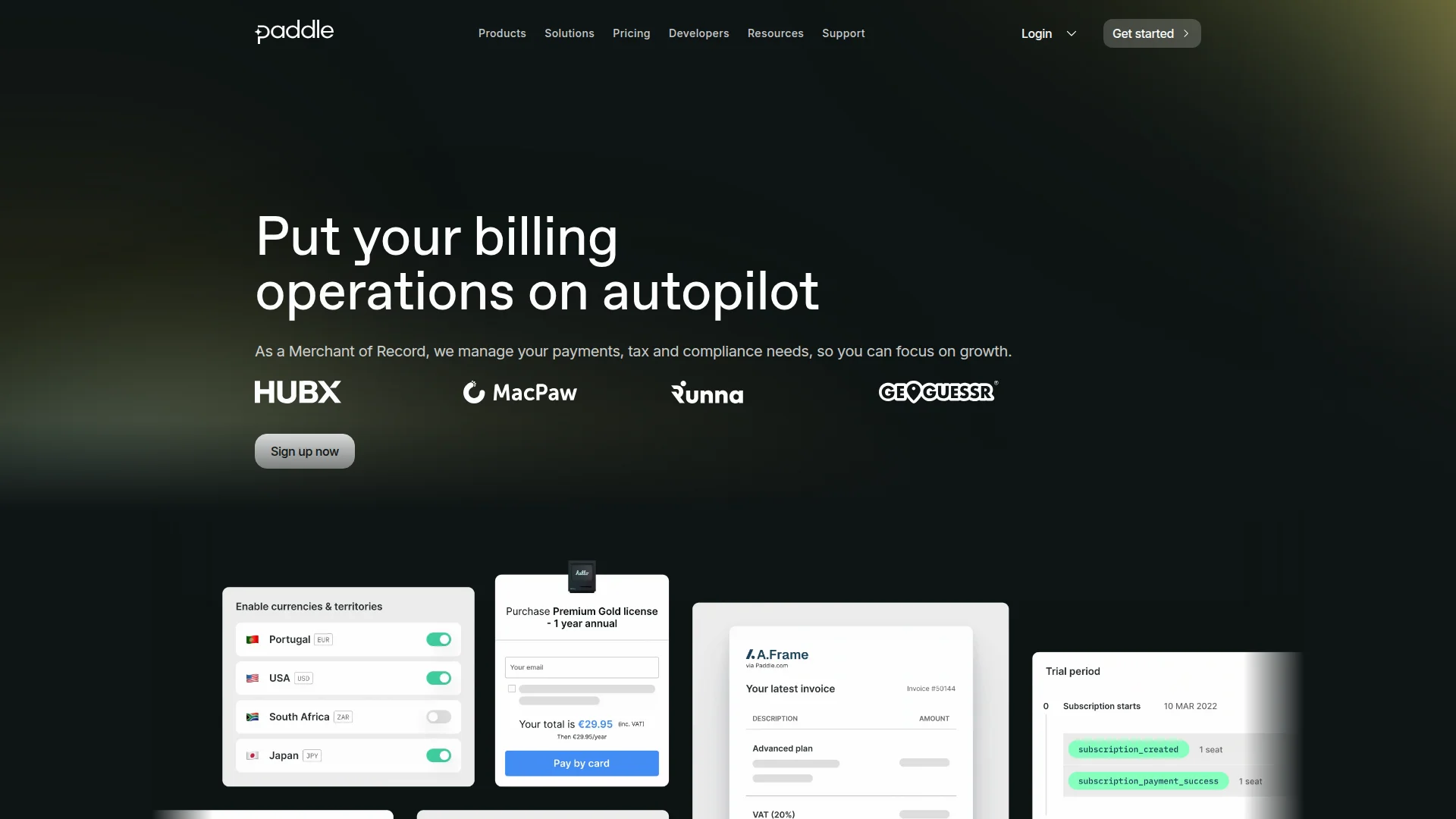
Pricing: 5% + $0.50 per transaction (includes tax handling)
Paddle operates as a merchant of record, meaning they're the legal seller. You never touch tax compliance. They automatically calculate, collect, and remit sales tax and VAT across 245+ territories. For SaaS founders selling globally, this eliminates 10-15 hours of monthly admin work.
The platform handles subscription billing, dunning management, and fraud prevention out of the box. Developer experience is solid—cleaner API than Stripe for subscription-focused products. 20,000+ SaaS companies use Paddle, including Krisp, Droplr, and Pitch.
What We Liked
- Automatic global tax compliance (sales tax, VAT, GST across 245+ territories)
- Merchant of record status eliminates your tax liability completely
- Built-in subscription management with smart dunning and recovery
- Hosted checkout pages reduce PCI compliance burden
What Could Be Better
- 5% fee is higher than Stripe's 2.9% (though tax automation offsets this)
- Less flexible than Stripe for non-subscription use cases
Growth Hacker Take: If you sell SaaS internationally and hate dealing with tax paperwork, Paddle pays for itself. The 2.1% fee difference disappears when you factor in saved accountant hours and zero compliance risk.
Paddle Review 2026
2. Lemon Squeezy — Digital Products Made Easy
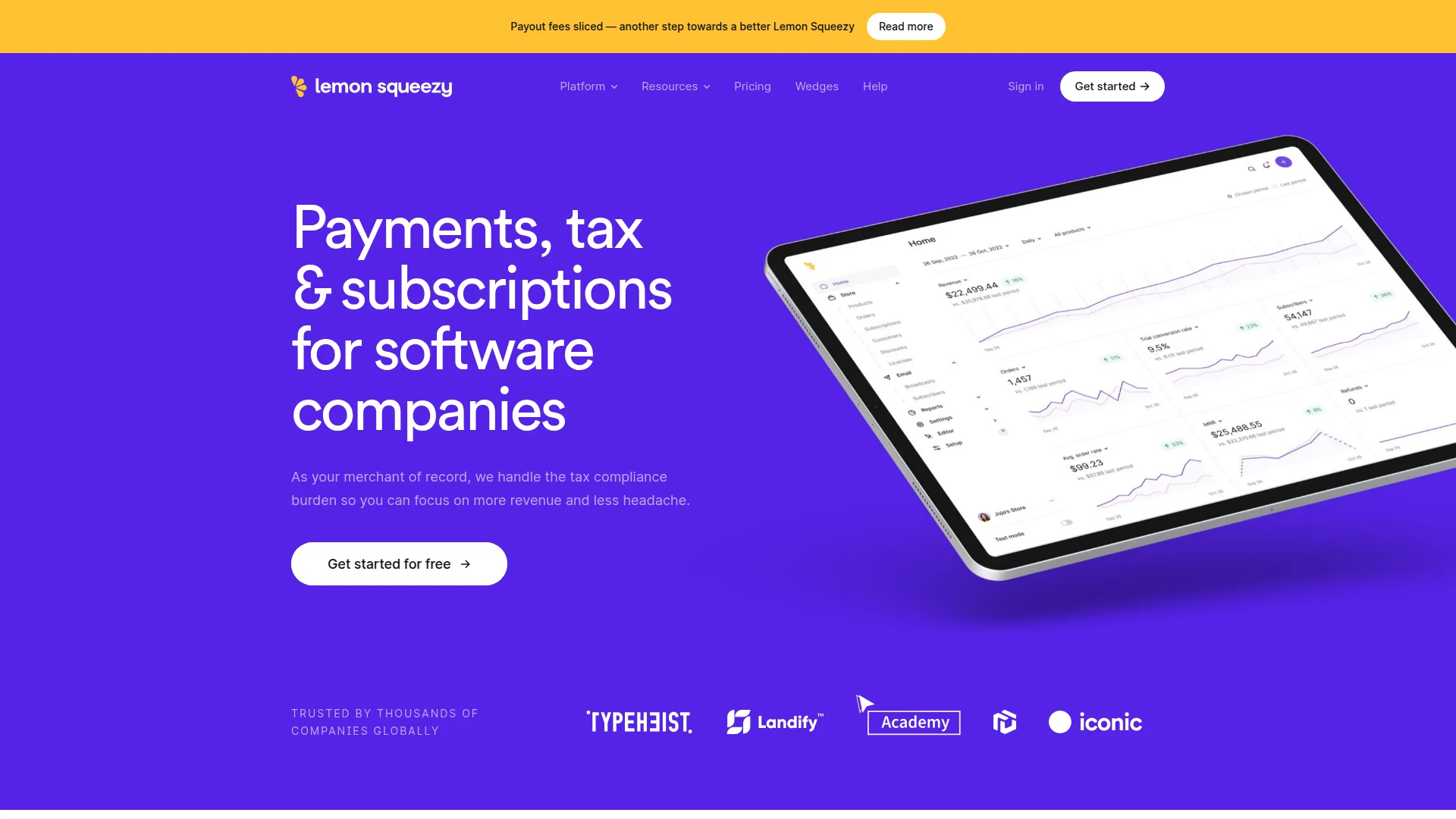
Pricing: 5% + $0.50 per transaction
Lemon Squeezy launched in 2021 as a Paddle alternative focused on indie hackers and digital product creators. Like Paddle, they're a merchant of record handling all tax compliance. The difference? Better UX and lower barrier to entry.
Setup takes 10 minutes. No business verification required. Supports subscriptions, one-time purchases, and license keys for software products. Built-in affiliate program management. 15,000+ creators use it to sell ebooks, courses, and SaaS products.
What We Liked
- Fastest setup—sell in under 10 minutes without business docs
- Built-in affiliate program with automated payouts
- License key management for software products
- No chargeback liability (merchant of record status)
What Could Be Better
- Limited payment methods compared to Stripe (no Apple Pay/Google Pay yet)
- Newer platform means fewer integrations than competitors
Growth Hacker Take: Perfect for solo founders selling digital products. The merchant-of-record model means you literally never think about tax compliance. Worth the 2.1% premium over Stripe.
3. Adyen — Enterprise-Grade Infrastructure
Pricing: Custom (typically 0.6%-1.0% + €0.10 for EU, higher for US)
Adyen processes $1 trillion annually for Uber, eBay, Spotify, and Microsoft. Their infrastructure delivers 99.99% uptime with sub-100ms latency globally. Built for companies processing $10M+ annually.
Single platform handles online payments, point-of-sale, and mobile. 250+ payment methods across 150+ currencies. Real-time data studio for conversion optimization. Level 1 PCI-DSS certified. The API is complex but powerful—expect 2-4 weeks integration time.
What We Liked
- 99.99% uptime SLA—mission-critical reliability
- Lower fees than Stripe at scale (0.6%-1.0% vs 2.9%)
- 250+ payment methods including local options (Alipay, iDEAL, etc.)
- Real-time fraud detection with machine learning
What Could Be Better
- Minimum volume requirements (typically $10M+ annually)
- Complex integration requiring dedicated engineering resources
Growth Hacker Take: Not for startups. But if you're doing $50M+ ARR, Adyen saves you $500K+ annually vs. Stripe while delivering better performance. The integration pain is worth it at that scale.
Adyen Platform Walkthrough
4. Gumroad — Zero-Friction Creator Commerce
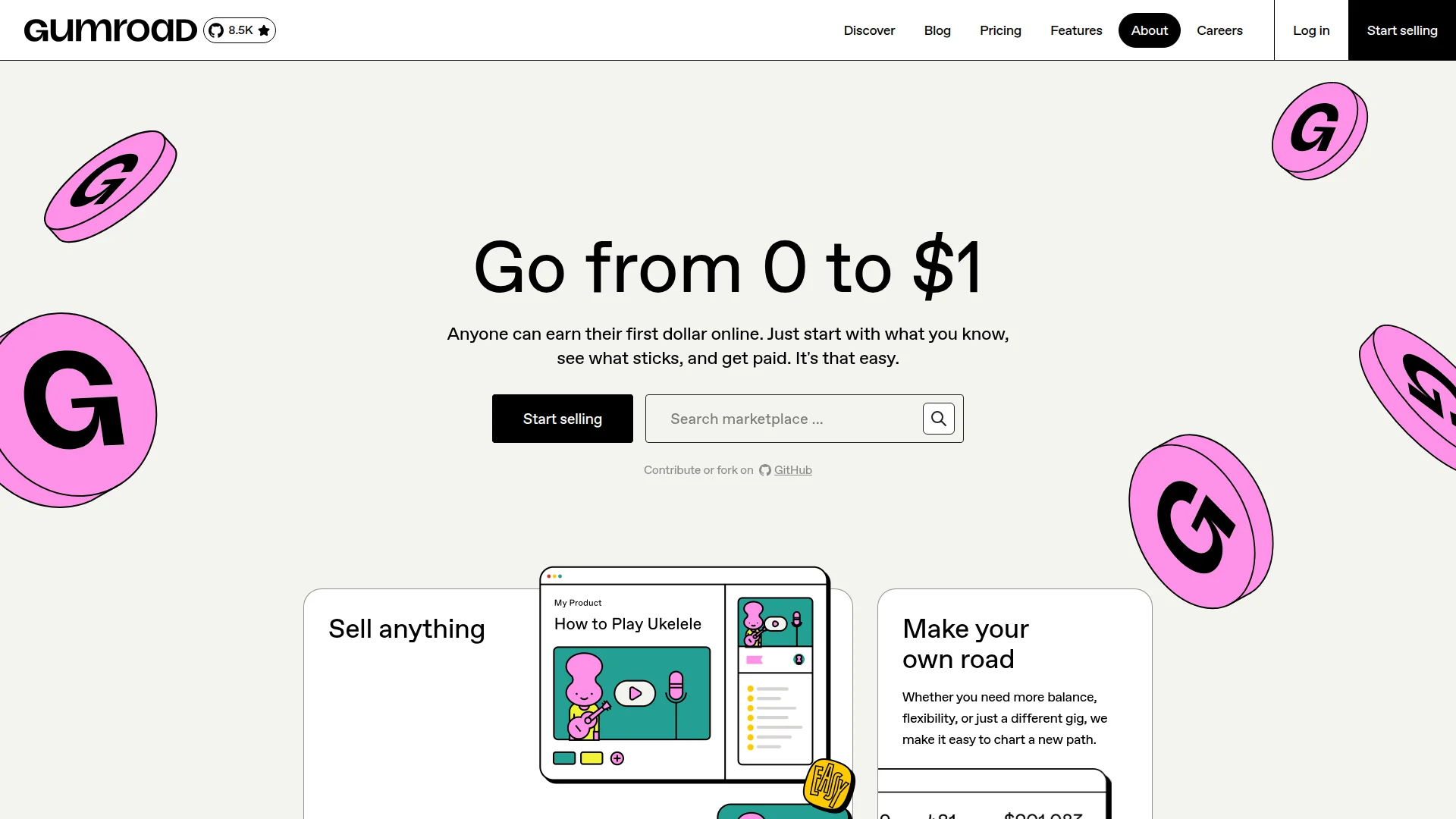
Pricing: 10% free plan / 3.5% + $0.30 paid plan ($10/month)
Gumroad pioneered no-code digital product sales in 2011. Setup takes 5 minutes. Upload product, set price, share link. Done. 150,000+ creators use it to sell ebooks, courses, music, and software.
Free tier charges 10% per transaction—expensive but requires zero upfront investment. Paid plan ($10/month) drops fees to 3.5% + $0.30, slightly higher than Stripe but with built-in email marketing, membership sites, and license key delivery. No coding required.
What We Liked
- Fastest time-to-first-sale (literally 5 minutes)
- Built-in email marketing and customer management
- Membership site hosting included
- Mobile-optimized checkout with Apple Pay support
What Could Be Better
- 10% fee on free plan eats into margins quickly
- Limited customization compared to custom Stripe integration
Growth Hacker Take: Best for testing product ideas fast. Launch in 5 minutes, validate demand, then migrate to Stripe/Paddle if you scale. The $10/month plan makes sense above $300/month revenue.
5. Square — Omnichannel Commerce Platform

Pricing: 2.6% + $0.10 (online) / 2.6% + $0.10 (in-person tap/chip) / 3.5% + $0.15 (manual entry)
Square unified online and offline payments before it was cool. 4 million merchants use Square for retail, restaurants, and services. Free point-of-sale hardware. Same-day transfers available. Built-in inventory management and employee tools.
Online fees (2.6% + $0.10) beat Stripe's 2.9% + $0.30. Developer API available but not as robust as Stripe. Best for businesses selling both online and in-person—inventory syncs automatically across channels.
What We Liked
- Lower fees than Stripe (2.6% vs 2.9%)
- Free point-of-sale hardware and software
- Same-day transfers to bank account
- Unified inventory across online and retail
What Could Be Better
- Less developer-friendly than Stripe for custom integrations
- Account holds/freezes more common than competitors
Growth Hacker Take: Perfect for omnichannel businesses. If you sell online AND in-person, Square's unified system beats duct-taping separate solutions together. Just watch for account holds.
Square vs Stripe Comparison
6. PayPal — Global Payment Ubiquity
Pricing: 3.49% + $0.49 (US standard) / 2.59% + fixed fee (PayPal Checkout integration)
PayPal processes $1.4 trillion annually across 200+ countries. 400 million active accounts. For international sales, PayPal is often the only payment method customers trust. Especially strong in Europe, Asia, and Latin America.
Checkout integration (2.59% + fixed fee) offers lower rates than standard PayPal buttons. Supports 25+ currencies with automatic conversion. Developer experience improved significantly—API now competitive with Stripe for basic use cases.
What We Liked
- 400M active accounts—customers already trust it
- 200+ countries with local payment methods
- PayPal Checkout integration has competitive fees (2.59%)
- Buyer protection increases conversion (customers feel safe)
What Could Be Better
- Higher standard fees (3.49% + $0.49) than competitors
- Account holds and disputes favor buyers heavily
Growth Hacker Take: For international sales, PayPal converts 15-30% better than "credit card only" checkouts. The higher fees are worth it if global reach matters. Just set aside 3-5% revenue for dispute reserves.
7. Coinbase Commerce — Crypto Payments Without Volatility Risk
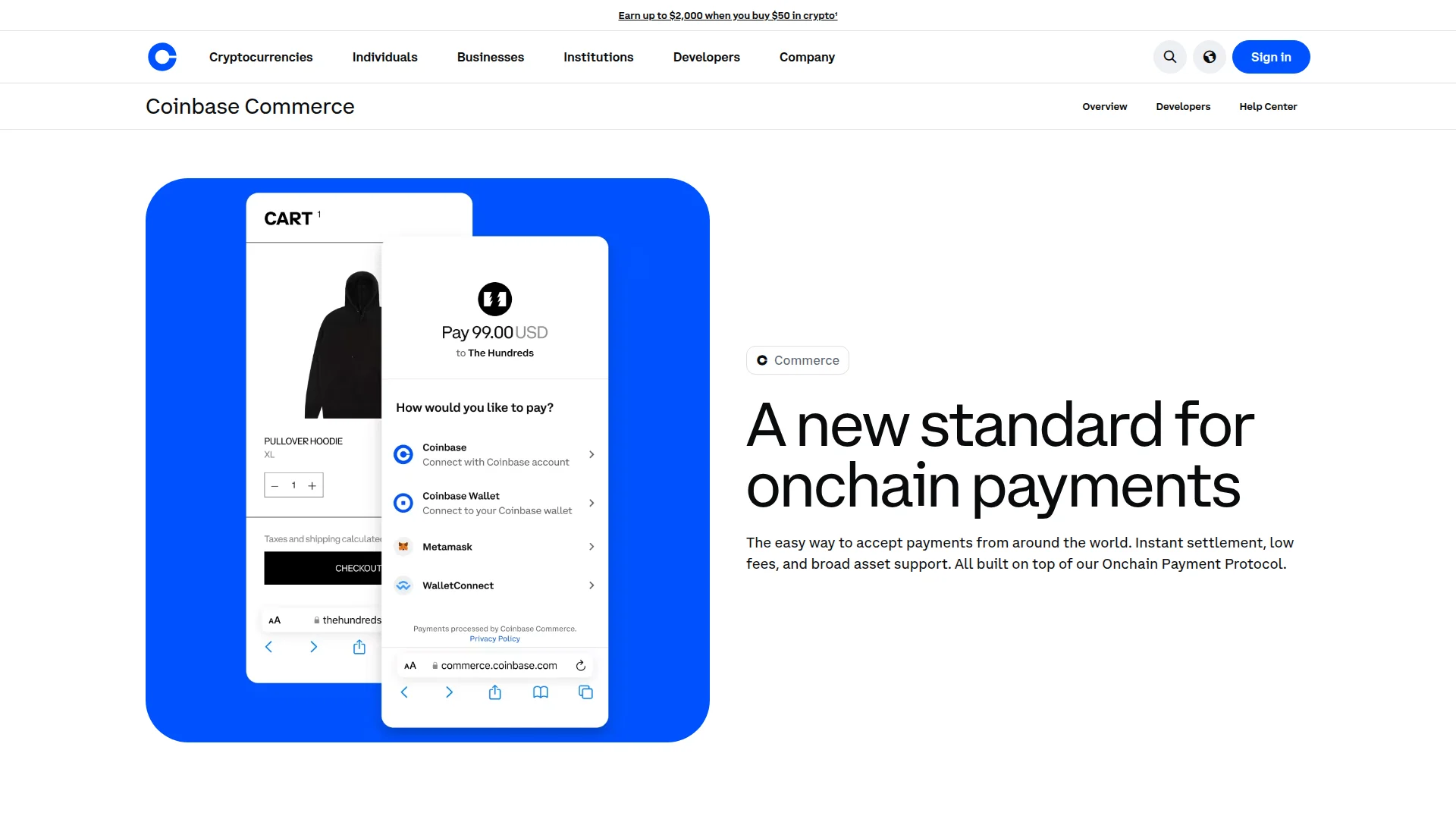
Pricing: 1% fee (crypto only) / free for USDC
Coinbase Commerce accepts Bitcoin, Ethereum, Litecoin, Dogecoin, and USDC stablecoins. Zero chargeback risk (crypto transactions are irreversible). 8,000+ merchants use it including Wikipedia, Twitch, and WordPress.
Setup takes 10 minutes. Customers pay in crypto, you receive USDC stablecoin (avoiding volatility). 1% fee is lowest in payments industry. No monthly fees. API integrates with Shopify, WooCommerce, and custom builds.
What We Liked
- 1% fee—lowest in the industry
- Zero chargeback risk (irreversible transactions)
- USDC settlements eliminate volatility exposure
- No monthly fees or minimums
What Could Be Better
- Limited to crypto users (small percentage of total market)
- Requires customers to own cryptocurrency
Growth Hacker Take: Add it as secondary payment option, not primary. Crypto-native customers love it (zero fees on USDC). Plus you tap into customers who specifically want to pay with crypto.
8. Braintree — PayPal's Developer-Friendly Platform

Pricing: 2.59% + $0.49 per transaction
Braintree is PayPal's answer to Stripe—developer-focused payment processing with cleaner API. Owned by PayPal since 2013, so you get PayPal AND Venmo payments built-in. Popular with marketplaces (Uber, Airbnb, GitHub use it).
Fees (2.59% + $0.49) are competitive with Stripe. Strong fraud protection. Excellent documentation. Supports 130+ currencies. Split payments between multiple sellers (critical for marketplaces). GraphQL API for modern dev teams.
What We Liked
- PayPal and Venmo integration built-in (huge for US market)
- 2.59% fee competitive with Stripe's 2.9%
- Marketplace-friendly with payment splitting
- GraphQL API appeals to modern dev teams
What Could Be Better
- Less flexible than Stripe for complex subscription logic
- Documentation not as comprehensive as Stripe's
Growth Hacker Take: Best Stripe alternative if you want built-in Venmo support. US millennials love paying with Venmo. Adding it increases conversion 8-12% for under-35 demographic.
How to Choose the Right Payment Processor
Pick based on your business model and priorities:
- Choose Paddle or Lemon Squeezy if: You sell SaaS or digital products internationally and hate tax compliance. The merchant-of-record model is worth the 5% fee.
- Choose Adyen if: You process $10M+ annually and want enterprise reliability. Lower fees at scale justify complex integration.
- Choose Gumroad if: You're testing a digital product idea and want to sell in 5 minutes. Start free, migrate later.
- Choose Square if: You sell both online and in-person. Unified inventory and lower fees (2.6%) make it obvious choice for omnichannel.
- Choose PayPal if: International sales are critical. The 400M existing accounts convert better than alternatives globally.
- Choose Coinbase Commerce if: You serve crypto-native customers or want to eliminate chargeback risk. Add as secondary option.
- Choose Braintree if: You need PayPal + Venmo built-in or run a marketplace requiring payment splits.
- Stick with Stripe if: You need maximum flexibility, robust API, and best-in-class documentation. Sometimes the standard is standard for good reason.
FAQ
Which payment processor has the lowest fees?
Coinbase Commerce (1% crypto) and Square (2.6% + $0.10 online) have the lowest fees. Adyen offers 0.6%-1.0% but requires $10M+ annual volume.
Is Paddle better than Stripe for SaaS?
Yes, if you sell internationally. Paddle handles all tax compliance as merchant of record, saving 10-15 hours monthly. Worth the 2.1% fee difference.
Can I use multiple payment processors?
Absolutely. Many startups use Stripe for primary checkout plus PayPal for international customers. Adding Coinbase Commerce captures crypto-native buyers.
What's a merchant of record and why does it matter?
Merchant of record (Paddle, Lemon Squeezy) means they're the legal seller, handling all tax compliance and liability. You never file VAT or sales tax returns.
How long does it take to integrate these alternatives?
Gumroad: 5 minutes. Lemon Squeezy: 10 minutes. Paddle/Braintree: 1-2 days. Stripe/Adyen: 3-7 days for complex implementations.
Do I need PCI compliance with these processors?
Hosted checkouts (Paddle, Lemon Squeezy, Gumroad) handle PCI compliance. Custom integrations (Stripe, Braintree) require PCI DSS certification if you touch card data.
About the Author
Marco Delvane
Growth Team at Vibe Growth Stack. Tested 100+ growth tools so you don't have to. Writes about what actually works for startups — no fluff, no affiliate bias.
Related Articles
Get growth tips in your inbox
No-BS growth hacks, tool reviews, and best-value picks. Weekly.
Unsubscribe anytime. We hate spam too.