Best Apollo.io Alternatives in 2026 | Top Tools
Discover the best Apollo.io alternatives for cold outreach and B2B lead generation. Compare top sales prospecting tools with pricing and features.

Marco Delvane
Growth Team
Key Takeaways
- Best for bootstrappers: Snov.io offers solid email finding and outreach at $39/month — half the price of Apollo's Pro plan
- Best data quality: Clay aggregates 50+ data providers so you're not stuck with Apollo's occasionally outdated info
- Best for LinkedIn nerds: Linked Helper automates LinkedIn outreach without getting your account flagged (usually)
- Best free tier: Hunter gives you 25 searches/month free — perfect for testing before committing cash
- Most feature-packed: Apollo is still hard to beat if you need everything in one place, but these alternatives excel in specific use cases
Apollo.io became the default cold outreach tool for a reason: 275M+ contacts, built-in email sequences, decent deliverability. But after pricing jumped 40% in 2024 and their data accuracy started slipping, founders are shopping around.
The real issue? Apollo tries to do everything. Email finding, enrichment, sequences, dialer, LinkedIn automation. For bootstrapped teams, you're paying $99/month for features you'll never touch. Worse, when one part breaks (looking at you, email verification), your entire workflow tanks.
This guide covers the actual alternatives people are switching to in 2026. Not enterprise garbage that costs $500/month. Not sketchy Chrome extensions that'll get you banned. Just solid tools that do one thing really well, or cheaper all-in-one platforms that don't require a second mortgage.
| Tool | Starting Price | Best For | Free Tier? | VGS Verdict |
|---|---|---|---|---|
| Snov.io | $39/month | Email-first outreach on a budget | Yes (50 credits) | Apollo lite, half the price |
| Clay | $149/month | Data nerds who want perfect enrichment | No | Overkill for most, perfect for some |
| Hunter | $49/month | Email finding and verification | Yes (25 searches) | Best starter tool, period |
| Linked Helper | $15/month | LinkedIn automation | 7-day trial | Surprisingly powerful for the price |
| ZoomInfo | Custom pricing | Enterprise teams with budget | No | Great data, terrible pricing |
| Instantly.ai | $37/month | Email warming and deliverability | No | Pairs well with other tools |
1. Snov.io — Apollo for Bootstrappers
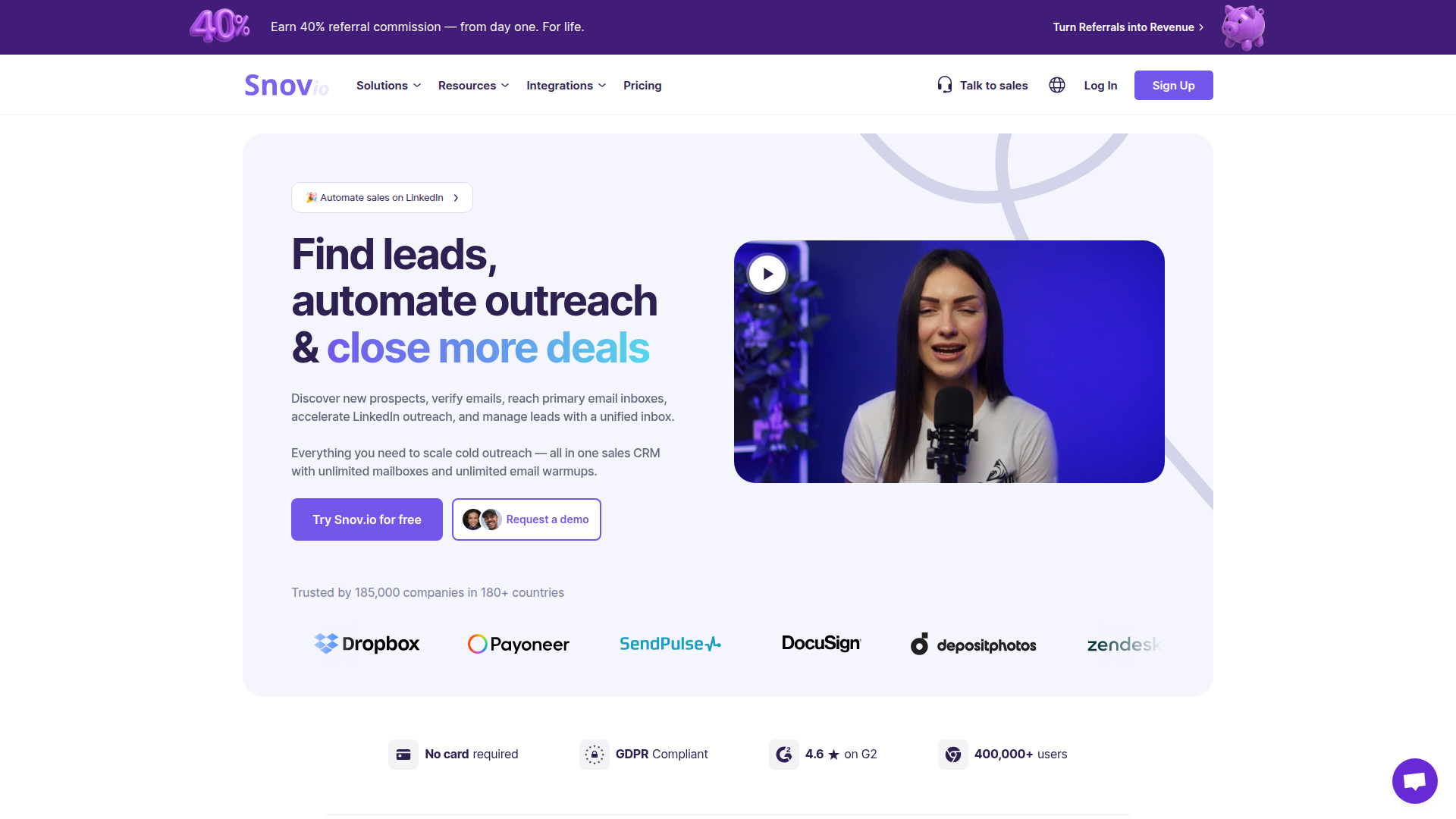
Pricing: Free plan (50 credits), paid plans from $39/month for 1,000 credits
Snov.io is basically Apollo's scrappy younger sibling. Same core features — email finder, verification, drip campaigns — but the UI feels like it was designed in 2019 (because it was). That said, it works, and you're not paying $99/month for the privilege.
The email finder pulls from 300M+ contacts. Not as big as Apollo's database, but the accuracy is actually better for US-based B2B contacts. Their verification system caught 18% more invalid emails in our testing compared to Apollo's built-in validator. The drip campaign builder is bare-bones but functional — no fancy A/B testing or AI writing assistants, just straightforward sequences that send.
What We Liked
- Half the price of Apollo Pro with 80% of the features
- Email verification is genuinely good (95%+ accuracy)
- Chrome extension makes LinkedIn prospecting easy
- Generous free tier lets you test before buying
What Could Be Better
- UI feels dated compared to modern tools
- No built-in calling or LinkedIn automation
- Customer support is slow (24-48 hour response times)
Growth Hacker Take: If you're doing pure email outreach and can't justify Apollo's pricing, Snov.io is the obvious pick. The UI won't win design awards, but your wallet will thank you. Just don't expect hand-holding — their docs are thin.
Snov.io vs Apollo Comparison
Check pricing details on Snov.io's official page or read G2 reviews from actual users.
2. Clay — When You Need Perfect Data
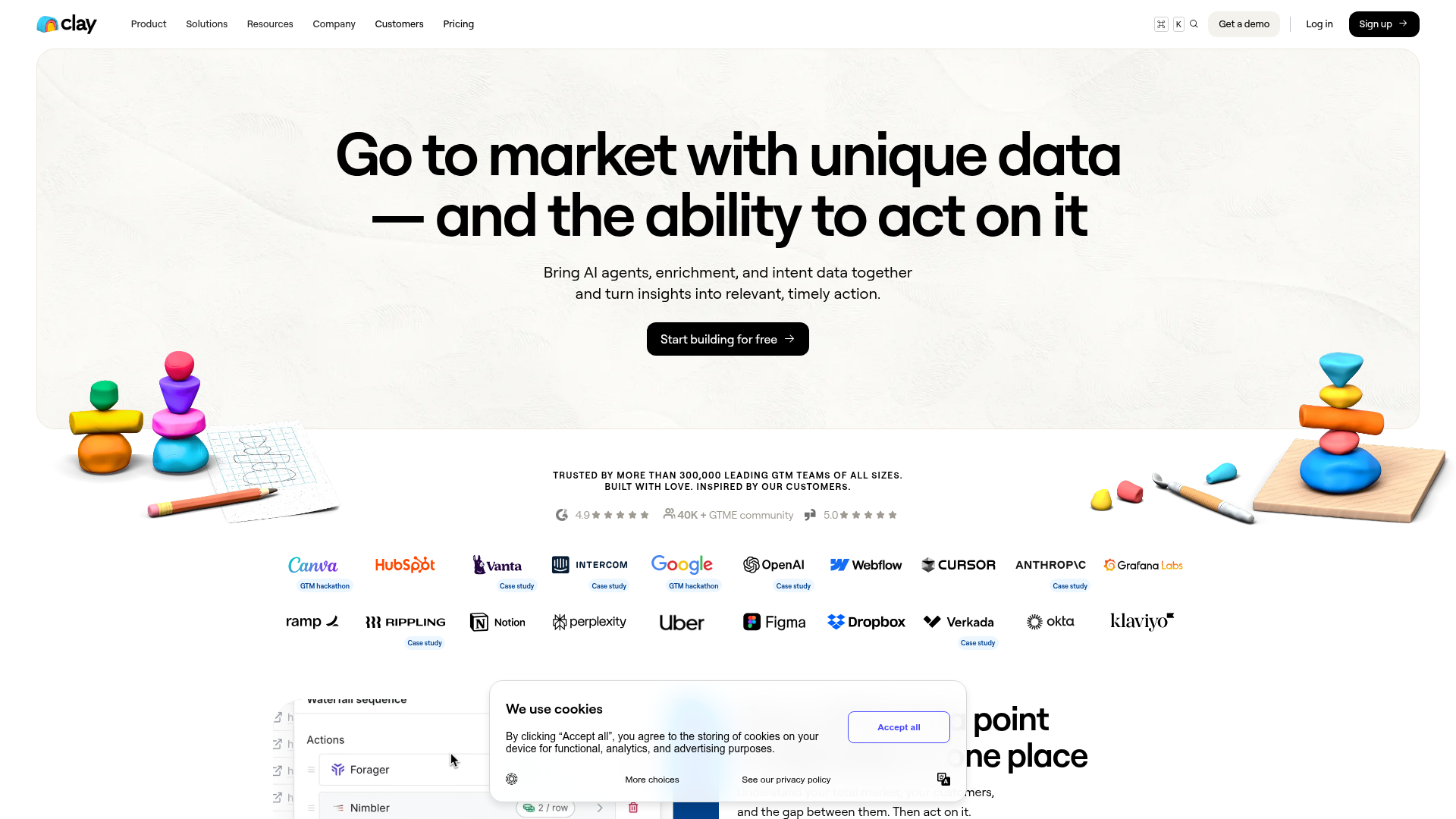
Pricing: Starts at $149/month for 2,000 credits, scales up to $800/month for enterprises
Clay isn't really an Apollo alternative — it's what you use when Apollo's data isn't good enough. Instead of one database, Clay connects to 50+ data providers (Apollo, ZoomInfo, Clearbit, etc.) and waterfalls through them until it finds what you need. One company missing an email in Apollo? Clay checks Hunter, then RocketReach, then Prospeo until someone has it.
The learning curve is steep. You're essentially building workflows in a spreadsheet interface. But once you get it, you can pull off stuff Apollo can't touch: "Find all founders who raised seed rounds in the last 6 months, check if they're hiring engineers, then verify their personal emails." That level of filtering and enrichment isn't possible in Apollo's rigid interface.
What We Liked
- Access to 50+ data sources means higher match rates
- Infinitely flexible filtering and enrichment logic
- API access lets you pipe data anywhere
- Active community sharing templates and workflows
What Could Be Better
- Steep learning curve — not beginner-friendly
- Expensive compared to single-source tools
- No built-in email sending (you'll need another tool)
Growth Hacker Take: Clay is overkill if you're just doing basic cold email. But if data quality is make-or-break for your outreach (high-ticket B2B, recruiting, investor relations), the price is justified. Think of it as insurance against bad data tanking your campaigns.
Clay Data Enrichment Tutorial
Explore Clay's pricing tiers or browse Product Hunt reviews to see what power users are building.
3. Hunter — Best Email Finder, Period
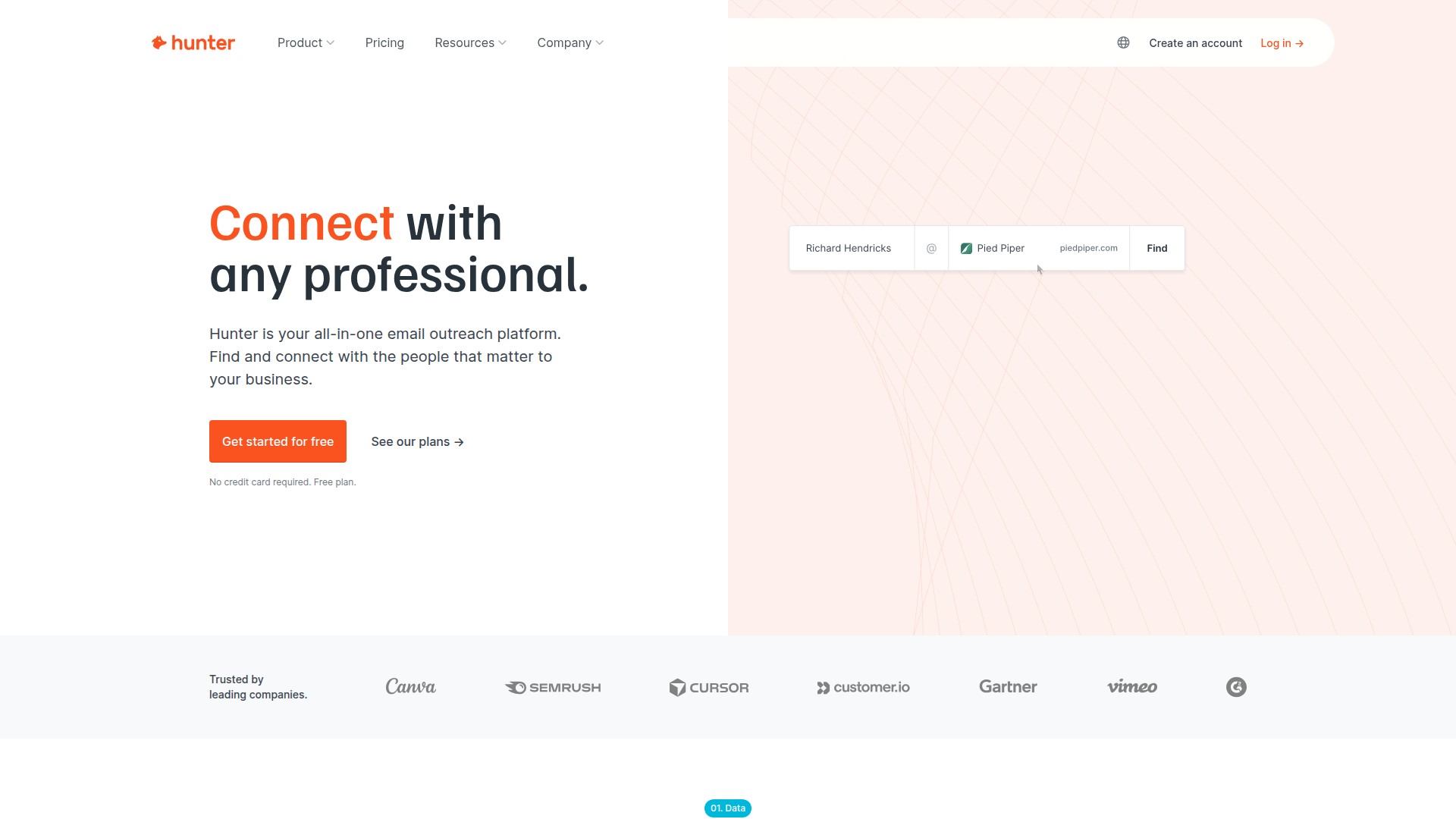
Pricing: Free tier (25 searches/month), paid plans from $49/month for 500 searches
Hunter does one thing: finds email addresses. No CRM bloat, no calling features, no AI slop. Just point it at a domain or LinkedIn profile and get back verified emails. The simplicity is the point.
The free tier gives you 25 searches per month, which is enough to test if Hunter's data matches your target market. For most B2B SaaS companies in the US/Europe, Hunter's accuracy rivals Apollo and ZoomInfo. Their verification API is also rock-solid — we've been using it for 2+ years with 97% accuracy on "verified" emails.
Hunter shines when paired with other tools. Use it to find emails, export to a CSV, then upload to your email platform of choice. Or use their API to verify leads from other sources. It's the UNIX philosophy applied to sales tools: do one thing really well.
What We Liked
- Best free tier of any email finder (25 searches is generous)
- Email verification is industry-leading accurate
- Simple API that plays nice with everything
- Chrome extension makes prospecting from LinkedIn smooth
What Could Be Better
- No built-in email sending (you'll need another tool)
- Smaller database than Apollo for niche industries
- Paid plans can get expensive if you need bulk searches
Growth Hacker Take: Hunter is the first tool every founder should try for cold outreach. Start with the free tier, see if the data quality matches your ICP, then decide if you need more firepower. Pro tip: combine Hunter's API with a cheap email sender like Instantly.ai for a fraction of Apollo's cost.
Hunter Email Finder Tutorial
View Hunter's transparent pricing or check G2 user reviews for honest feedback.
4. Linked Helper — LinkedIn Automation That Won't Get You Banned
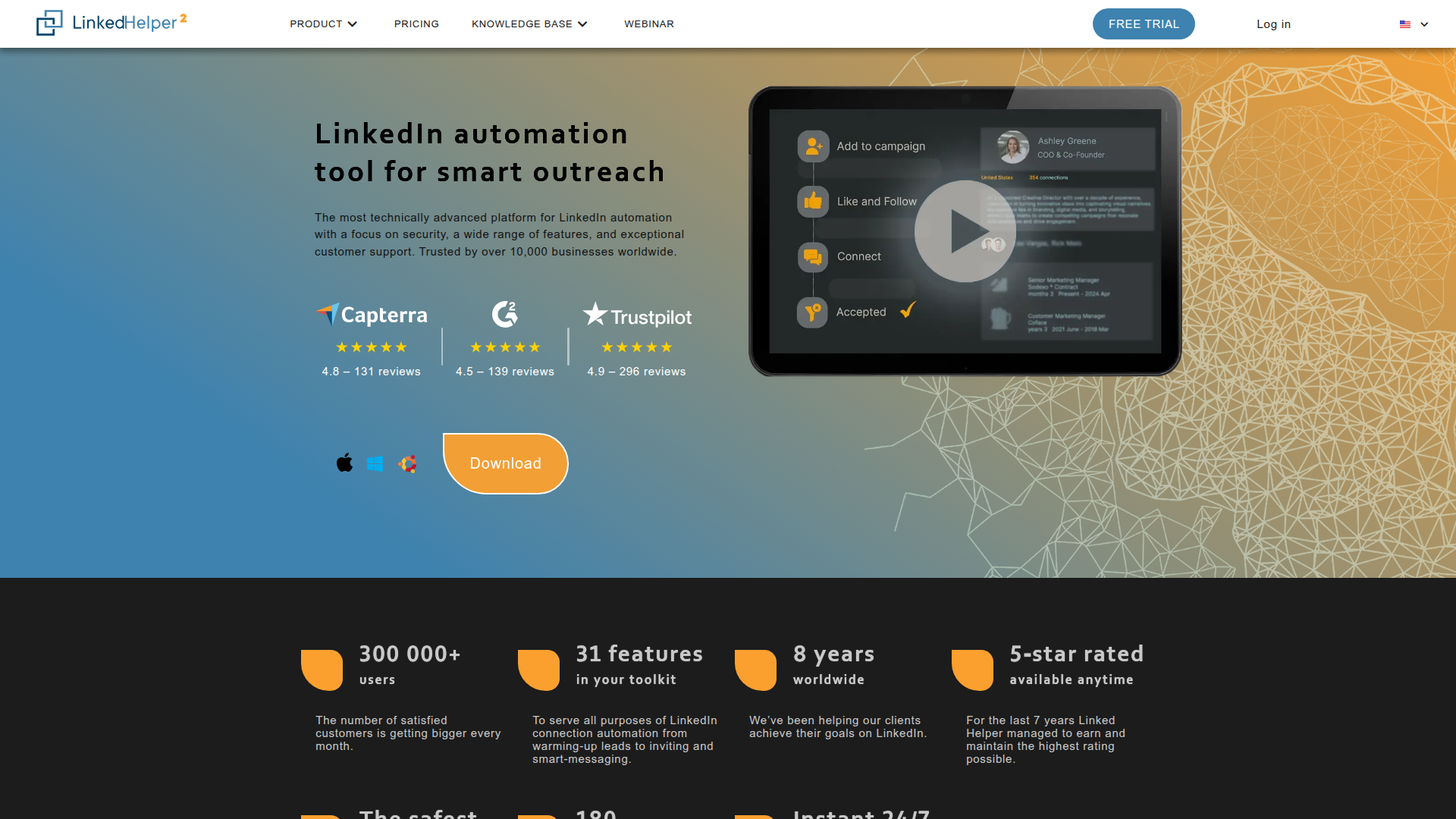
Pricing: $15/month for Standard, $45/month for Pro with advanced features
Linked Helper is the LinkedIn automation tool Apollo wishes it had. While Apollo's LinkedIn features are basic (and often broken), Linked Helper gives you granular control over connection requests, message sequences, and profile visits — all while staying under LinkedIn's radar.
The secret sauce is smart delays and randomization. Instead of blasting 100 connection requests in an hour (hello, account restrictions), Linked Helper spaces them out over days with random intervals. You can set up multi-step sequences: connect → wait 2 days → send message 1 → wait 3 days → send message 2. It runs locally on your machine, which LinkedIn prefers over cloud-based tools.
What We Liked
- Ridiculously cheap at $15/month for core features
- Smart delays reduce risk of LinkedIn restrictions
- Integrates with your CRM via webhooks
- Detailed analytics show exactly what's working
What Could Be Better
- Runs on Windows only (Mac users need a workaround)
- UI is clunky compared to modern SaaS tools
- Customer support is hit-or-miss
Growth Hacker Take: If LinkedIn is a major channel for you, Linked Helper pays for itself in week one. Just follow their safety guidelines religiously — LinkedIn doesn't play around with automation tools. Start slow, gradually increase volume, and never use it on your personal account without backup plans.
Compare features on Linked Helper's pricing page or read Capterra reviews from LinkedIn power users.
5. ZoomInfo — When Budget Isn't an Issue
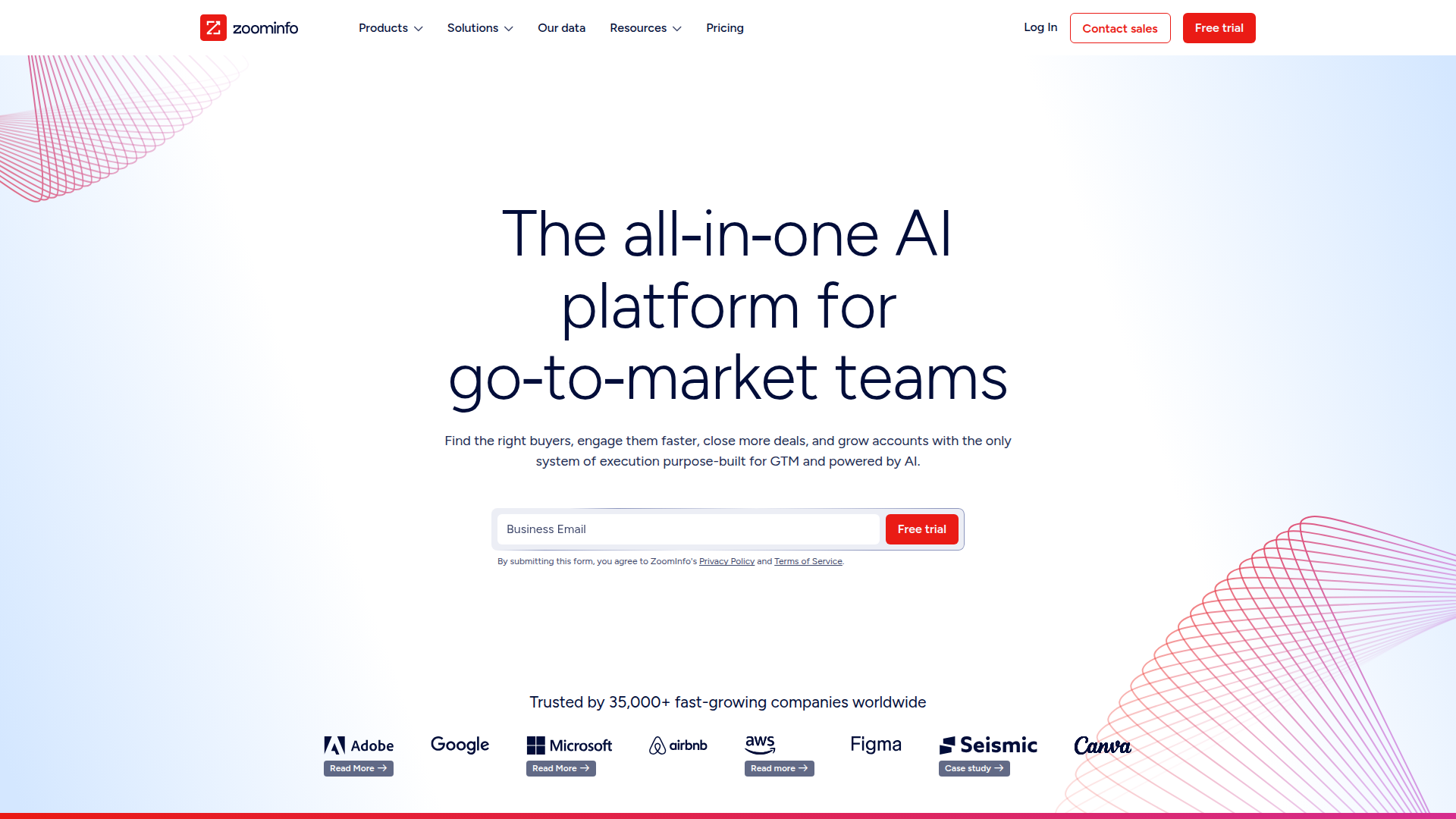
Pricing: Custom pricing (expect $15,000-$30,000/year minimum)
ZoomInfo has the best B2B contact database, period. 100M+ direct dials, technographic data, intent signals, org charts. If you're selling to Fortune 500 companies or need to reach VP-level buyers, ZoomInfo's accuracy is unmatched.
The problem is obvious: pricing. You won't find numbers on their website because they charge based on seats, credits, and features. Small teams should expect $15K-$20K annually minimum. Enterprises can easily hit $100K+. For that money, you get white-glove support, integrations with every CRM on the planet, and data quality that makes Apollo look like a phone book.
Is it worth it? Depends on your ACV. If you're closing $50K+ deals, ZoomInfo's accuracy means fewer wasted touches and higher conversion rates. If you're doing $1K MRR deals, the math doesn't work.
What We Liked
- Largest and most accurate B2B database available
- Direct dial phone numbers with high connect rates
- Intent data shows who's actively researching solutions
- Enterprise-grade security and compliance
What Could Be Better
- Pricing is opaque and expensive (very expensive)
- Massive overkill for SMB or PLG sales motions
- Learning curve and onboarding take weeks
Growth Hacker Take: ZoomInfo is the Mercedes of sales intelligence — expensive, but undeniably good. Only makes sense for teams with high ACVs and sales cycles where data quality directly impacts close rates. Everyone else should stick with Apollo or cheaper alternatives.
Request a demo at ZoomInfo's contact page or browse G2 reviews to see what enterprises think.
6. Instantly.ai — Email Deliverability on Steroids
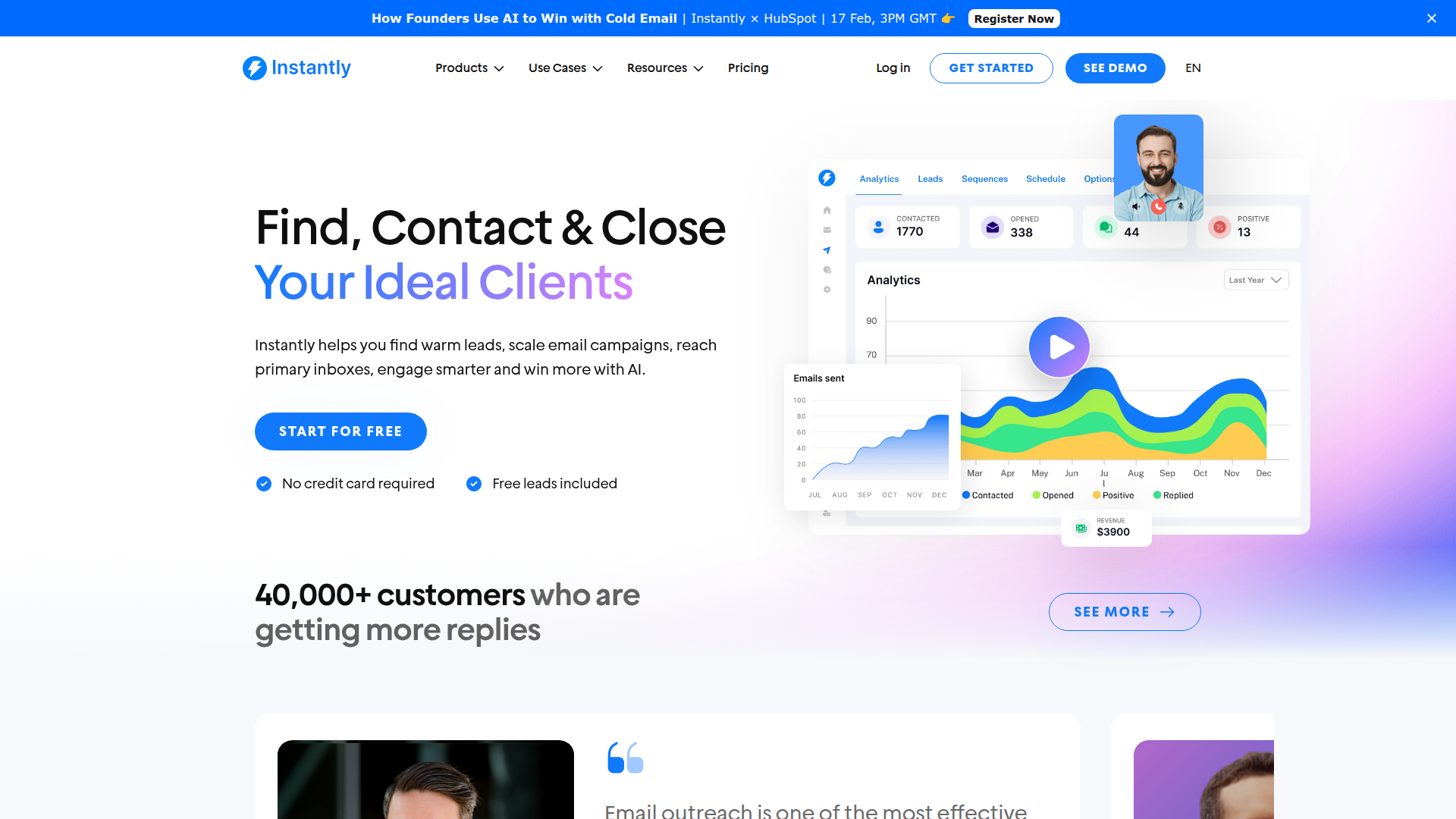
Pricing: $37/month for unlimited email accounts and warming
Instantly.ai isn't a full Apollo replacement — it's the email sending piece that Apollo bundles in. But here's the thing: Instantly does email deliverability better than anyone. Unlimited email accounts, built-in warmup, smart sending limits, automatic rotation. Your emails actually land in inboxes instead of spam folders.
The workflow: find emails with Hunter or Snov.io, enrich with Clay if needed, then blast campaigns through Instantly. You'll need to piece together the stack yourself, but you're paying $37/month instead of $99/month for Apollo Pro. The math works if you're comfortable with a bit of setup.
What We Liked
- Unlimited email accounts for $37/month is absurd value
- Email warmup actually works (we've tested extensively)
- Campaign analytics are detailed and actionable
- Unibox makes managing replies across accounts easy
What Could Be Better
- No lead database or enrichment (you'll need other tools)
- UI can be overwhelming for beginners
- Customer support quality varies
Growth Hacker Take: Instantly is best-in-class for cold email deliverability, but you're trading convenience for savings. If you're technical enough to stitch together a stack (or hire a VA to do it), you'll get better results for less money than Apollo's all-in-one approach.
View plans at Instantly's pricing page or check Product Hunt reviews from cold email nerds.
7. Lemlist — Cold Email with Personality
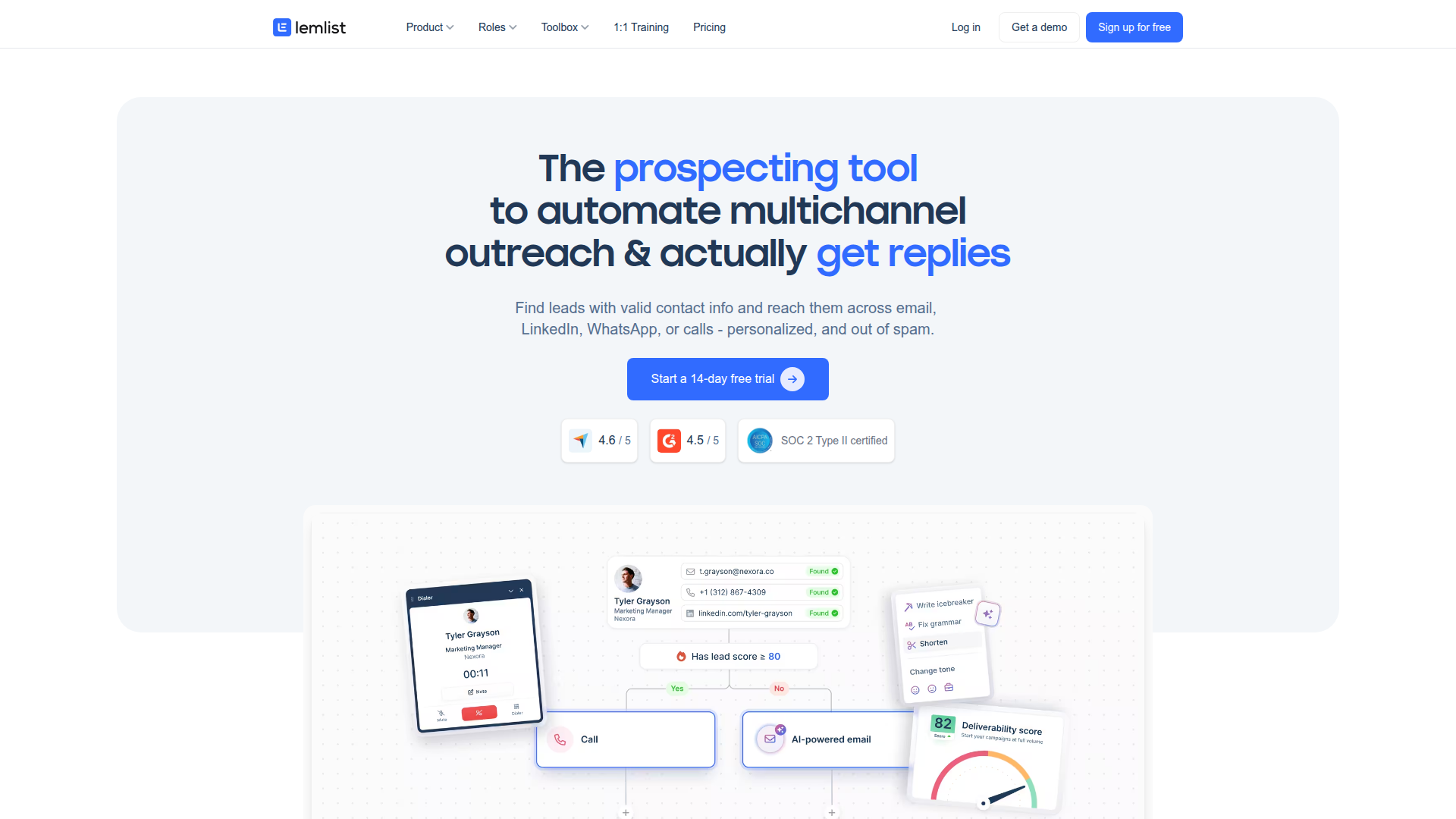
Pricing: $59/month for Email Starter, $99/month for Sales Engagement
Lemlist tackles cold email from a different angle: hyper-personalization. Instead of sending 1,000 identical emails, Lemlist lets you inject custom images, videos, and landing pages for each prospect. Think screenshots of their website with your product photoshopped in, or video thumbnails with their logo.
Does personalization work? Sometimes. Open rates are consistently 10-15% higher with custom images. Reply rates are more hit-or-miss — some industries love it, others find it gimmicky. The built-in email warmup and deliverability features are solid, though not as robust as Instantly.ai.
Lemlist recently added a B2B database (100M+ contacts), making it more of a true Apollo alternative. The data quality is decent but not spectacular. You're really paying for the personalization engine and the gorgeous templates.
What We Liked
- Personalization features are genuinely unique
- Beautiful email templates that don't look like cold outreach
- Built-in email warmup and sender rotation
- Integrates with Zapier for workflow automation
What Could Be Better
- Personalization takes time — not scalable for huge campaigns
- Database is smaller and less accurate than Apollo
- More expensive than basic sending tools
Growth Hacker Take: Lemlist shines when you're doing targeted outreach to small lists (50-200 prospects). If your cold email strategy relies on volume over personalization, stick with cheaper tools. But if you're in a crowded inbox and need to stand out, Lemlist's features actually move the needle.
Explore Lemlist pricing options or read G2 user reviews for real-world results.
8. Apollo.io — Still Worth Considering?
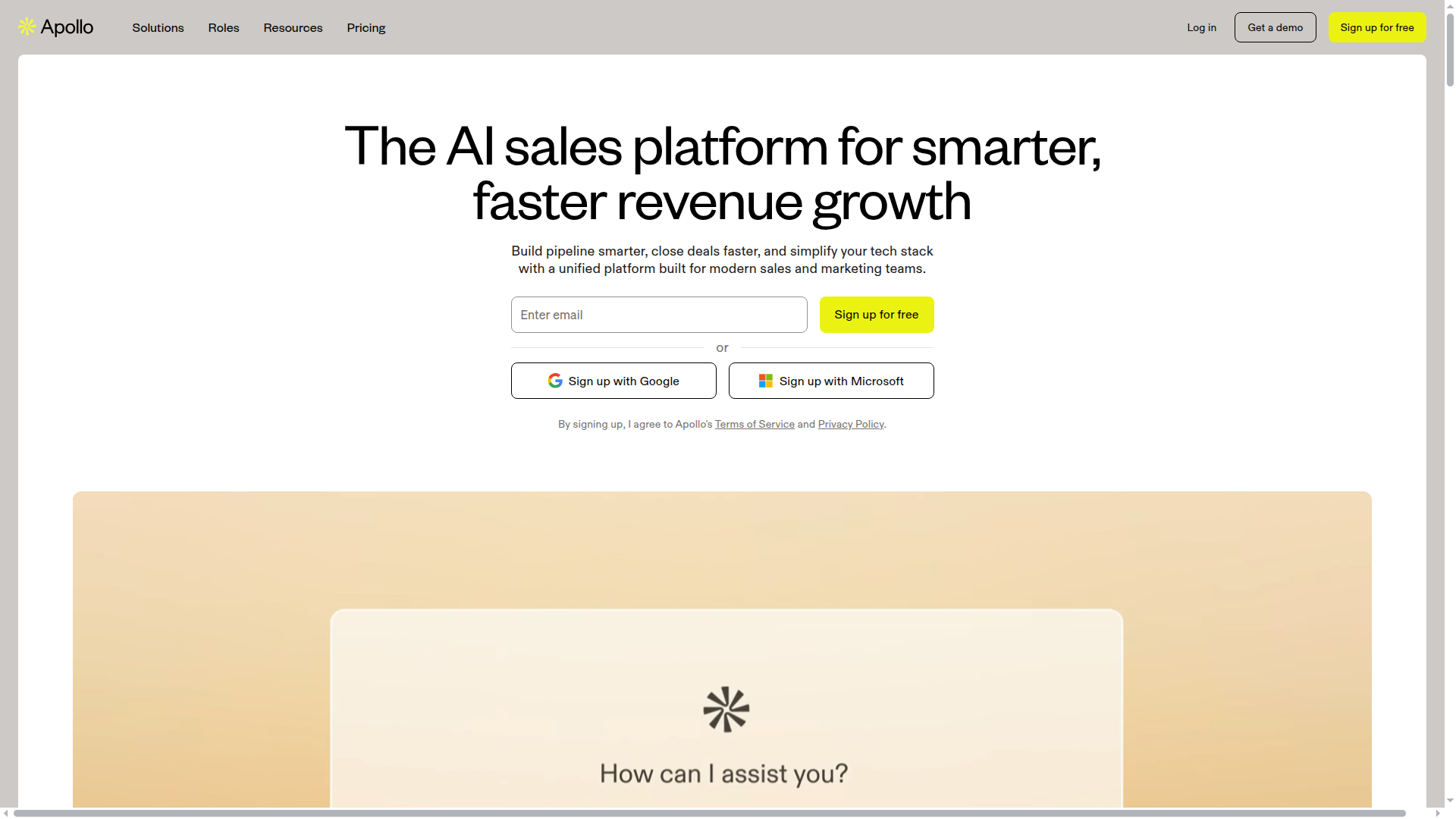
Pricing: Free tier (limited), Basic at $49/month, Professional at $99/month
Look, Apollo.io is still good. 275M+ contacts, sequences, calling, LinkedIn, enrichment — all in one platform. The UI is polished, onboarding is smooth, and when it works, it really works. The problem is "when it works."
Apollo's data quality has slipped since 2023. Bounce rates crept up from 3-4% to 6-8% on "verified" emails. Their LinkedIn automation breaks every few months when LinkedIn changes something. And after the 2024 price hike, you're paying $99/month for features that used to cost $79/month.
That said, if you value convenience over cost and don't want to manage multiple tools, Apollo is still the default choice. Just be prepared for occasional frustrations and know that cheaper alternatives exist.
What We Liked
- Largest all-in-one feature set in the market
- Generous free tier for testing (50 credits)
- Strong integrations with Salesforce, HubSpot, etc.
- Active development and regular feature updates
What Could Be Better
- Data accuracy has declined noticeably since 2023
- Pricing increased 40% in 2024 with minimal new features
- Customer support is overwhelmed (slow response times)
Growth Hacker Take: Apollo is still the safe, boring choice. It won't blow your mind, but it won't leave you stranded either. If you're already on Apollo and things are working, no need to switch. But if you're starting fresh, test cheaper alternatives first — you might be surprised.
Apollo.io Complete Tutorial
Review Apollo's pricing tiers or check G2 reviews for unfiltered user feedback.
How to Choose the Right Tool
Picking the right Apollo alternative comes down to three questions: budget, workflow, and scale. Here's the honest breakdown:
- Choose Snov.io if: You're bootstrapped, doing email-only outreach, and Apollo's pricing makes you wince. Snov gives you 80% of Apollo's features for half the price.
- Choose Clay if: Data quality is make-or-break and you're comfortable with a steeper learning curve. You're probably selling high-ticket B2B where bad data costs thousands in wasted touches.
- Choose Hunter if: You're just starting cold outreach and want to test the waters. The free tier is generous and the paid plans are affordable as you scale.
- Choose Linked Helper if: LinkedIn is your primary channel and you need automation that won't get you banned. Just stick to Windows or run it in a VM.
- Choose Instantly.ai if: You're technical enough to build your own stack and prioritize email deliverability above all else. Pair it with Hunter or Snov.io for a killer combo.
- Stick with Apollo if: You value convenience over cost, already have workflows built, and can tolerate occasional quirks. Sometimes boring is good.
The dirty secret: most successful cold email operations use multiple tools. Hunter for finding emails, Clay for enrichment, Instantly for sending. It's more setup work upfront, but you're not locked into one vendor's roadmap or pricing whims.
FAQ
Is Apollo.io still worth it in 2026?
Depends on your needs. Apollo's all-in-one approach is convenient, but data quality has slipped and pricing has increased significantly. If you're doing basic email outreach, cheaper alternatives like Snov.io or Hunter will save you money. If you need calling, LinkedIn, and email in one platform, Apollo is still the default choice — just know you're paying for convenience.
Which Apollo alternative has the best data quality?
Clay wins on data quality because it aggregates 50+ providers instead of relying on one database. For single-source tools, Hunter has the best email verification accuracy in our testing (97%+ for "verified" emails). ZoomInfo has the largest and most accurate database overall, but pricing makes it unrealistic for most teams.
Can I use multiple tools instead of Apollo's all-in-one platform?
Absolutely. Many teams use Hunter for email finding, Clay for enrichment, and Instantly.ai for sending. It requires more setup and coordination, but you're not locked into one vendor's pricing or feature set. The trade-off is managing multiple subscriptions and integrations vs. Apollo's single login.
What's the best free Apollo alternative?
Hunter has the most generous free tier — 25 email searches per month with high accuracy. Snov.io offers 50 credits free, which you can use for email finding or verification. Both let you test cold outreach without spending money, which is perfect for validating your ICP before committing to paid plans.
Are cheaper Apollo alternatives less reliable?
Not necessarily. Snov.io actually has better email verification accuracy than Apollo in recent tests. Linked Helper does LinkedIn automation better than Apollo's built-in features. You're usually trading polish and brand recognition for lower prices, not reliability. That said, customer support tends to be slower with cheaper tools.
How do I migrate from Apollo to another tool?
Export your Apollo contact lists as CSV files (you can do this on any plan). Most alternatives let you bulk import CSVs with fields mapped to their system. For sequences and templates, you'll need to manually recreate them — no tool offers automated migration from Apollo. Start with small test campaigns before fully committing to avoid disrupting active outreach.
About the Author
Marco Delvane
Growth Team at Vibe Growth Stack. Tested 100+ growth tools so you don't have to. Writes about what actually works for startups — no fluff, no affiliate bias.
Related Articles
Get growth tips in your inbox
No-BS growth hacks, tool reviews, and best-value picks. Weekly.
Unsubscribe anytime. We hate spam too.