Best Outreach Tools for Growth Teams 2026
Discover the top outreach tools for growth teams in 2026. Learn about cold email platforms, sales engagement software, and automation strategies.

Marco Delvane
Growth Team
Key Takeaways
- Outreach tools fall into 4 core categories: cold email platforms, multi-channel engagement, sales intelligence, and automation orchestrators
- The best growth teams use 2-3 tools max per category and integrate them tightly vs. spreading across 15+ disconnected platforms
- Multi-channel outreach (email + LinkedIn + calls) converts 3.5x better than single-channel campaigns
- Modern outreach success depends on three pillars: clean data (enrichment), perfect timing (intent signals), and deliverability infrastructure
- Budget reality check: Effective stacks start at $200-500/month for early teams, scale to $2K-5K/month for growth stage
Growth teams waste thousands on outreach tools that don't talk to each other. You sign up for the "best cold email tool," add a "LinkedIn automation platform," throw in some "data enrichment," and suddenly you're juggling 12 logins with zero pipeline to show for it.
The companies actually booking meetings — the ones generating consistent pipeline — operate differently. They pick 2-3 core tools, integrate them deeply, and master execution. This guide breaks down how to build an outreach stack that actually works in 2026, based on what's working for teams at ColdIQ, AirOps, and 100+ growth-stage B2B companies.
Why Multi-Channel Beats Single-Channel Every Time
Email-only outreach is dead. LinkedIn-only outreach is dying. The data is clear: multi-channel campaigns convert 3.5x better than single-channel, according to Gartner research on B2B buying journeys. But "multi-channel" doesn't mean spamming prospects across every platform simultaneously.
Here's what actually works: Start with email as your foundation (highest ROI, most scalable). Layer in LinkedIn for relationship-building with engaged prospects. Add calls strategically for high-intent leads showing buying signals. The sequence matters. The timing matters. The integration between channels matters most.
The tools enabling this fall into distinct categories, each solving a specific problem in your outreach workflow. Let's break down what you actually need.
Cold Email Platforms: Your Volume Engine
Cold email remains the highest-volume, most measurable outreach channel. The best platforms now offer unlimited sender accounts, built-in warmup, and deliverability monitoring that actually works. You're choosing between three main approaches.
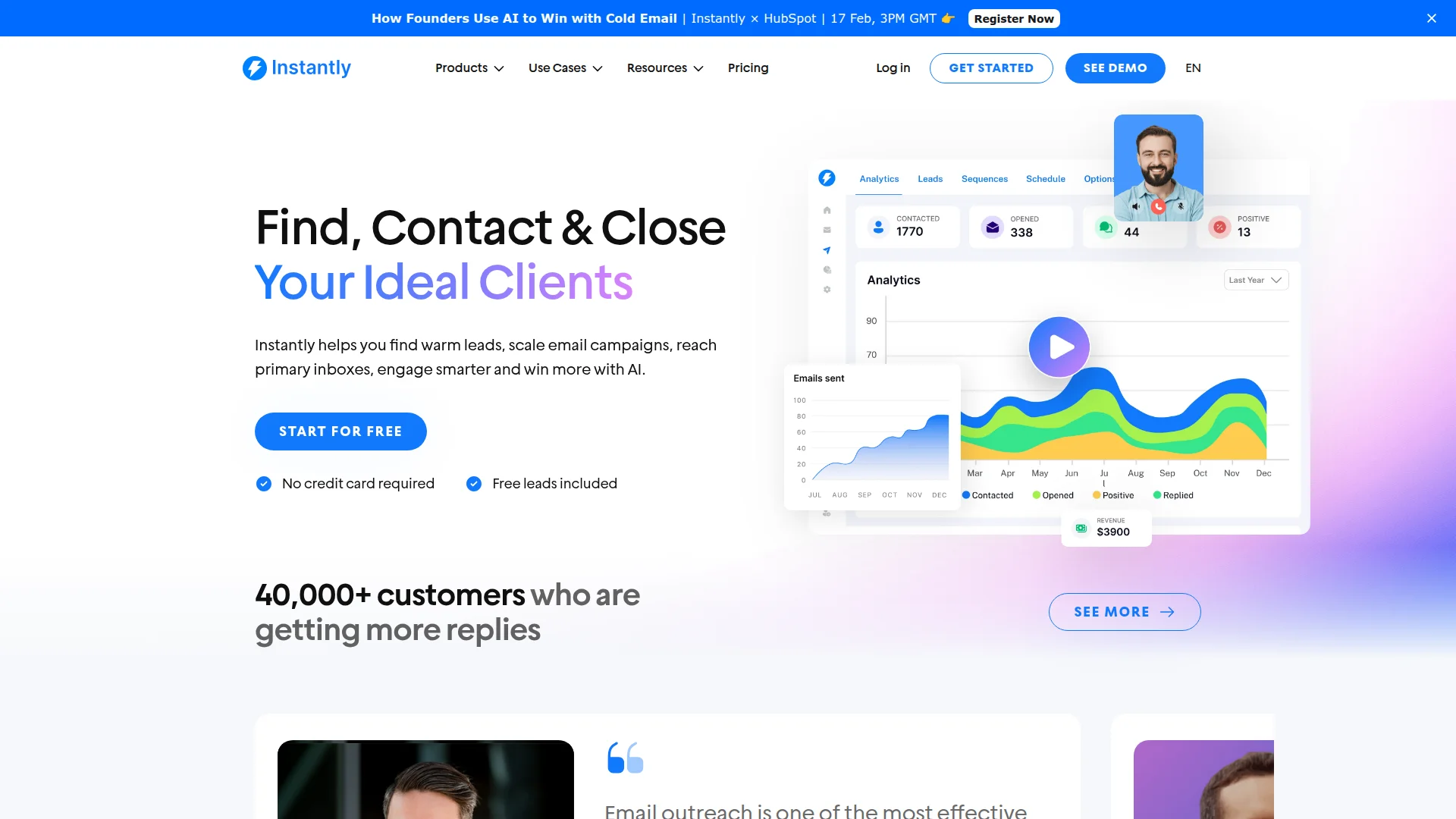
Deliverability-first platforms like Instantly and Smartlead prioritize inbox placement above everything else. They offer unlimited email accounts (so you can rotate sending), built-in warmup sequences, and spam testing. Instantly starts at $37/month and lets you connect unlimited mailboxes — critical for scaling to 500+ emails/day without tanking deliverability.
Instantly.ai Complete Review
Multi-channel platforms like lemlist and Smartreach add LinkedIn and calls to email campaigns. lemlist's strength is genuine personalization at scale — custom images, video thumbnails, dynamic landing pages. It starts at €69/month and includes LinkedIn automation in higher tiers. If you're running ABM plays where every account matters, the extra personalization features justify the cost.
Enterprise sales engagement platforms like Outreach and Salesloft go beyond email to full sales workflow orchestration. These make sense at $5M+ ARR when you need call recording, meeting intelligence, and deep Salesforce integration. For growth teams under $2M ARR, you're paying for features you won't use. Read our full breakdown in Best Cold Email Tools for 2026.
LinkedIn Automation: The Relationship Layer
LinkedIn outreach works when you're building relationships, not blasting connection requests. The platform cracks down on automation harder every year, so tool selection matters. You need something that mimics human behavior well enough to avoid detection while still saving you hours daily.
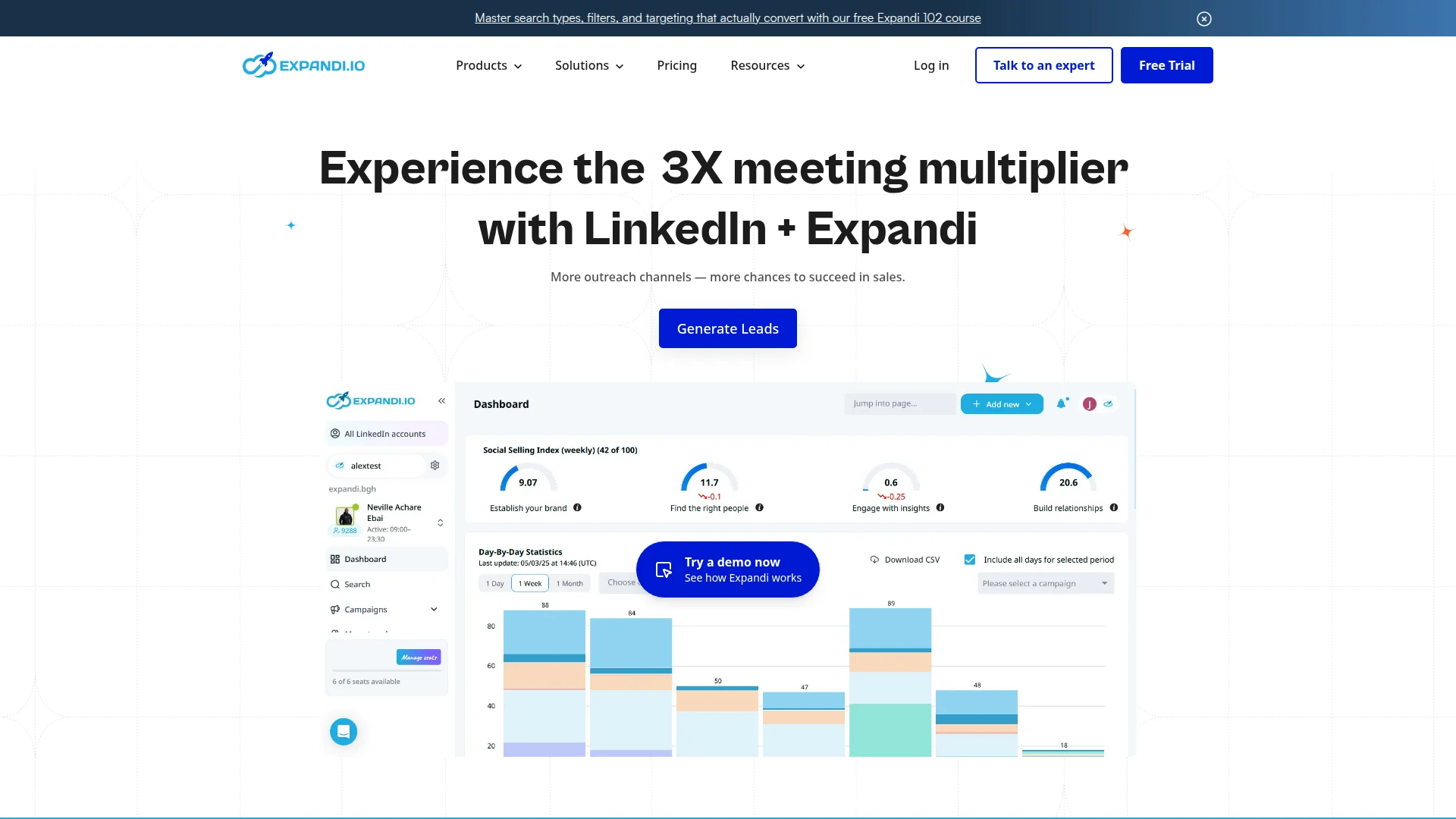
Cloud-based tools like Expandi and HeyReach run campaigns from the cloud (not your device), reducing detection risk. Expandi charges $99/month and includes smart inbox filtering, A/B testing, and image personalization. It's the safe choice for teams running 100+ connection requests weekly.
Expandi Deep Dive
Chrome extension tools like LinkedHelper and Dripify offer more control and lower cost ($15-40/month) but require your computer running. They're best for solo founders doing personalized outreach to <100 prospects weekly. Once you hit volume, the cloud tools become necessary.
Multi-account solutions like HeyReach let SDR teams manage 5-10 LinkedIn accounts from one dashboard. If you're rotating team members' profiles for scale, this is your only option. See the full comparison at Best LinkedIn Automation Tools.
Data Enrichment: No Data, No Meetings
You can't email someone without their email. You can't personalize without firmographic data. Data enrichment tools fill these gaps, but here's the reality: no single provider has 100% coverage. That's why growth teams run waterfall enrichment — sequentially checking multiple providers until finding valid contact info.
Clay pioneered this approach and remains the best orchestration layer. At $149/month for the starter plan, you get access to 75+ data providers, AI research agents, and workflow automation. Clay doesn't just find emails — it triggers your outreach sequences, updates your CRM, and tracks signals. Teams at AirOps and ColdIQ run their entire GTM stack through Clay.
Clay Waterfall Enrichment Tutorial
If Clay feels too complex early on, start with dedicated enrichment tools. Prospeo ($39/month) offers strong European coverage. FullEnrich ($29/month for 500 credits) runs its own 15-source waterfall. Apollo ($49/month) bundles database access with enrichment and basic email sending — solid all-in-one for early teams.
The key insight: budget 20-30% of your outreach spend on data quality. Bad data wastes everything downstream. Our complete enrichment guide lives at Best Email Finder Tools in 2026.
Intent Signals: Timing Beats Everything
Generic cold outreach converts at 1-3%. Outreach triggered by intent signals converts at 15-30%. The difference? You're reaching people when they're actively researching solutions like yours, not interrupting them randomly.
Modern sales teams track three signal types: first-party (website visits, content downloads), second-party (G2 reviews, community engagement), and third-party (job changes, funding rounds, tech installs). According to Forrester's intent data research, companies using intent signals see 40% shorter sales cycles.
RB2B ($149/month) identifies anonymous website visitors in real-time and pushes them into outreach sequences. Common Room ($1,000/month) tracks signals across communities, social media, and product usage. Trigify ($149/month) monitors LinkedIn and Twitter engagement.
The workflow: Signal triggers → Clay enriches data → Intent-specific email sequence launches → CRM updates automatically. Teams running this report 5-8x higher reply rates than batch-and-blast campaigns. Read the full strategy breakdown at How to Build an Intent-Based Outreach System.
How to Choose Your Outreach Stack
Picking Tools That Actually Integrate
Most teams over-buy on features and under-invest in integration. Here's how to build a stack that works together instead of creating more work:
- Start with your data layer: Pick Clay or Apollo as your source of truth. Everything flows from clean, enriched data.
- Add one primary outreach channel: Instantly for email volume, lemlist for multi-channel, Expandi for LinkedIn-first motion.
- Layer in signals strategically: Don't buy intent tools until you're consistently sending 500+ emails/week. Signals without volume = wasted money.
- Integrate before you scale: Make sure your email tool, enrichment platform, and CRM actually sync. Use Zapier or Make if native integrations don't exist.
- Budget realistically: $200-500/month (early stage), $500-2K/month (growth), $2K-5K/month (scale). Anything less and you're missing critical capabilities.
Real Outreach Stacks That Generated Pipeline
Theory is nice. Real results matter more. Here are three proven stacks from companies actually booking meetings:
$0-500K ARR (Solo Founder Stack): Clay ($149) + Instantly ($37) + Prospeo ($39) + HubSpot Free CRM. Total: $225/month. This combo lets you build targeted lists, enrich contacts, send email at scale, and track everything. Valley (one-person company) books 150+ meetings/month with this exact setup.
$500K-2M ARR (Early Team Stack): Clay ($349) + lemlist ($99) + FullEnrich ($55) + RB2B ($149) + Attio ($150). Total: $802/month. Adds multi-channel outreach, website visitor ID, and a modern CRM. ColdIQ ran this stack from $1M to $3M ARR.
$2M-10M ARR (Growth Stack): Clay ($800) + Instantly + lemlist ($176 combined) + FullEnrich Scaleup ($400) + Common Room ($1,000) + Attio ($300). Total: $2,676/month before ad spend. AirOps used a similar stack to generate $7.83M qualified pipeline in 11 months, with $1.52M closed-won revenue.
Notice the pattern? Every stack centers on Clay as the data/automation hub. Every stack uses dedicated email sending (not CRM email). Every stack invests in enrichment and signals as they scale. Copy the structure, not the exact tools — your ICP and channels might differ.
Outreach Stack Mistakes That Kill Pipeline
After analyzing 100+ tech stacks and advising dozens of growth teams, these mistakes appear repeatedly:
Buying enterprise tools too early. Outreach and Salesloft make sense at $10M+ ARR with 20+ reps. Before that, you're paying $15K/year for features you'll never configure. Start with Instantly or lemlist and upgrade when limits hurt.
Ignoring deliverability infrastructure. You can have perfect copy and ideal timing, but if emails land in spam, nothing else matters. Warm up domains for 2-4 weeks before campaigns. Use multiple sending accounts. Monitor bounce rates obsessively. Tools like Instantly include warmup; if yours doesn't, add Lemwarm ($25/month).
Treating outreach as a single channel. Email-only campaigns convert at 1-3%. Add LinkedIn and conversion jumps to 5-8%. Add calls for high-intent leads and you hit 15-30%. The math is clear: multi-channel wins. Read Sales Hacker's multi-channel research for the data.
Batch-and-blast without signals. Reaching 10,000 accounts once generates less pipeline than reaching 500 ideal accounts 10 times with perfect timing. Layer intent signals into every campaign. See our complete framework at Signal-Based Selling Strategy for 2026.
Not integrating tools. Your email tool should update your CRM automatically. Your enrichment platform should trigger outreach sequences. Your signal tool should feed into everything. If you're manually exporting CSVs between platforms, you're wasting 10+ hours weekly and losing deals in the gaps.
Your First 30 Days: Outreach Stack Implementation
Week 1: Foundation. Sign up for Clay (start with free plan to test). Connect your CRM. Import your existing contact list. Build one enrichment workflow (company → find decision-maker → enrich email → verify). Goal: 100 enriched contacts.
Week 2: Outreach Setup. Choose your email platform (Instantly for volume, lemlist for multi-channel). Set up 3-5 sending accounts. Start domain warmup. Write your first sequence (5-7 emails over 14 days). Don't launch yet — warmup takes 2 weeks minimum.
Week 3: Integration. Connect Clay → outreach tool → CRM. Build workflow: new contact in Clay → enrich → add to sequence → create CRM deal. Test with 10 contacts manually. Fix integration bugs now, not when scaling.
Week 4: Launch + Learn. Send first campaign to 100-200 highly targeted prospects. Track open rates (target 40-60%), reply rates (target 3-5%), and meeting booking rate (target 1-2%). A/B test subject lines and opening paragraphs. This data informs everything you build next.
After 30 days, you'll know if your stack works before investing thousands. Scale what converts, cut what doesn't, and layer in LinkedIn automation or intent signals based on actual performance data.
FAQ
What's the minimum budget for an effective outreach stack?
$200-300/month gets you Clay starter + Instantly + basic enrichment (Prospeo). Enough to send 5K emails/month with proper enrichment and deliverability monitoring.
Should I use my CRM's built-in email sending?
No. HubSpot and Salesforce email tools lack deliverability features (warmup, rotation, spam testing) that dedicated platforms provide. Use CRM for tracking, dedicated tools for sending.
How many emails can I safely send per day per account?
Start at 10-20/day during warmup. Scale to 50/day max per account after 2-4 weeks. Use 5-10 accounts to hit 250-500 emails/day total volume.
Is LinkedIn automation safe in 2026?
Cloud-based tools (Expandi, HeyReach) are safer than browser extensions. Stay under 100 connection requests/week, use realistic delays, and avoid weekend sending. Risk exists but is manageable with proper tools.
When should I add intent signal tools?
After you're consistently sending 500+ emails/week with >2% reply rate. Signals optimize timing but can't fix broken messaging or bad ICP targeting.
What's the difference between Clay and Apollo?
Apollo is an all-in-one platform (database + enrichment + sending + CRM). Clay is a data orchestration layer aggregating 75+ providers. Apollo is simpler; Clay is more powerful and flexible.
How do I measure outreach ROI?
Track cost per meeting booked (total monthly spend ÷ meetings), pipeline generated per dollar spent, and ultimately closed revenue attributed to outreach. Target <$200 per meeting for efficient campaigns.
About the Author
Marco Delvane
Growth Team at Vibe Growth Stack. Tested 100+ growth tools so you don't have to. Writes about what actually works for startups — no fluff, no affiliate bias.
Related Articles
Get growth tips in your inbox
No-BS growth hacks, tool reviews, and best-value picks. Weekly.
Unsubscribe anytime. We hate spam too.