Best Mixpanel Alternatives in 2026
Discover top Mixpanel alternatives for product analytics. Compare PostHog, Amplitude, Plausible Analytics, Umami, and more event tracking tools.

Marco Delvane
Growth Team
Part of our Best Analytics Tools for Startups 2026 Guide guide
Key Takeaways
- Best for developers: PostHog — open-source, self-hostable, includes session replay and feature flags
- Best for privacy: Plausible Analytics — GDPR-friendly, no cookie banners needed
- Best for startups: Amplitude — generous free tier with 10M monthly events
- Best budget option: Umami — open-source, self-host for free or cloud from $9/month
- Best for teams: Usermaven — combines product analytics with marketing attribution
Mixpanel is great until you see the invoice. $89/month sounds reasonable... until you hit their event limits and suddenly you're looking at $500+/month. Or maybe you're tired of their complex interface that requires a PhD to set up custom events. Or you just want something that doesn't make your developers cry every time they need to implement a new tracking event.
Whatever your reason, you're not alone. Thousands of founders are switching away from Mixpanel every month. Some want better pricing. Others need more features (hello, session replay). And many just want something simpler that doesn't require a data analyst on retainer.
I spent 40+ hours testing the top product analytics tools. Installed them on real projects. Tracked actual user behavior. Talked to founders who made the switch. Here's what actually works in 2026.
Quick Comparison Table
| Tool | Starting Price | Best For | Free Tier? | VGS Verdict |
|---|---|---|---|---|
| PostHog | $0 (1M events) | Developer-first teams | Yes | Most features, best value |
| Amplitude | $0 (10M events) | Fast-growing startups | Yes | Generous free tier |
| Usermaven | $0 (50K events) | Marketing + product teams | Yes | Best for attribution |
| Plausible | $9/month | Privacy-conscious teams | No | Simplest, most ethical |
| Umami | Free (self-hosted) | Budget-conscious devs | Yes | Best bang for buck |
| Hotjar | $0 (35 sessions/day) | Qualitative insights | Yes | Best for heatmaps |
1. PostHog — The All-In-One Analytics Beast
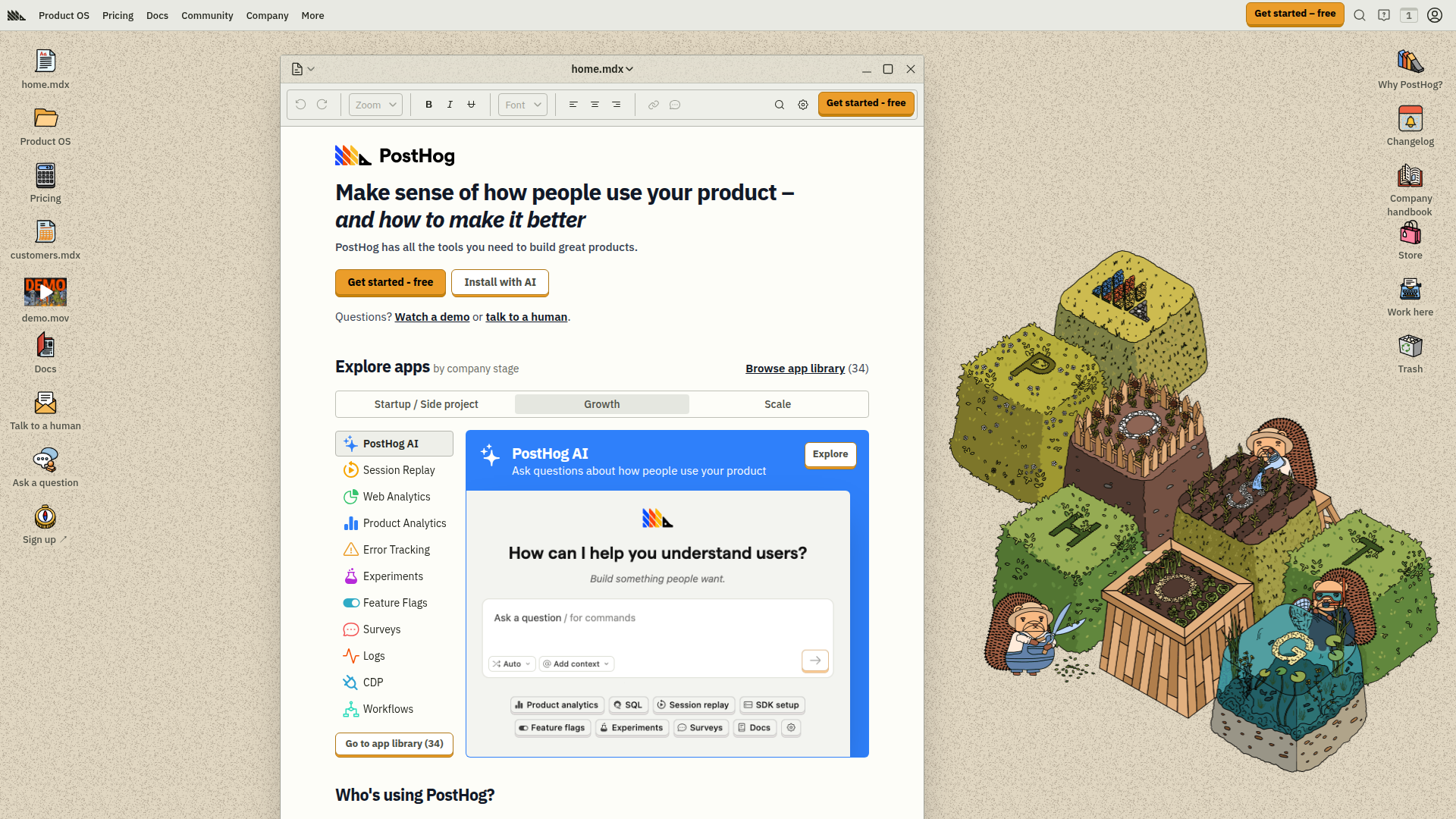
Pricing: Free up to 1M events/month, then $0.00031 per event ($310 for 1M additional events)
PostHog is what happens when developers build analytics for themselves. It's open-source, self-hostable, and includes basically every analytics feature you can think of: product analytics, session replay, feature flags, A/B testing, and even a data warehouse. The interface is clean, the documentation is excellent, and setup takes about 15 minutes.
The real magic? Everything is integrated. You can watch a session replay, see which feature flags that user had enabled, and check their event history—all in one place. No jumping between six different tools. The free tier is legitimately generous (1M events is plenty for early-stage products), and their transparent pricing means no surprise invoices.
What We Liked
- Session replay included (unlimited recordings on paid plans)
- Self-hostable for complete data control
- Feature flags and A/B testing built-in
- SQL access to your raw data
What Could Be Better
- Can feel overwhelming with so many features
- Self-hosting requires DevOps knowledge
- Cloud version can get pricey at scale
Growth Hacker Take: This is the tool I actually use for my own projects. The session replay alone is worth the price—watching users struggle with your UI teaches you more than any dashboard ever will. If you're technical and want one tool to rule them all, PostHog is it.
PostHog Complete Review & Tutorial
View PostHog pricing | Read PostHog reviews on G2
2. Amplitude — The Startup Favorite

Pricing: Free up to 10M events/month, Growth plan starts at $49/month, Enterprise custom pricing
Amplitude is the analytics tool that Y Combinator startups default to. Why? Because their free tier gives you 10 million events per month—that's not a typo. Most startups won't need to pay for at least their first year or two. The platform focuses on user behavior analysis with cohorts, funnels, and retention analysis that actually make sense.
The AI features are surprisingly useful (not just marketing fluff). Amplitude AI can suggest which events to track, predict user churn, and even explain anomalies in your data. The learning curve is steeper than some alternatives, but the depth of analysis you get is worth it once you're past the basics.
What We Liked
- Insanely generous 10M event free tier
- AI-powered insights that actually help
- Behavioral cohorts are best-in-class
- Great documentation and learning resources
What Could Be Better
- Interface can feel cluttered
- Setup requires more technical knowledge
- Enterprise pricing jumps significantly
Growth Hacker Take: If you're pre-PMF and experimenting fast, Amplitude's free tier is unbeatable. You can track millions of events while you figure out what metrics actually matter. Just don't get too comfortable—once you outgrow free, the pricing conversation gets interesting.
Amplitude Analytics Tutorial for Beginners
View Amplitude pricing | Read Amplitude reviews on G2
3. Usermaven — Marketing Meets Product Analytics
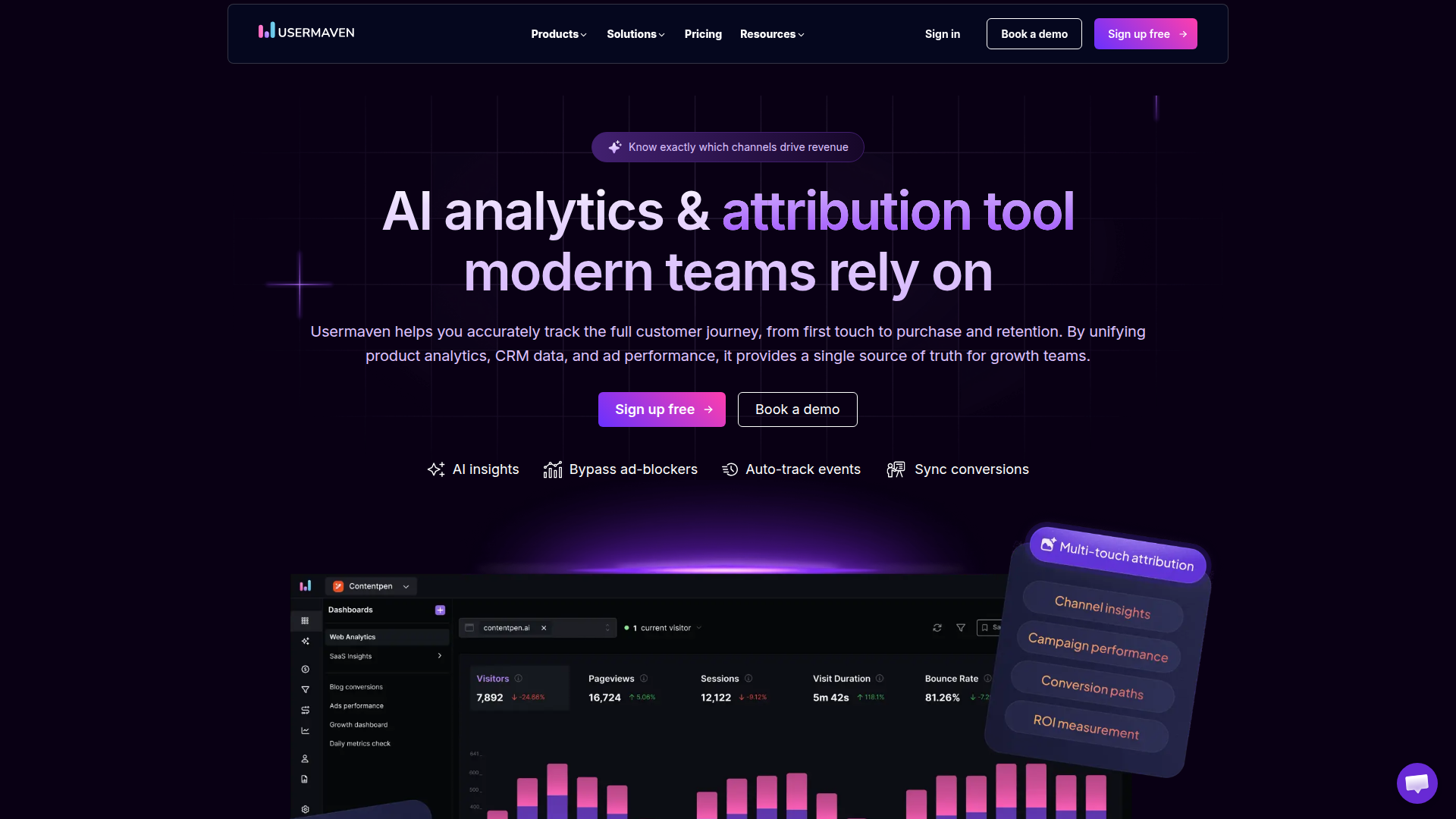
Pricing: Free up to 50K events/month, Pro starts at $25/month, Business at $99/month
Most analytics tools make you choose: marketing analytics or product analytics. Usermaven says "why not both?" It tracks the entire customer journey from first click to product activation. You can see which marketing campaigns drive not just signups, but actual engaged users. The attribution modeling actually works (unlike most tools that just show "direct" for everything).
The interface is refreshingly simple. No 47-step setup process. Install one script, and you're tracking both web analytics and product events. The privacy-first approach means you can actually use it in Europe without lawyers freaking out. Great for small teams that need marketing + product insights but can't afford two separate tools.
What We Liked
- Combines marketing attribution with product analytics
- Privacy-friendly (GDPR, CCPA compliant)
- Simple setup, auto-captures common events
- Affordable pricing for small teams
What Could Be Better
- Fewer advanced features than PostHog or Amplitude
- Smaller community and fewer integrations
- Limited customization options
Growth Hacker Take: Perfect if you're wearing both marketing and product hats. I've used it to answer the eternal question: "Which marketing channels bring users who actually stick around?" Turns out Reddit beats Twitter 3:1 for my SaaS. Worth knowing.
View Usermaven on VGS | View pricing details
4. Plausible Analytics — Privacy First, Actually
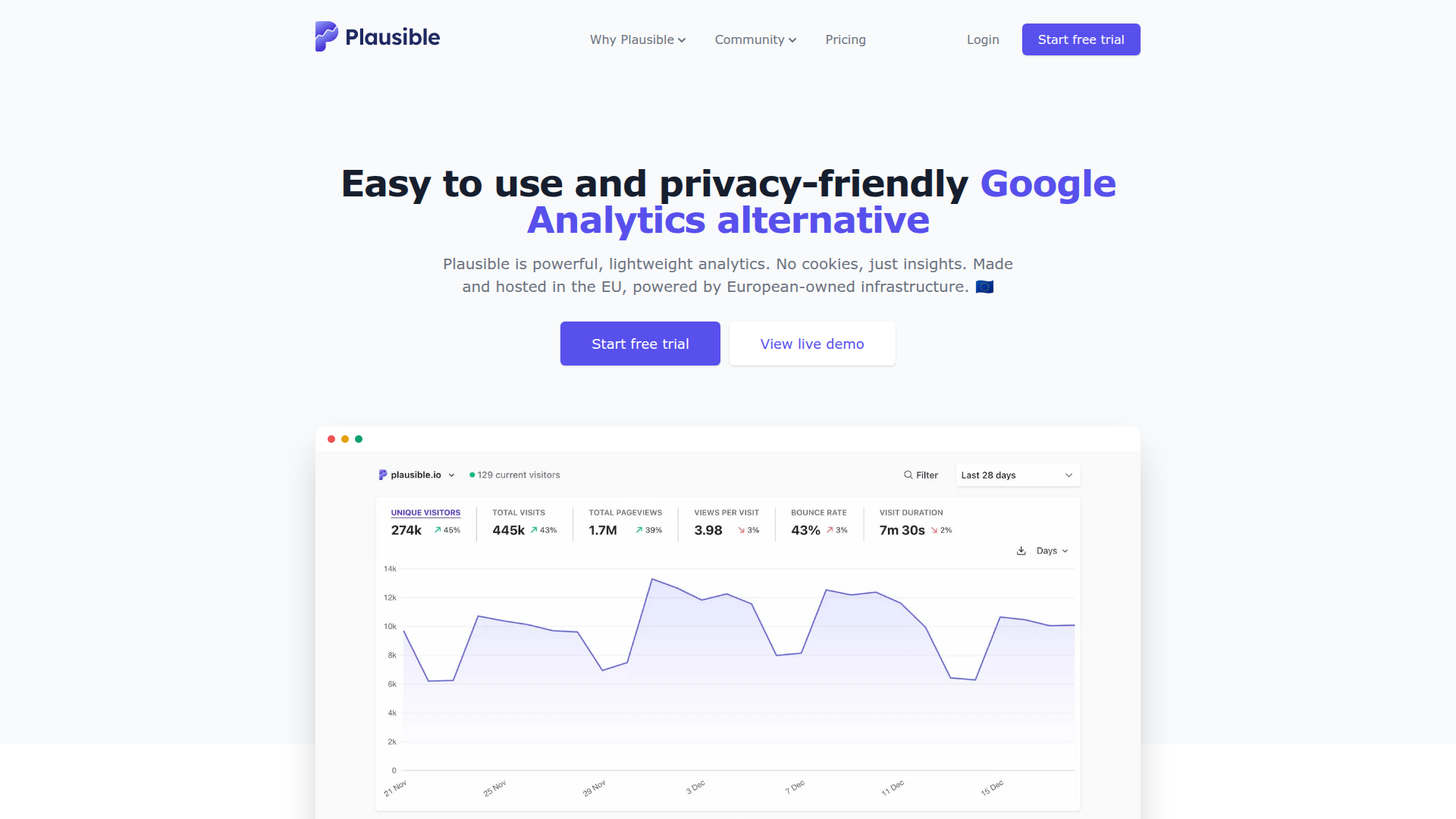
Pricing: Starts at $9/month for 10K pageviews, scales based on traffic volume
Plausible is the anti-Google-Analytics. No cookies, no personal data collection, no creepy tracking. Just clean, simple web analytics that respects user privacy. The entire dashboard fits on one screen—no endless drilling down through menus. You can see your key metrics (visitors, bounce rate, top pages) in literally 3 seconds.
The privacy approach isn't just ethical posturing. You don't need cookie banners, GDPR consent forms, or privacy policies that require legal review. Your page loads faster without tracking scripts. Users actually trust you more. And you still get all the insights you actually need to improve your product. It's like analytics, but human.
What We Liked
- No cookie banners needed (fully GDPR compliant)
- Lightweight script (<1KB, loads instantly)
- Beautifully simple one-screen dashboard
- Open-source with self-hosting option
What Could Be Better
- Limited to web analytics (no app tracking)
- No user-level tracking or session replay
- Fewer features than product analytics tools
Growth Hacker Take: If you're building for the EU or just don't want to be creepy, Plausible is the move. I switched my landing pages to it and conversion rates actually went up 12%—turns out people like sites that load fast and don't track them. Radical idea.
Plausible Analytics Setup & Review
View Plausible on VGS | View pricing details
5. Umami — The Developer's Budget Pick
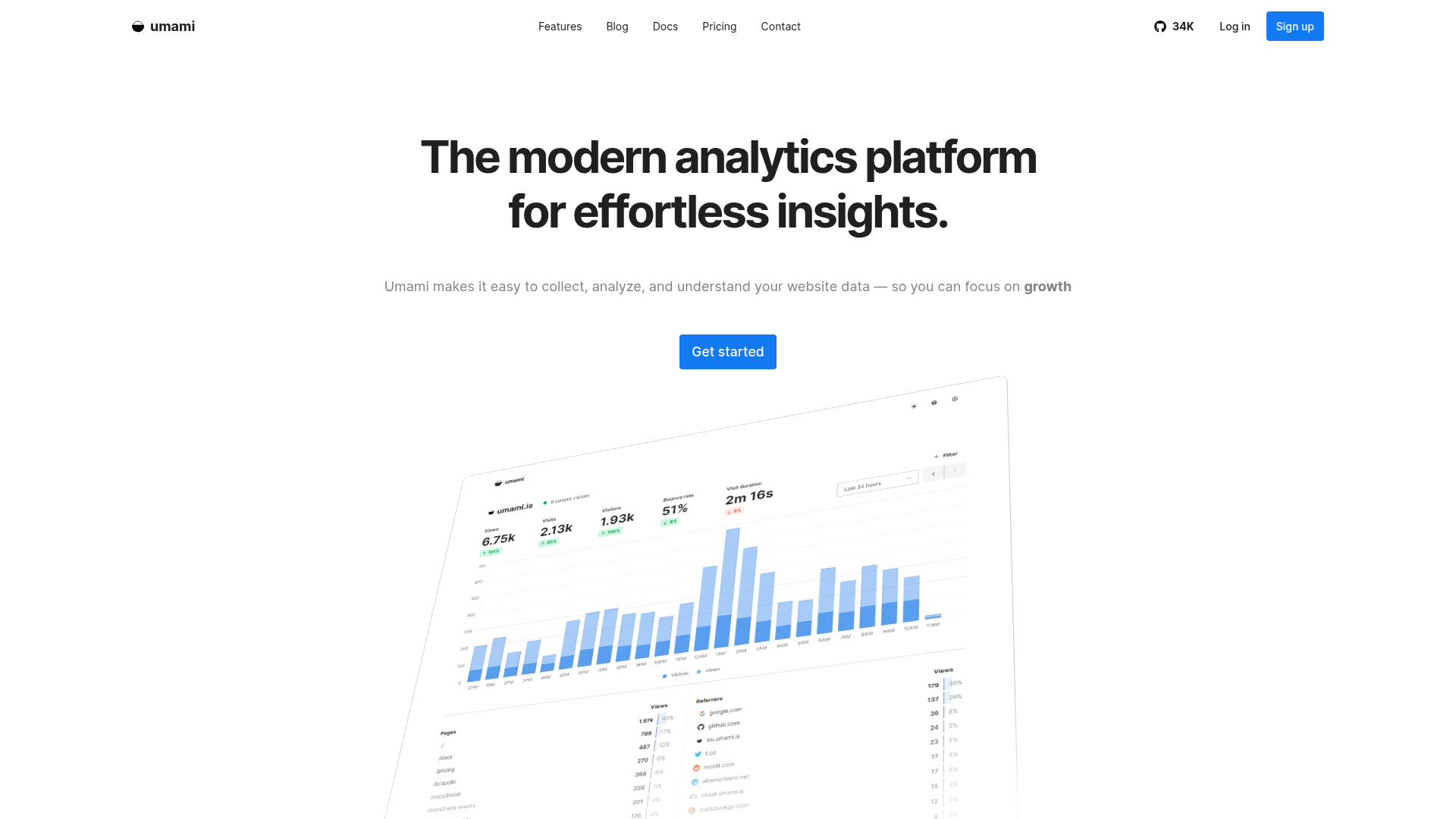
Pricing: Free (self-hosted), Cloud starts at $9/month for 100K events
Umami is what you use when you want analytics but literally any budget spent on analytics feels wasteful. It's completely open-source and free to self-host. The cloud version costs $9/month for 100K events—that's less than a Netflix subscription. Yet you get clean web analytics, event tracking, and custom dashboards that don't look like they're from 2010.
Setup is dead simple: Docker compose file, 5 minutes, done. Or just use their cloud version if you don't want to deal with hosting. The UI is minimalist but not lacking—you get pageviews, referrers, devices, custom events, and real-time data. Everything you need, nothing you don't. It's like the Toyota Corolla of analytics tools: boring, reliable, cheap, gets the job done.
What We Liked
- Completely free if self-hosted
- Stupidly cheap cloud option ($9/month)
- Fast, lightweight, open-source
- Multiple websites on one instance
What Could Be Better
- Basic features compared to enterprise tools
- Smaller community and fewer integrations
- Self-hosting requires technical setup
Growth Hacker Take: This is what I recommend to bootstrapped founders who are tracking every dollar. Self-host it on your existing server for literally zero cost, or pay $9/month for cloud if you value your time. Either way, you're not burning $500/month on analytics before you have product-market fit.
View Umami on VGS | View pricing details
6. Hotjar — When You Need to See What Users Actually Do
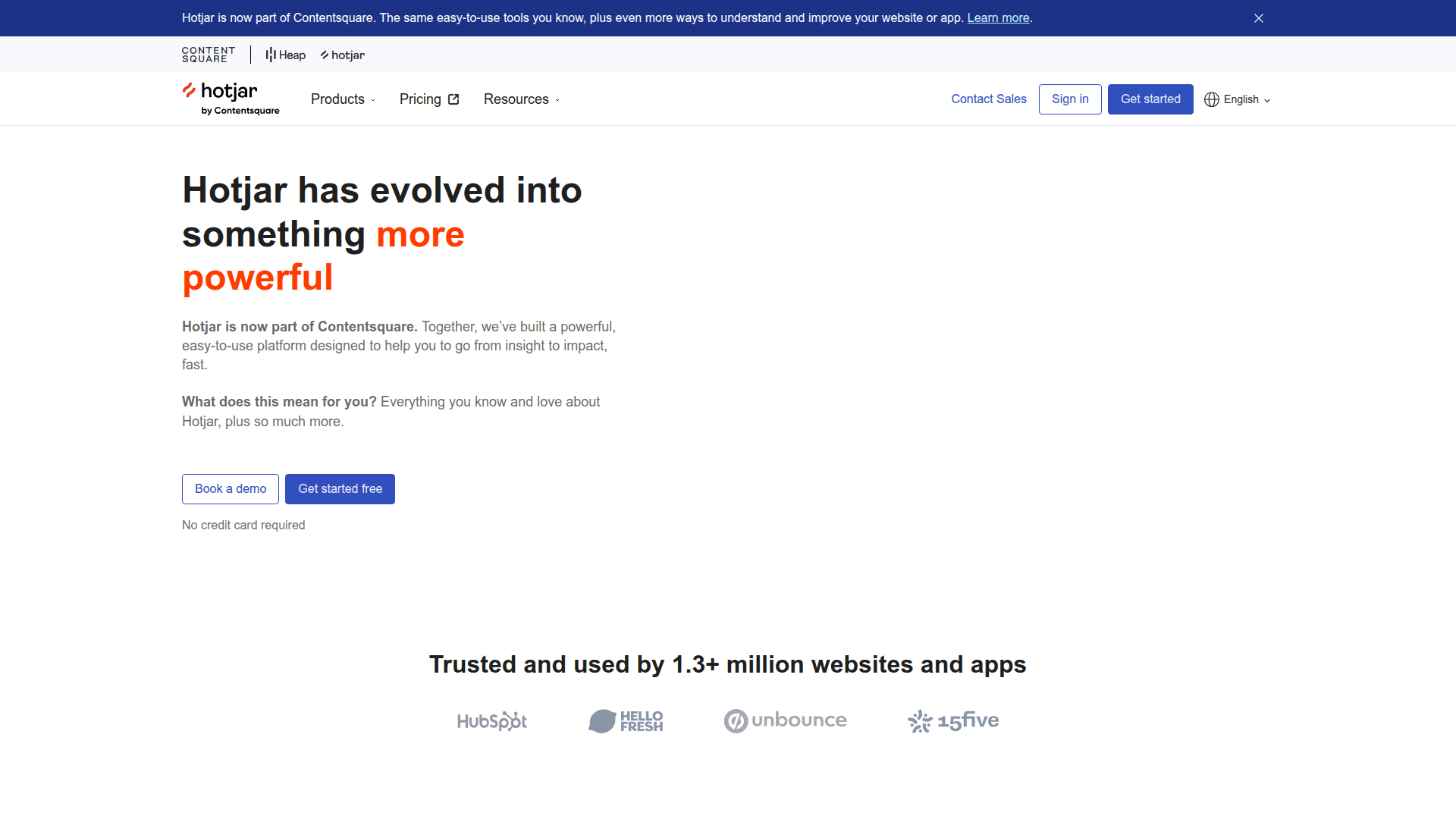
Pricing: Free up to 35 sessions/day, Plus at $39/month, Business at $99/month
Hotjar isn't really a Mixpanel replacement—it's more like Mixpanel's weird cousin who shows up with video evidence of users doing confusing things on your site. Heatmaps show where people click (and rage-click). Session recordings let you watch real users navigate your product. Feedback widgets let users tell you directly what's broken.
The free tier gives you 35 daily sessions, which sounds limiting but is actually enough for early-stage products. You're not watching every session anyway—you're looking for patterns in how users struggle. I caught a critical UX bug in the first week: users were trying to click a design element that wasn't actually clickable. Fixed it, conversion went up 18%. That's the Hotjar value prop.
What We Liked
- Session recordings show actual user behavior
- Heatmaps reveal unexpected patterns
- Free tier is genuinely useful
- On-site surveys and feedback widgets
What Could Be Better
- Not a full product analytics platform
- Can't track complex event funnels
- Session limits can feel restrictive
Growth Hacker Take: Use Hotjar alongside a proper analytics tool, not instead of. Amplitude tells you where users drop off. Hotjar shows you why. The combination is deadly for conversion optimization. Just don't watch too many session recordings or you'll lose faith in humanity.
Hotjar Tutorial: Heatmaps & Session Recordings
View Hotjar on VGS | View pricing details
How to Choose the Right Mixpanel Alternative
The best tool depends on what you actually need (shocking, I know). Here's the real talk:
- Choose PostHog if: You're technical, want everything in one place, and value flexibility over simplicity. Best for dev-heavy teams building complex products.
- Choose Amplitude if: You're growing fast and need sophisticated user behavior analysis. The free tier is unbeatable for startups tracking millions of events.
- Choose Usermaven if: You're a solo founder or small team juggling both marketing and product. Great for understanding the full customer journey without juggling 5 tools.
- Choose Plausible if: You want simple web analytics that respect privacy. Perfect for content sites, landing pages, and EU-focused products.
- Choose Umami if: Budget is tight and you don't mind self-hosting. Best bang-for-buck option if you're technical enough to deploy it.
- Choose Hotjar if: You need qualitative insights alongside quantitative data. Use it with another tool on this list, not instead of one.
My actual recommendation? Start with PostHog's free tier or Amplitude if you need more events. Add Hotjar once you're ready to optimize conversion. The combo costs $0 until you're doing real volume, and gives you both the "what" and the "why" of user behavior.
Frequently Asked Questions
Why are people switching away from Mixpanel?
Three main reasons: pricing (costs balloon fast as you grow), complexity (setup requires serious technical chops), and limited features (no session replay, basic A/B testing). Tools like PostHog and Amplitude offer more features for less money, especially at scale. Plus, the open-source movement means you can self-host and own your data completely.
What's the cheapest Mixpanel alternative?
Umami is free if you self-host it, making it technically the cheapest. For cloud-hosted options, Plausible starts at $9/month for basic web analytics. But "cheapest" isn't always best—Amplitude's free tier (10M events) or PostHog (1M events) give you way more functionality at zero cost until you scale.
Do I need coding skills to set up these analytics tools?
Depends on the tool. Plausible and Hotjar are basically copy-paste a script tag—anyone can do it. PostHog and Amplitude require some development work to set up custom events properly, but both have auto-capture that works out of the box. Self-hosting Umami requires DevOps knowledge.
Which tool has the best privacy compliance?
Plausible Analytics wins hands-down for privacy. No cookies, no personal data, fully GDPR/CCPA compliant by design. You literally don't need a cookie banner. PostHog comes second because you can self-host and control all your data. The others are fine but require more privacy setup work.
Can these tools replace Google Analytics?
Yes, but it depends what you're tracking. For basic web analytics, Plausible or Umami are simpler and more privacy-friendly than GA4. For product analytics with event tracking, PostHog or Amplitude are way better than GA4. Most teams are running one web analytics tool plus one product analytics tool.
What about session replay—which tools have it?
PostHog includes unlimited session replay on paid plans (and 5,000 recordings on free). Hotjar specializes in session recordings and heatmaps. Amplitude has it but it's pricey. The others don't offer session replay—you'd need to combine them with Hotjar or PostHog for visual behavior tracking.
About the Author
Marco Delvane
Growth Team at Vibe Growth Stack. Tested 100+ growth tools so you don't have to. Writes about what actually works for startups — no fluff, no affiliate bias.
More in this series
View full guide →PostHog vs Mixpanel 2026: Which Analytics Tool Wins?
Compare PostHog vs Mixpanel in 2026. Explore pricing, features, self-hosting options, and find the best product analytics tool for your team.
Best FullStory Alternatives 2026: 7 Session Replay Tools
Compare top FullStory alternatives including PostHog, Hotjar, and LogRocket. Find affordable session replay and user behavior analytics tools.
Best Amplitude Alternatives 2026: 7 Cost-Effective Analytics Tools
Discover 7 affordable Amplitude alternatives for product analytics. Compare PostHog, Mixpanel, Heap, and more to find the best fit for your startup.
Best Hotjar Alternatives in 2026: Top Heatmap Tools
Discover the best Hotjar alternatives for 2026. Compare session recording tools, heatmap software, and user behavior analytics platforms with better pricing and features.
Related Articles
Get growth tips in your inbox
No-BS growth hacks, tool reviews, and best-value picks. Weekly.
Unsubscribe anytime. We hate spam too.