Best Substack Alternatives 2026: Top Newsletter Platforms
Explore the best Substack alternatives in 2026. Compare top newsletter platforms including Beehiiv, Ghost, Loops, and more for creators and writers.

Marco Delvane
Growth Team
Part of our Best Email Marketing Tools for Startups 2026 guide
Key Takeaways
- Best for creators: Beehiiv ($49/month) — monetization features built in, fastest-growing platform
- Best for writers: Ghost ($11/month) — open-source, full control, membership-focused
- Best for startups: Loops (free up to 2K contacts) — modern UI, API-first, product updates
- Budget pick: Kit (formerly ConvertKit) ($25/month) — creator-focused features at lower price
- All-in-one option: Kajabi ($149/month) — newsletters + courses + community
Why People Are Ditching Substack
Substack pioneered newsletter subscriptions, but cracks are showing. Creators are frustrated with limited customization (everything looks like Substack), zero ownership of subscriber emails, and mediocre monetization tools beyond paid subscriptions. The 10% platform fee stings when you're scaling revenue.
The bigger issue? Substack controls your audience relationship. You can't export subscriber payment info, run advanced segmentation, or integrate with your tech stack. For creators building real businesses, that's a dealbreaker. The platforms below solve these problems while matching or beating Substack's core features. Some focus on monetization (Beehiiv), others on flexibility (Ghost), and a few target SaaS companies (Loops).
Quick Comparison: Best Substack Alternatives
| Platform | Starting Price | Best For | Free Tier? | VGS Verdict |
|---|---|---|---|---|
| Beehiiv | $49/month | Monetization-focused creators | Yes (2,500 subs) | Best all-around Substack replacement |
| Ghost | $11/month | Writers wanting full control | Self-hosted only | Most flexible, technical setup required |
| Loops | Free | SaaS product updates | Yes (2K contacts) | Modern UI, API-first approach |
| Kit (ConvertKit) | $25/month | Budget-conscious creators | Yes (10K subs) | Solid features, lower price point |
| Kajabi | $149/month | Course creators | 14-day trial | All-in-one but pricey |
| Buttondown | $9/month | Minimalist writers | Yes (100 subs) | Simple, affordable, no frills |
| MailerLite | $10/month | General email marketing | Yes (1K subs) | Not newsletter-specific but capable |
1. Beehiiv — The Monetization Machine
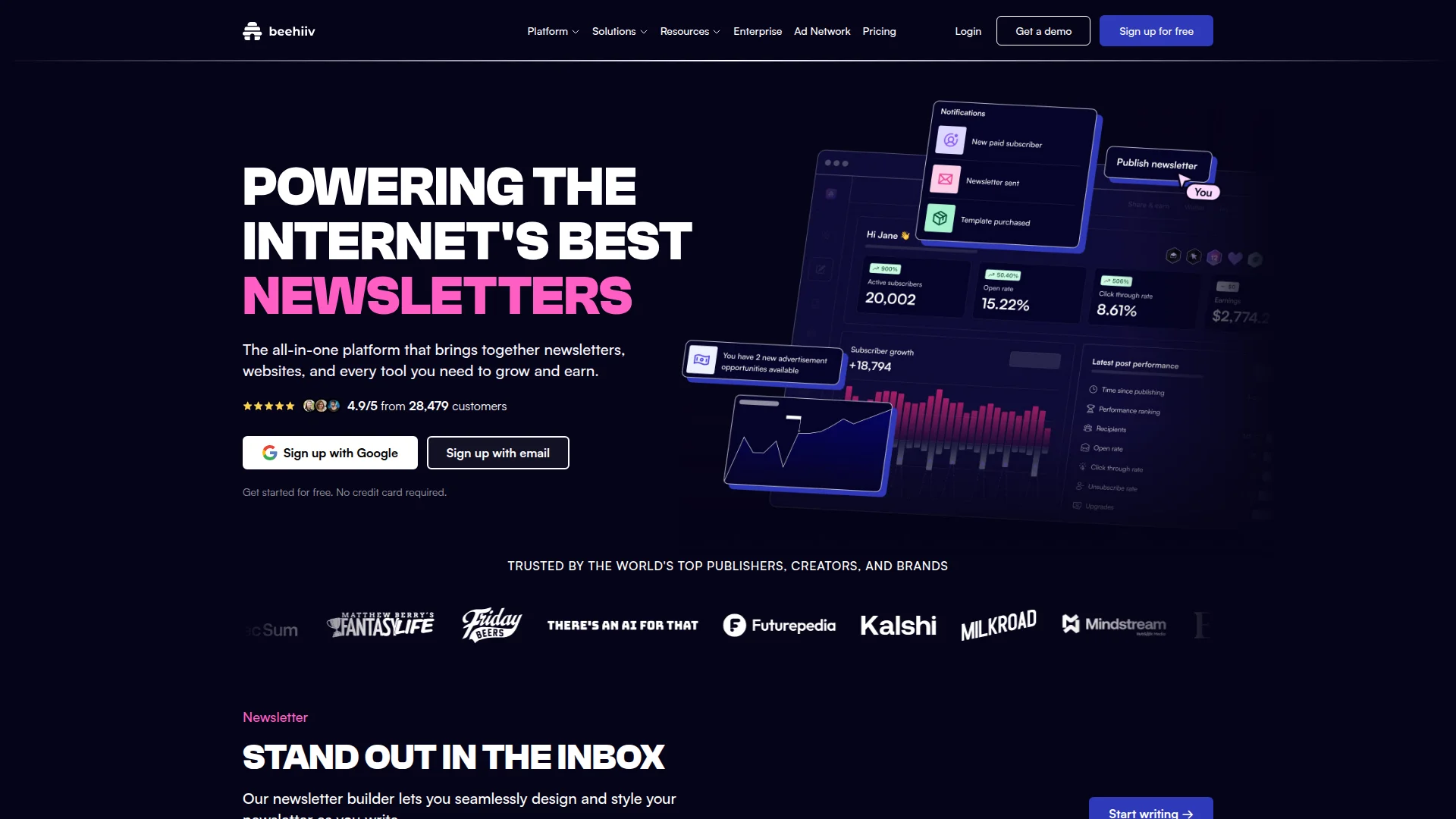
Pricing: Free (up to 2,500 subscribers) | Scale ($49/month) | Max ($99/month) | Enterprise (custom)
Beehiiv launched in 2021 and already powers newsletters generating 8-figure revenues. Built by former Morning Brew team members, it focuses on what Substack ignores: growth tools and monetization beyond subscriptions. The Ad Network connects creators with premium advertisers (no cold outreach needed). Referral programs incentivize sharing with automated reward tiers. Boosts let you cross-promote with other newsletters. The analytics dashboard tracks everything Substack doesn't—open rates by device, link clicks, subscriber sources, and revenue attribution.
What We Liked
- Ad Network handles sponsorship sales automatically (30-50% revenue increase reported)
- Referral system built-in with milestone rewards and leaderboards
- 3D analytics showing subscriber growth, engagement trends, and revenue forecasting
- Recommendation network for cross-promotion (free subscriber acquisition)
What Could Be Better
- Pricier than competitors once you hit 2,500+ subscribers
- Learning curve for advanced features (worth it, but takes time)
Growth Hacker Take: Beehiiv treats newsletters like businesses, not hobbies. The Ad Network alone justifies the cost—creators report $5K-50K monthly ad revenue without hunting sponsors. If you're serious about monetization, this is the platform.
Beehiiv Platform Review
External links: Beehiiv Pricing | G2 Reviews (4.4/5)
2. Ghost — The Open-Source Powerhouse
Pricing: Self-hosted (free software, hosting costs) | Managed hosting ($11/month for Starter, $31/month for Creator, custom for Business)
Ghost is the anti-Substack. Completely open-source, you own everything—code, data, design, subscriber relationships. Self-hosting gives total control but requires technical chops (DigitalOcean droplet setup, SSL certificates, backups). Managed hosting removes headaches while preserving ownership. Built-in membership tiers let you paywall content at multiple price points. The editor is minimalist and fast. Integrations work through webhooks and Zapier. SEO tools are surprisingly robust (meta descriptions, social cards, structured data).
What We Liked
- 100% data ownership—export everything, no lock-in
- Custom domain and branding (no "Powered by Ghost" unless you want it)
- Native membership system with Stripe integration (2.9% + $0.30 fees only)
- Active developer community creating themes and plugins
What Could Be Better
- Self-hosting requires developer skills (managed hosting solves this but costs more)
- No built-in ad network or growth tools (focused on paid memberships)
Growth Hacker Take: Ghost is for writers who think long-term. You're building an asset you control, not renting space on someone's platform. The membership focus means you keep 97.1% of revenue (vs. 90% on Substack). Technical barrier is real but worth it.
Ghost Platform Deep Dive
External links: Ghost Pricing | GitHub Repository
3. Loops — The SaaS-Focused Newcomer
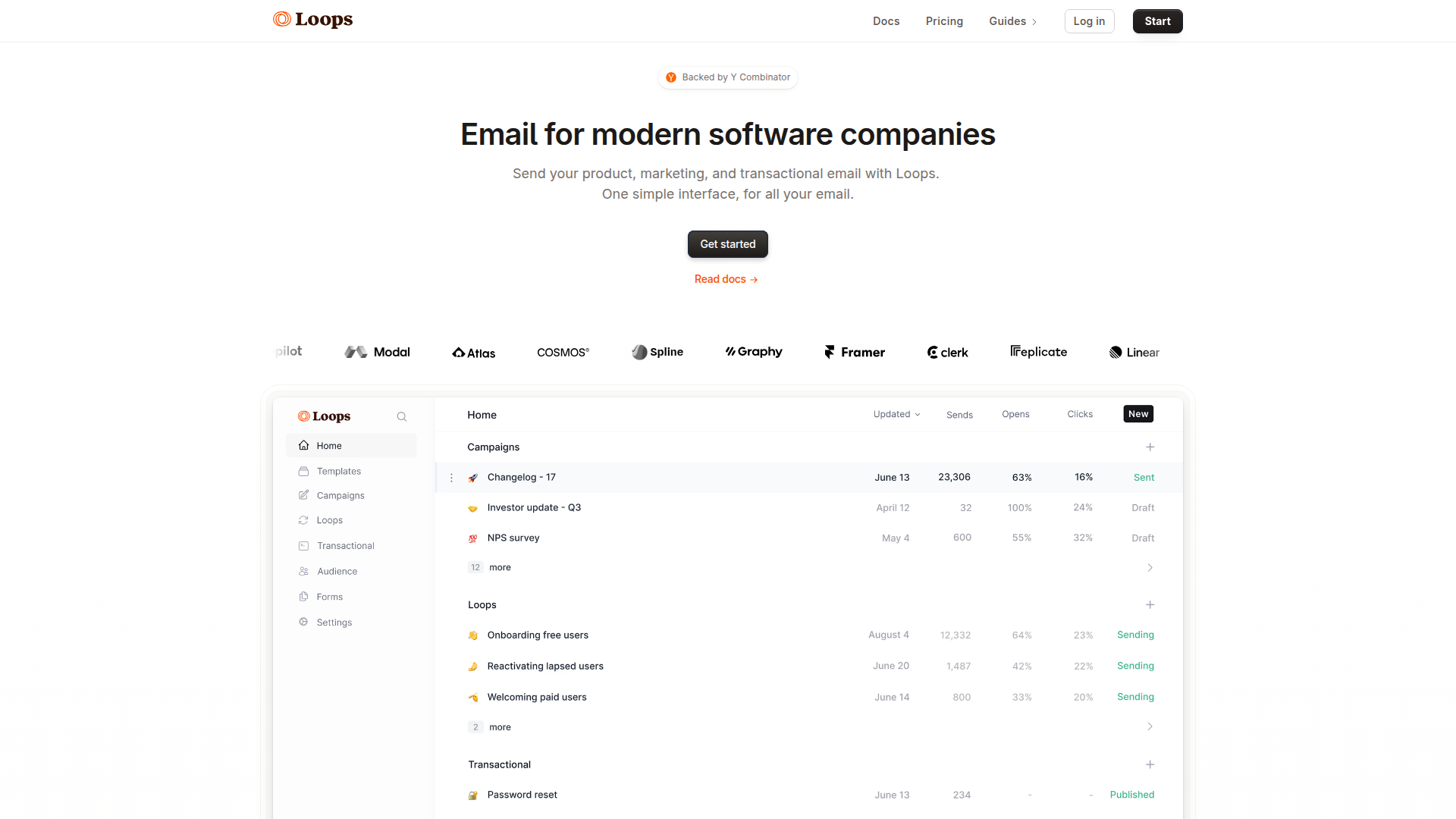
Pricing: Free (up to 2,000 contacts) | Pro ($29/month for 5K contacts, scales with usage)
Loops is what you'd build if you redesigned email for 2026. Clean interface, API-first architecture, React Email integration for developers. Built specifically for SaaS product updates and transactional newsletters. Event-triggered campaigns let you send based on user behavior (trial started, feature used, payment failed). The visual editor feels modern—drag-and-drop blocks, inline code snippets, conditional content. Segmentation is powerful without being overwhelming. Deliverability is excellent (sends through Amazon SES).
What We Liked
- API-first design (perfect for technical teams integrating with apps)
- Event-based triggers for behavioral emails (onboarding, feature announcements)
- React Email support (write templates in code if you want)
- Generous free tier (2K contacts, unlimited sends)
What Could Be Better
- Not designed for traditional newsletters (more product-focused)
- Limited monetization features (no built-in paid subscriptions)
Growth Hacker Take: Loops isn't trying to replace Substack for writers. It's targeting SaaS founders who want beautiful product update emails without MailChimp's complexity. If you're building software, this is cleaner than ConvertKit and cheaper than Customer.io.
Loops Platform Overview
External links: Loops Pricing | Product Hunt Launch
4. Kit (ConvertKit) — The Creator Economy Veteran
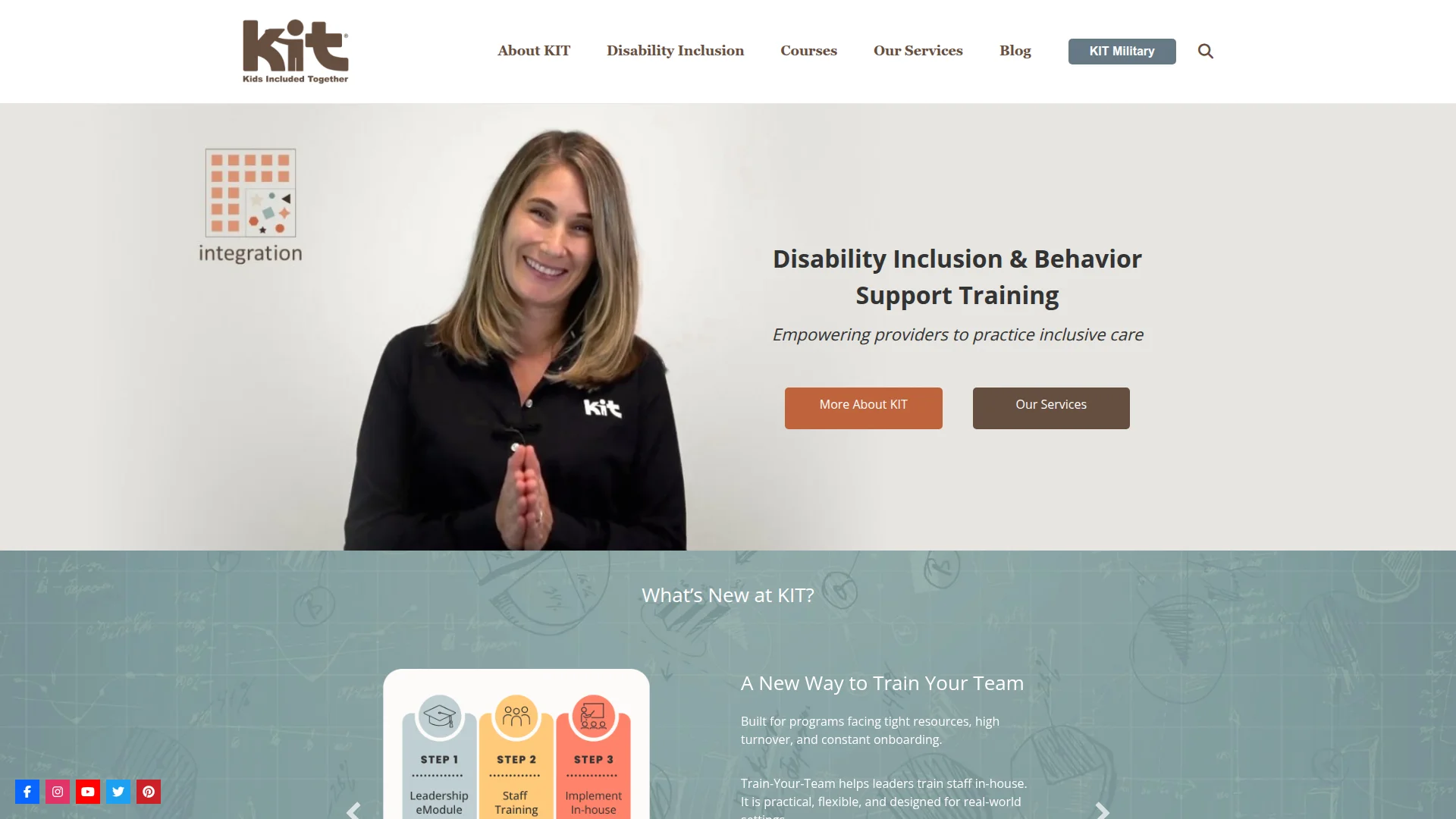
Pricing: Free (up to 10,000 subscribers, Kit branding) | Creator ($25/month for 1K subs) | Creator Pro ($50/month)
Kit (rebranded from ConvertKit in 2024) targets YouTubers, podcasters, and online course creators. Visual automation builder lets you create sequences triggered by tags, link clicks, or form submissions. Landing pages and forms are included (ugly but functional). The Commerce feature sells digital products with 0% platform fees (Stripe's 2.9% + $0.30 only). Subscriber tagging is powerful—segment by interests, behavior, purchase history. Email templates are basic but customizable. Deliverability is solid (mid-90% inbox rates).
What We Liked
- Generous free tier (10K subs with full features minus automation)
- Visual automation builder (easier than most competitors)
- Built-in digital product sales (0% platform fee, underrated feature)
What Could Be Better
- Templates feel dated compared to Beehiiv or Loops
- Limited analytics (basic open/click rates, no advanced segmentation insights)
Growth Hacker Take: Kit is the budget-friendly Substack alternative with creator-specific features. The free tier is actually usable (unlike most freemium traps). If you're starting out or don't need advanced monetization, this does the job for $25/month.
External links: Kit Pricing | G2 Reviews (4.4/5)
5. Kajabi — The All-in-One Course Platform
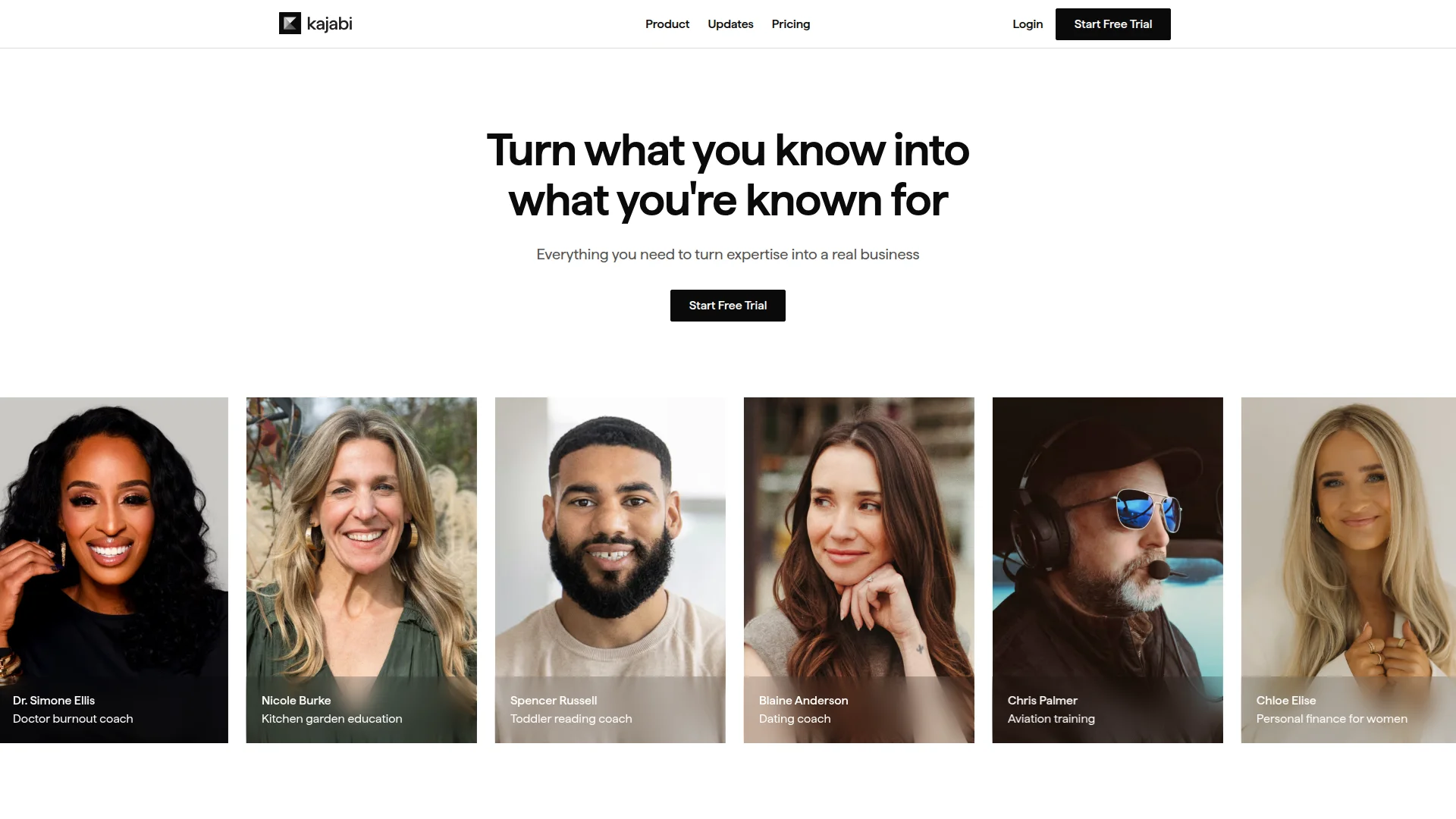
Pricing: Kickstarter ($149/month) | Basic ($199/month) | Growth ($319/month)
Kajabi is overkill if you only want newsletters—but unbeatable if you're building a knowledge business. Newsletters integrate with online courses, membership sites, coaching programs, and digital downloads. The email builder is solid with automation workflows. Landing pages convert well (A/B testing included). Payment processing is built-in with subscription management. Analytics track student progress, engagement, and revenue. You can run your entire creator business from one dashboard.
What We Liked
- Complete ecosystem (newsletters + courses + community + payments)
- Strong automation for course delivery and drip content
- Built-in website builder and hosting (no separate tools needed)
What Could Be Better
- Expensive if you only need email (newsletters are secondary feature)
- Steeper learning curve than dedicated newsletter platforms
Growth Hacker Take: Don't use Kajabi for newsletters alone—that's like buying a car to listen to the radio. But if you're selling courses or memberships, having email integrated with your content delivery is powerful. The $149/month base price makes sense when you factor in what you're replacing.
External links: Kajabi Pricing | G2 Reviews (4.3/5)
6. Buttondown — The Minimalist's Choice
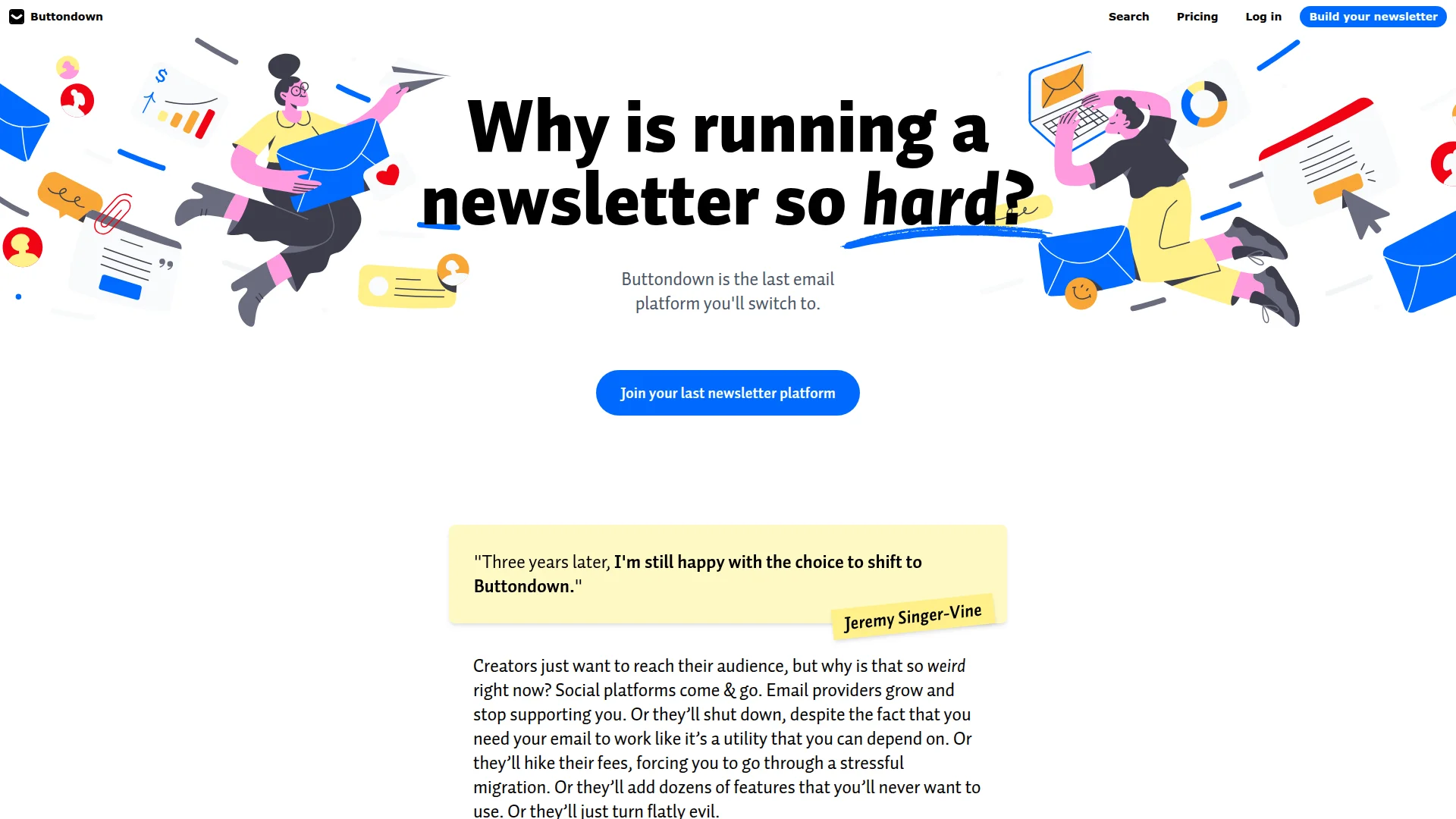
Pricing: Free (up to 100 subscribers) | Standard ($9/month for 1K subs) | Professional (custom)
Buttondown strips newsletters to essentials. Markdown editor, scheduled sends, basic automation, done. No fancy growth tools, no ad networks, no course integrations. Just clean, fast email publishing. The interface feels like using Notion—distraction-free writing. Archives are beautifully designed (better than Substack's default). RSS support is built-in. API access lets developers integrate with custom workflows. Privacy-focused (GDPR compliant, no tracking pixels by default).
What We Liked
- Extremely affordable ($9/month for most indie creators)
- Markdown-first editor (perfect for technical writers)
- Clean, fast interface with zero bloat
What Could Be Better
- No monetization features (paid subscriptions not supported)
- Limited templates and design customization
Growth Hacker Take: Buttondown is for writers who just want to write. No growth hacking, no monetization pressure, no feature overload. If you're prioritizing simplicity and cost over revenue generation, this nails it.
External links: Buttondown Pricing
7. MailerLite — The Budget All-Rounder
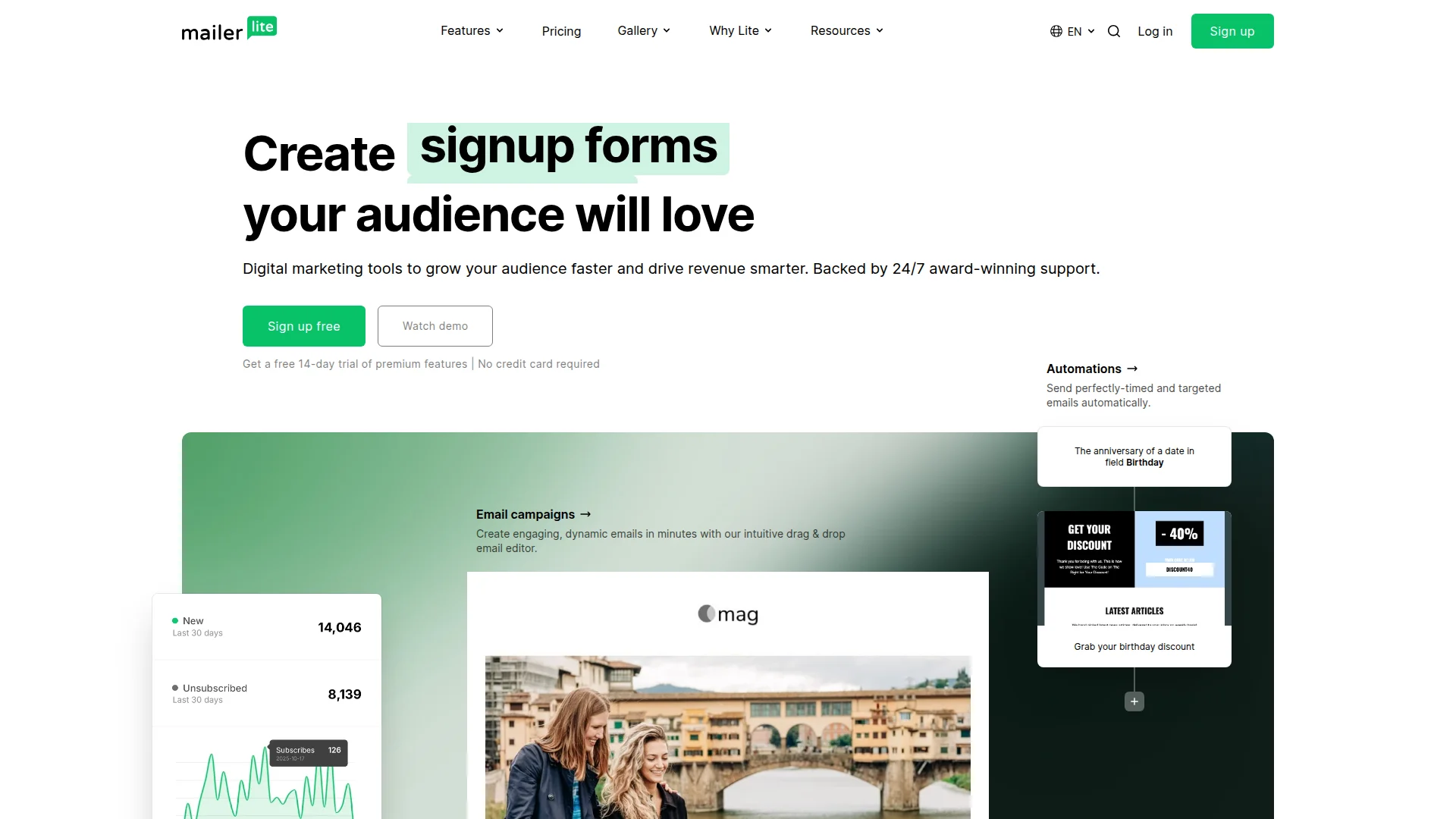
Pricing: Free (up to 1,000 subscribers, 12K emails/month) | Growing Business ($10/month for 1K subs) | Advanced ($21/month) | Enterprise (custom)
MailerLite isn't newsletter-specific but handles them capably at lower prices than competitors. Drag-and-drop editor works well for basic layouts. Landing pages and signup forms are included. Automation builder lets you create sequences based on subscriber behavior. Email campaigns support A/B testing. The free tier is genuinely useful (1K subs, unlimited emails). Paid plans include website builder, digital product sales, and Facebook integration.
What We Liked
- Generous free tier (1K subs, 12K monthly emails)
- Clean interface that's easy to learn
- Website builder included (basic but functional)
What Could Be Better
- Not optimized for newsletter publishing (more general email marketing)
- Limited paid subscription features
Growth Hacker Take: MailerLite works if you're budget-constrained and don't need newsletter-specific features. At $10/month for 1K subs, it's cheaper than most alternatives. Just don't expect Beehiiv-level monetization tools or Ghost-level flexibility.
External links: MailerLite Pricing | G2 Reviews (4.6/5)
How to Choose Your Substack Alternative
Pick based on your primary goal:
- Choose Beehiiv if: You want to monetize through ads and sponsorships. The Ad Network and growth tools justify the higher price.
- Choose Ghost if: You're building a long-term media business and want complete control. Self-hosting is worth learning.
- Choose Loops if: You're a SaaS founder sending product updates. The API-first approach integrates with your app.
- Choose Kit if: You're starting out or need creator-focused features (landing pages, digital products) on a budget.
- Choose Kajabi if: You're selling courses or memberships alongside newsletters. All-in-one makes sense for knowledge businesses.
- Choose Buttondown if: You just want to write without complexity. Minimalism is the feature.
- Choose MailerLite if: You need general email marketing at the lowest price point.
For most creators leaving Substack, Beehiiv offers the best balance of features, growth tools, and monetization. If you're technical and thinking long-term, Ghost gives you control worth the learning curve. SaaS companies should try Loops for its modern approach to transactional emails.
FAQ
What's the best free Substack alternative?
Loops offers 2,000 contacts free with full features, and Kit gives 10,000 subscribers free (with limitations). Buttondown's free tier covers 100 subscribers, good for testing.
Can I import my Substack subscribers to these platforms?
Yes, all platforms listed support CSV imports. Substack lets you export your subscriber list (email addresses only, not payment info for paid subscribers).
Which platform has the best monetization features?
Beehiiv leads with its built-in Ad Network, referral programs, and premium subscription tools. Ghost is strong for membership-based revenue.
Do these platforms take a percentage of my revenue?
Ghost takes 0% (only Stripe's 2.9% + $0.30 fee). Beehiiv takes 0% on premium subscriptions. Kit and Kajabi also charge 0% platform fees.
Which is easiest to set up for non-technical users?
Beehiiv and Kit have the smoothest onboarding. Ghost requires technical knowledge for self-hosting (managed hosting solves this).
Can I use my own domain name?
Yes, all paid plans on these platforms support custom domains. Ghost requires it, others make it optional.
About the Author
Marco Delvane
Growth Team at Vibe Growth Stack. Tested 100+ growth tools so you don't have to. Writes about what actually works for startups — no fluff, no affiliate bias.
More in this series
View full guide →MailerLite vs Mailchimp 2026: Which Email Tool Wins?
Compare MailerLite and Mailchimp in 2026. Discover which email marketing tool offers better features, pricing, and automation for your business needs.
ConvertKit vs Mailchimp 2026: Which Email Platform Wins?
Compare ConvertKit vs Mailchimp in 2026. Discover which email platform best suits creators vs businesses, pricing, automation, and features.
Best ConvertKit Alternatives 2026: 7 Email Platforms
Discover the top ConvertKit alternatives for creators in 2026. Compare 7 email marketing platforms with pricing, features, and best use cases.
Substack vs Beehiiv 2026: Which Newsletter Platform Wins?
Compare Substack and Beehiiv in 2026. Discover pricing, features, monetization, and growth tools to choose the best newsletter platform for your needs.
Best ActiveCampaign Alternatives 2026: 7 Cheaper Email Tools
Discover 7 affordable ActiveCampaign alternatives in 2026. Compare email marketing tools, automation features, and pricing to find the best fit for your team.
Related Articles
Get growth tips in your inbox
No-BS growth hacks, tool reviews, and best-value picks. Weekly.
Unsubscribe anytime. We hate spam too.