Best SendGrid Alternatives in 2026: Top Email Platforms
SendGrid's deliverability issues post-Twilio acquisition have developers seeking better options. Compare modern email platforms with cleaner APIs and reliable delivery.

Marco Delvane
Growth Team
Part of our Best Email Marketing Tools for Startups 2026 guide

Key Takeaways
- SendGrid's reputation took a hit after Twilio's acquisition — deliverability issues and support delays are pushing founders to explore alternatives
- Modern email platforms like Resend and Loops are built specifically for developers, with cleaner APIs and better documentation than SendGrid's legacy system
- Pricing models vary wildly — some charge per email, others per contact, and a few offer unlimited sending (which sounds great until you hit the fine print)
- If you're sending under 100k emails/month, you have better options than SendGrid that cost less and deliver more reliably
- The "best" alternative depends on your use case: transactional emails need different tools than marketing campaigns or newsletters
Why Founders Are Ditching SendGrid
SendGrid used to be the default choice for transactional email. Then Twilio bought them in 2019, and things got... complicated. The platform that once felt like a developer's best friend now feels like enterprise bloatware with a startup price tag.
Deliverability rates have become inconsistent, with emails landing in spam more frequently, especially after SendGrid's IP reputation took hits from shared IP pools being abused. It's not just a statistic — it's lost revenue and confused customers.
The developer experience has also aged poorly. SendGrid's API documentation reads like it was written in 2015. Modern alternatives like Resend offer cleaner SDKs, better error messages, and webhook implementations that actually make sense.
Quick Comparison: SendGrid vs The Competition
| Tool | Starting Price | Best For | Free Tier? | VGS Verdict |
|---|---|---|---|---|
| SendGrid | $19.95/month | High-volume enterprise | 100 emails/day | Reliable but overpriced for startups |
| Resend | $20/month | Developer experience | 3,000/month | Best API, growing fast |
| Loops | $29/month | SaaS email marketing | Yes (2,000 contacts) | Marketing + transactional in one |
| Postmark | $15/month | Transactional only | 100 emails/month | Laser-focused on delivery |
| Amazon SES | Pay as you go | Developers who like pain | 62,000/month | Cheapest but requires setup hell |
| Mailgun | $35/month | API-first sending | 5,000/month | Solid choice, less hype |
| Brevo (Sendinblue) | $25/month | Marketing automation | 300 emails/day | All-in-one for small teams |
| SparkPost | $20/month | High-volume senders | 500/month | Enterprise features, startup pricing |
1. Resend — The Developer's Dream Email API
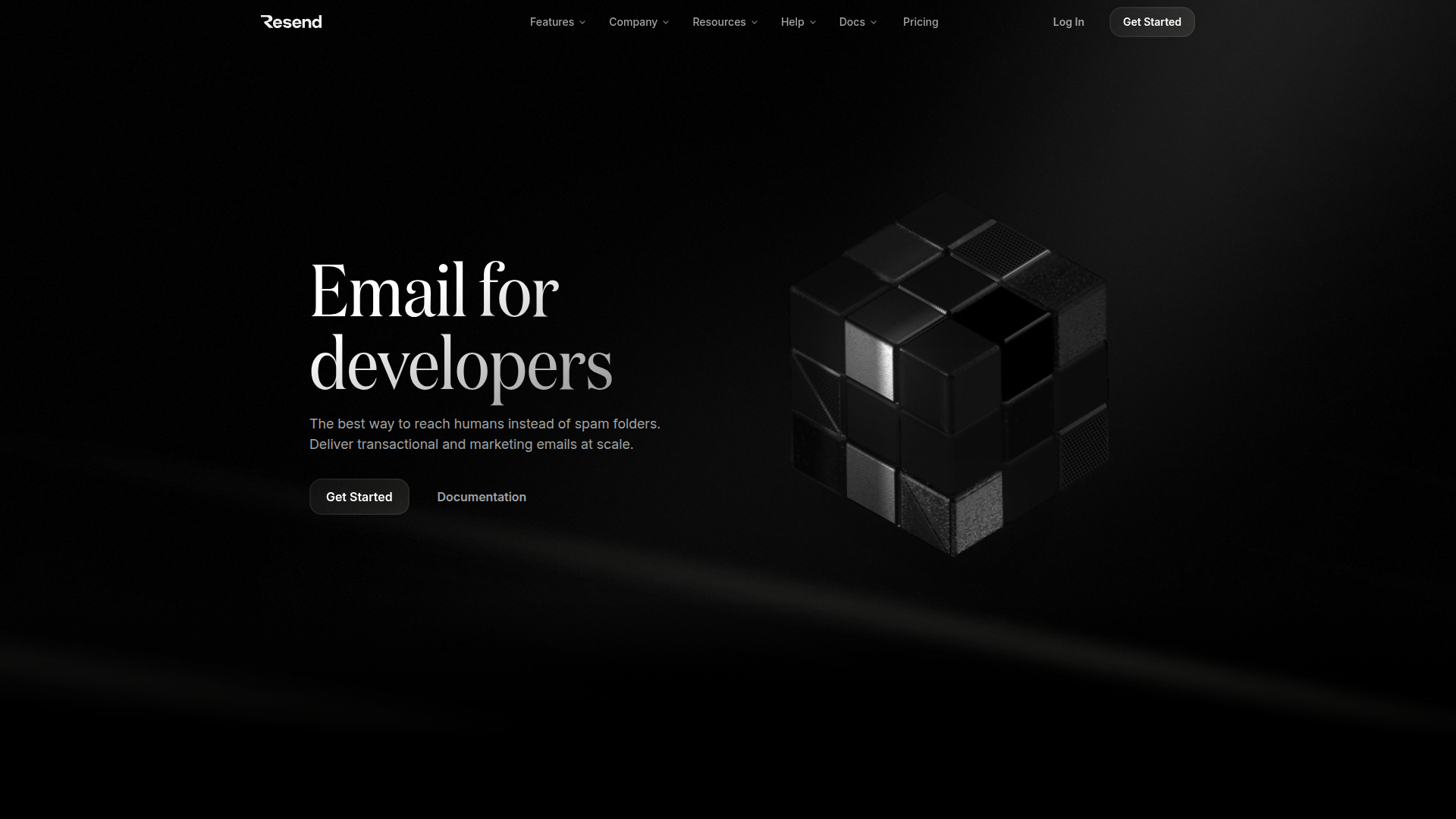
Pricing: Free for 3,000 emails/month, then $20/month for 50,000 emails
Resend is a developer's paradise with its clean APIs and React Email integration. Forget old-school HTML tables; you can write React components instead, keeping everything within your codebase. Deliverability is prioritized with IP warm-up, leading to remarkable inbox rates compared to competitors.
What We Liked
- React Email integration makes template development actually enjoyable
- Generous free tier (3,000 emails) with no daily sending limits
- Best-in-class API documentation with real examples
- Email analytics include opens, clicks, bounces, and spam complaints
What Could Be Better
- Newer platform means smaller community and fewer integrations
- No built-in marketing automation features (purely transactional)
- Advanced features like A/B testing aren't available yet
Growth Hacker Take: Resend should be your go-to if coding quality is your thing. It fits perfectly with SaaS products, and the React Email alone is a time-saver. But if you need marketing emails, look at Loops.
Resend Review — Nodemailer vs Resend vs SendGrid — Which One Is BEST?
View Resend pricing | Read Resend reviews on G2
2. Loops — SaaS Email Marketing That Doesn't Suck
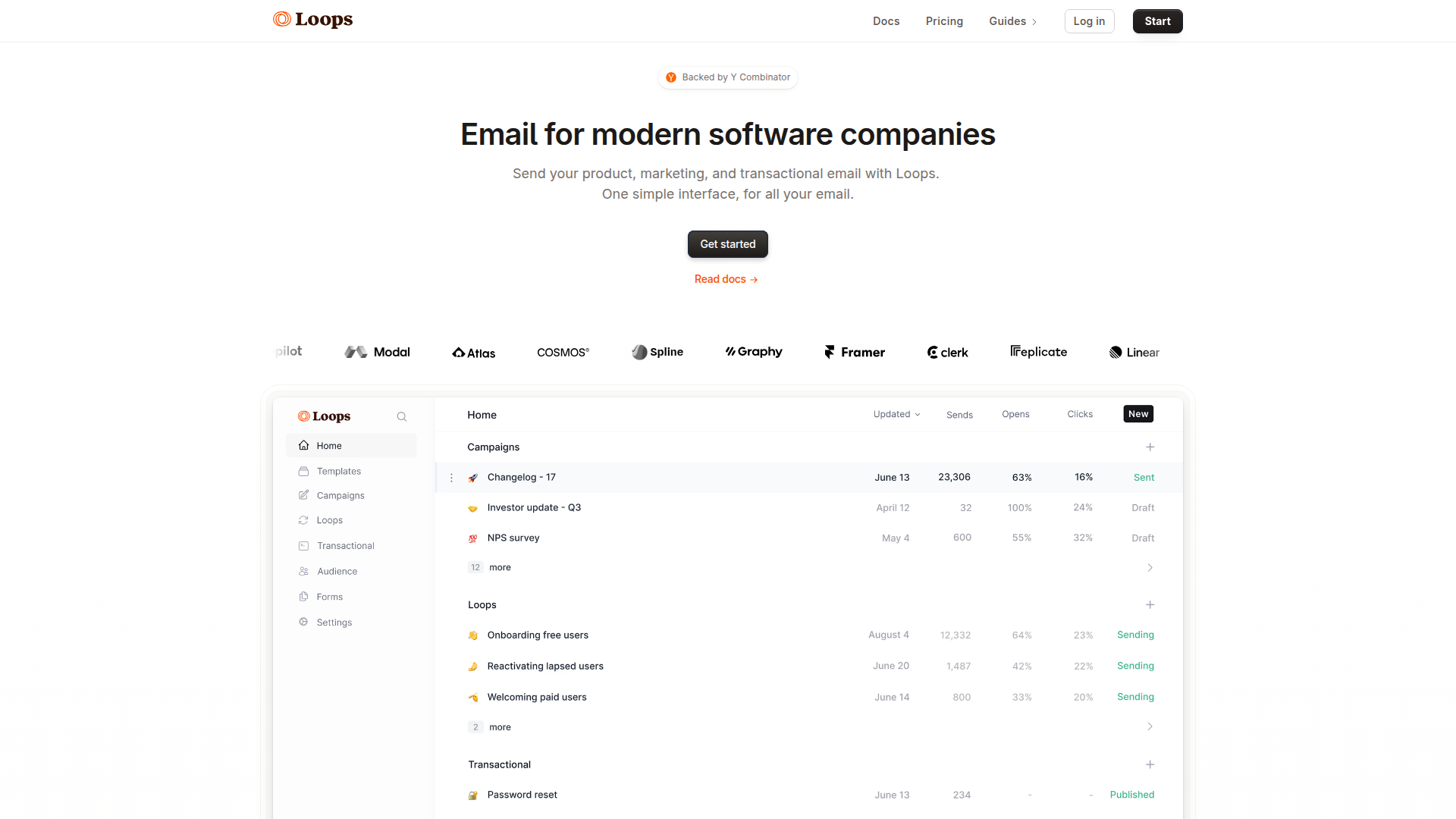
Pricing: Free for up to 2,000 contacts, then $29/month for unlimited emails
Loops combines transactional emails and marketing campaigns in one user-friendly interface. The email builder suits non-designers perfectly, while the event-based automation can trigger personalized email sequences directly connected to your app. You don't pay per email but per contact, making it cost-effective for SaaS.
What We Liked
- Unlimited emails per month — pay per contact, not per send
- Visual builder that doesn't require design skills
- Event-based triggers connect directly to your product
- Includes both transactional and marketing email in one platform
What Could Be Better
- Limited integrations compared to enterprise platforms
- Advanced segmentation features are still developing
- No SMS or multi-channel capabilities yet
Growth Hacker Take: If you're a small SaaS, Loops is a smart pick. Unlimited sending for $29/month is a steal. Just don't expect it to be a giant like Salesforce.
Loops Review — Why I Love Using Loops for Drip Email Campaigns
View Loops pricing | See Loops on Product Hunt
3. Postmark — Transactional Email Obsession
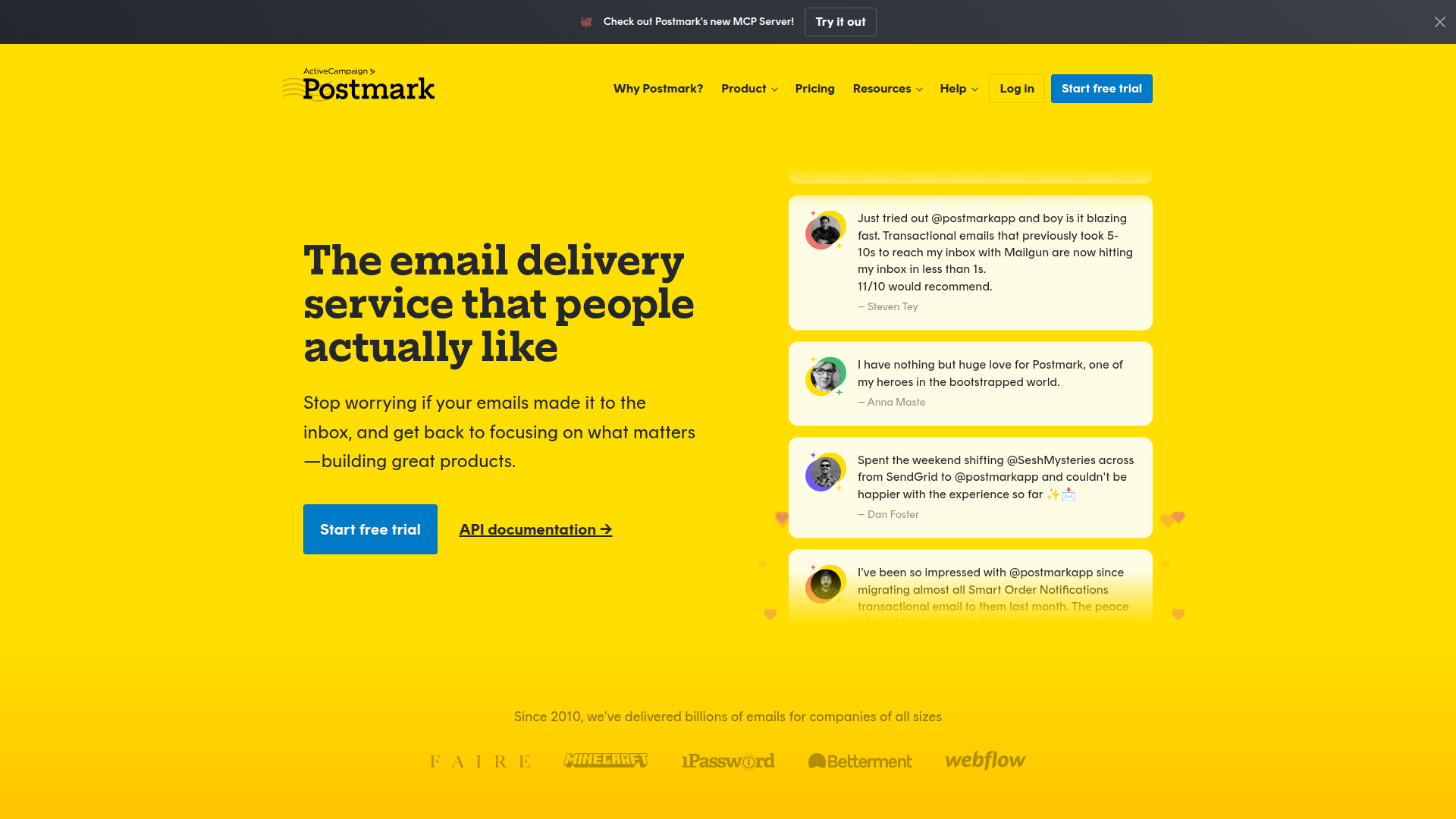
Pricing: $15/month for 10,000 emails, then $1.25 per additional 1,000 emails
Postmark is dedicated to transactional emails with an impressive 2-second average delivery speed. This platform ensures high deliverability and provides comprehensive 45-day log retention that's crucial for debugging. The template system is perfect for devs; effortless yet powerful.
What We Liked
- Industry-leading 99.7% delivery rate with transparent reporting
- 2-second average delivery speed for time-sensitive emails
- 45-day log retention with powerful search and filtering
- Template system that's actually developer-friendly
What Could Be Better
- No marketing email features at all (strictly transactional)
- Pricing gets expensive above 50k emails/month compared to competitors
- Limited customization options for the dashboard
Growth Hacker Take: For mission-critical delivery (think fintech, e-commerce), Postmark's reliability is second to none. Just remember, it's not for marketing emails.
Postmark Review — Best Email Service Provider For Transactional Emails
View Postmark pricing | Read Postmark reviews on G2
4. Amazon SES — Cheap But You'll Earn It
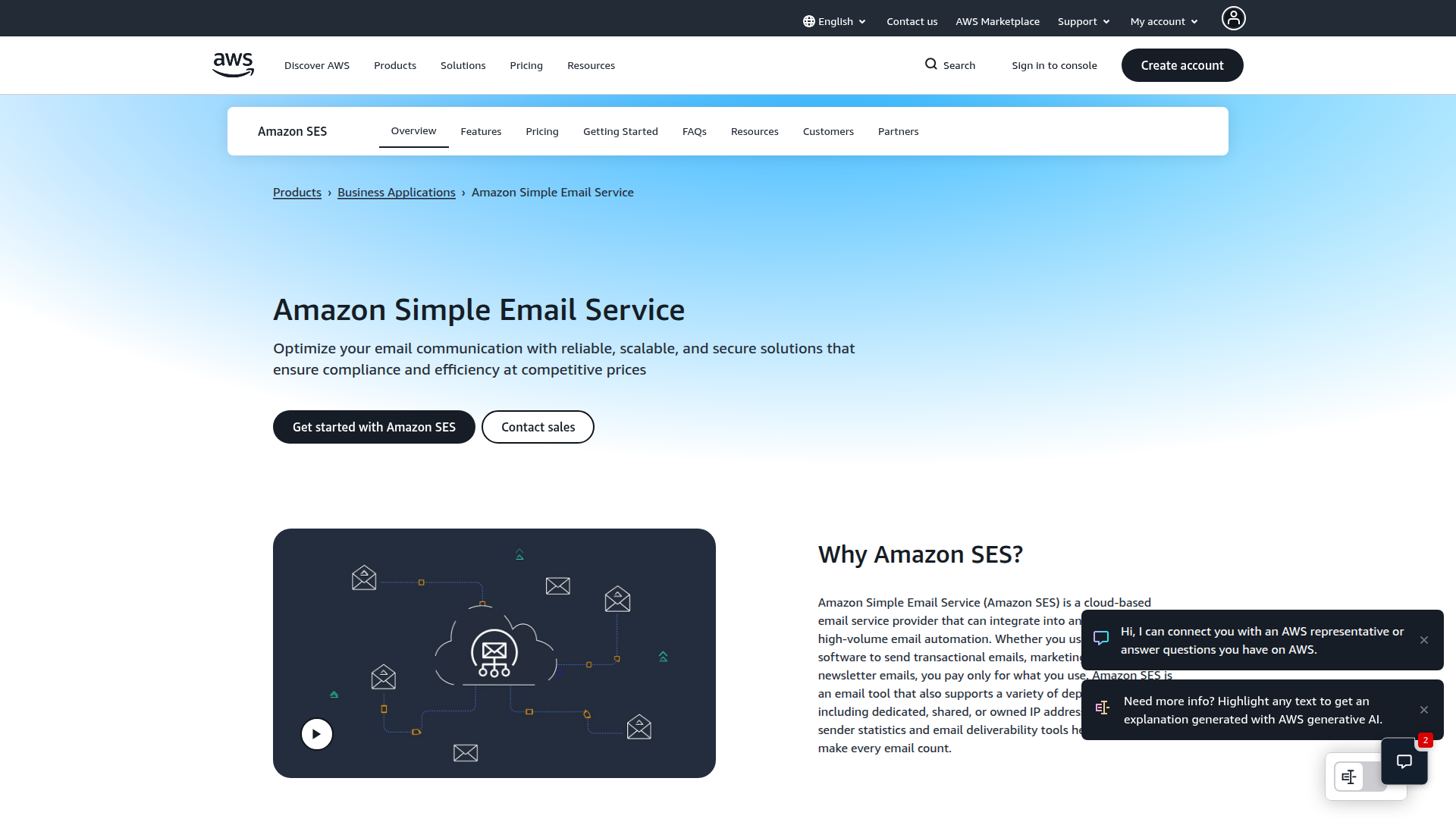
Pricing: $0.10 per 1,000 emails (after free tier of 62,000 emails/month when sent from EC2)
Amazon SES offers rock-bottom prices for email sending, ideal for high-volume users. However, the setup is a DIY situation that requires technical expertise, from DNS configuration to request production access. SES is all API-based, so you'll handle everything from analytics to templates.
What We Liked
- Unbeatable pricing at scale ($0.10 per 1,000 emails)
- Generous free tier of 62,000 emails/month from EC2
- Enterprise reliability and infrastructure
- Complete control over email sending infrastructure
What Could Be Better
- Requires significant technical expertise to set up properly
- No dashboard, templates, or analytics included
- Support is slow and ticket-based unless you pay extra
Growth Hacker Take: If you're sending over half a million emails/month and live in AWS already, SES could be your budget savior — provided you have the tech skills to make it work.
View Amazon SES pricing | Read SES documentation
5. Mailgun — The Reliable Middle Ground
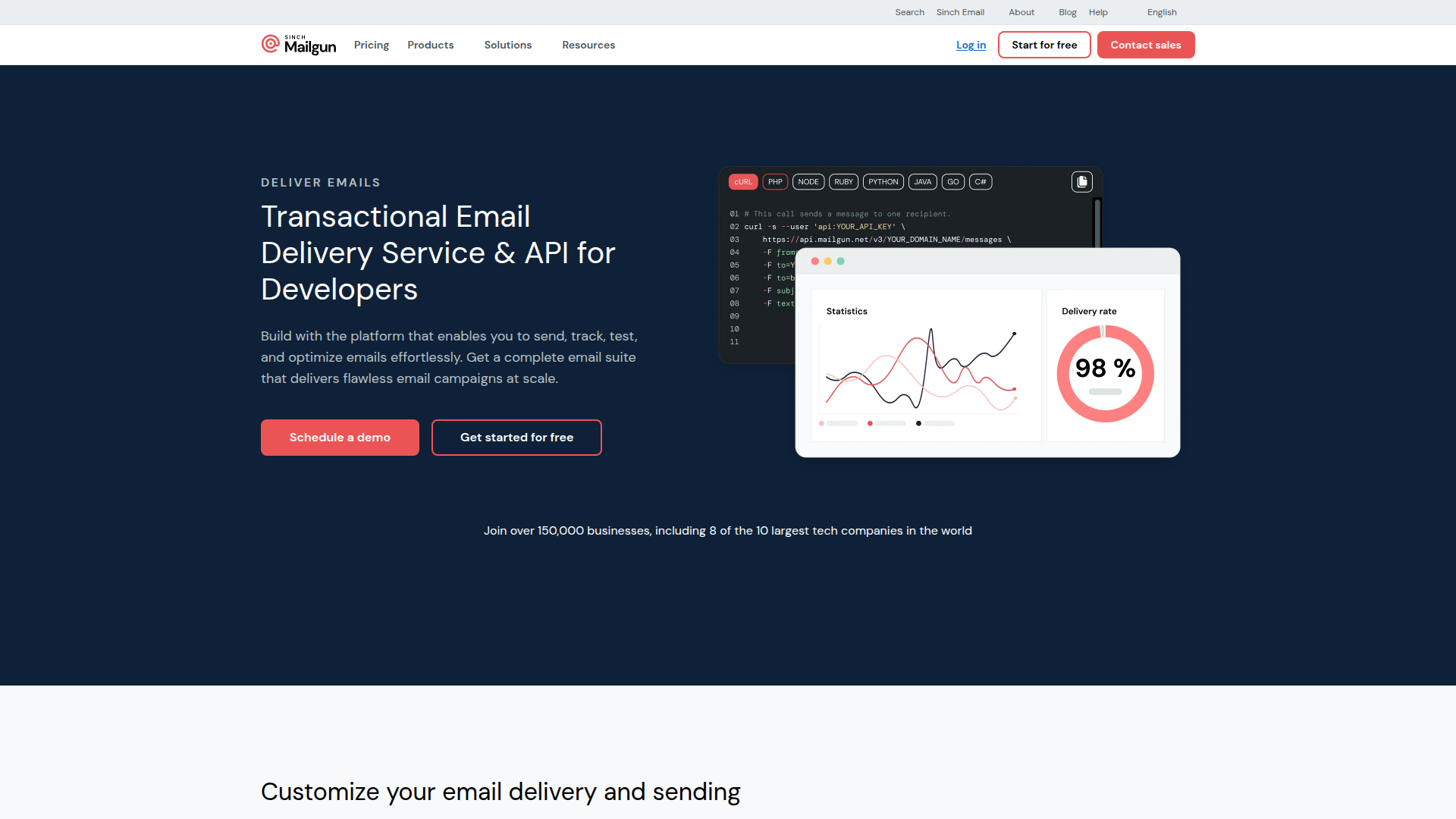
Pricing: Free for 5,000 emails/month (3 months), then $35/month for 50,000 emails
Mailgun is the workhorse email platform, operating quietly and efficiently. It's reliable with a well-designed API and comprehensive documentation. Built-in email validation and a decent free tier make it a solid choice for startups and beyond.
What We Liked
- Mature platform with excellent API documentation
- Built-in email validation saves money and protects reputation
- EU data residency available for GDPR compliance
- Generous free tier for testing (5,000 emails for 3 months)
What Could Be Better
- Pricing gets expensive fast above 100k emails/month
- Dashboard UI feels dated compared to newer platforms
- Support quality varies depending on your plan tier
Growth Hacker Take: It's not the flashiest, but Mailgun just works. Choose it if stability and reliability are your top concerns.
View Mailgun pricing | Read Mailgun reviews on G2
6. Brevo (formerly Sendinblue) — Marketing Automation for Small Teams
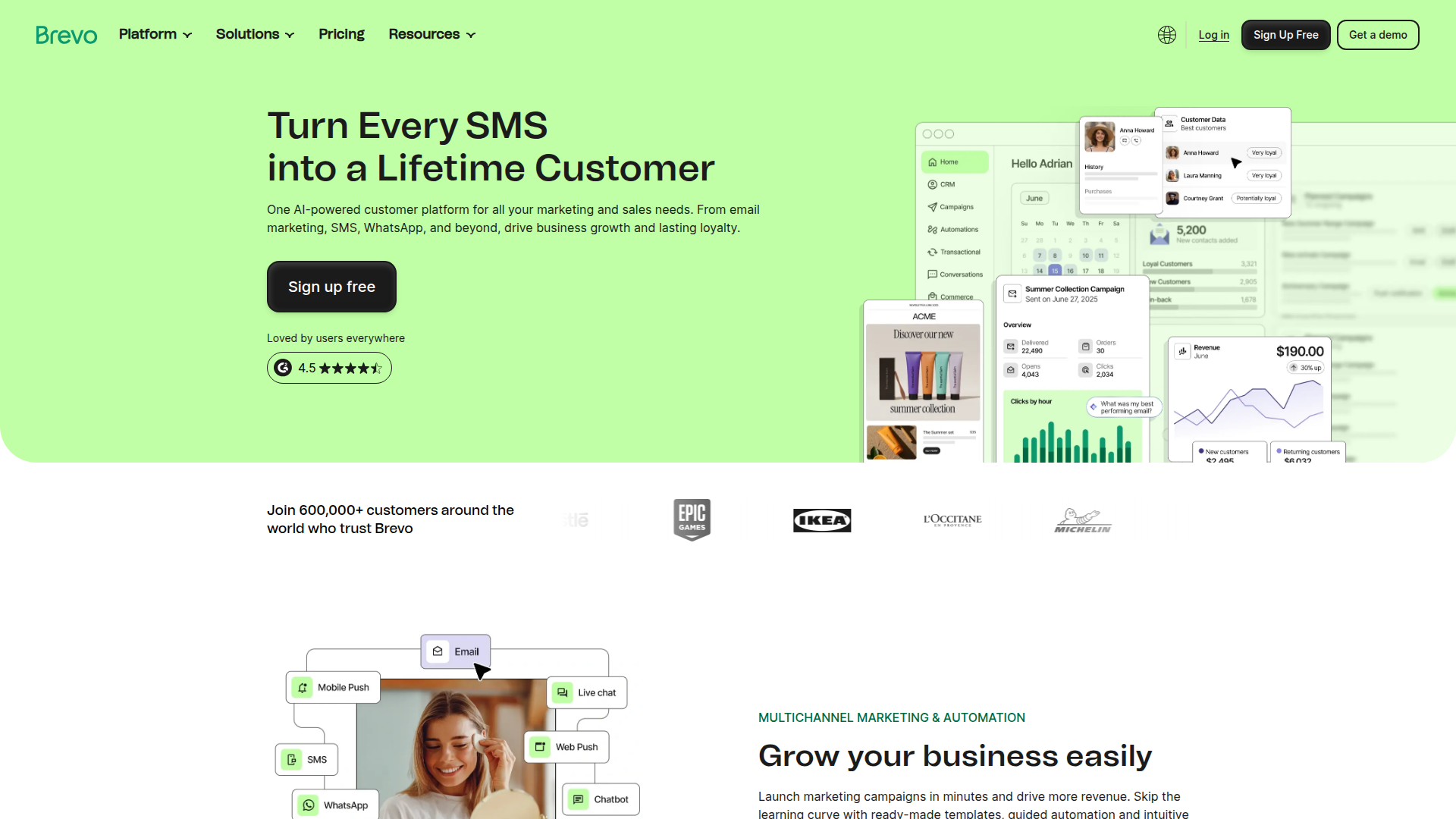
Pricing: Free for 300 emails/day, then $25/month for 20,000 emails
Brevo is an all-inclusive package merging email, SMS, chat, and CRM into one user-friendly platform. Its drag-and-drop builder is modern and intuitive, while the automation tools rival more expensive options. SMS is included, which adds value for multi-channel campaigns.
What We Liked
- All-in-one platform includes email, SMS, chat, and CRM
- Powerful marketing automation at small business prices
- Daily sending limit (not monthly) means more flexibility
- Good deliverability rates and dedicated IP options
What Could Be Better
- Interface can feel cluttered with so many features
- Advanced features require higher-priced tiers
- Brevo branding on emails unless you pay for removal
Growth Hacker Take: Brevo is your best bet if you want a comprehensive solution for your marketing needs without breaking the bank. At $25/month, it's priced for small teams ready to grow.
Brevo Review — Is It Actually THE BEST Marketing Tool? (2025 Review)
View Brevo pricing | Read Brevo reviews on Capterra
7. SparkPost — Enterprise Features, Startup Friendly
Pricing: Free for 500 emails/month, then $20/month for 50,000 emails
SparkPost bridges enterprise capabilities with startup-friendly pricing. Its analytics rival those of dedicated platforms and deliverability optimization is automated to improve inbox placement actively. While its free tier is limited, the paid plans deliver excellent value for serious senders.
What We Liked
- Enterprise-grade infrastructure at startup prices
- Advanced analytics and reporting that rivals expensive platforms
- Automated deliverability optimization and recommendations
- Subaccount system perfect for agencies
What Could Be Better
- Tiny free tier (500 emails) compared to competitors
- Learning curve is steeper than simpler alternatives
- Some features require technical expertise to utilize fully
Growth Hacker Take: SparkPost is perfect if you're driven by data and want robust email performance insights. It's overkill for basic needs but a goldmine for detail-oriented growth hackers.
View SparkPost pricing | Read SparkPost reviews on G2
8. MailerSend — Beautiful Emails Made Easy
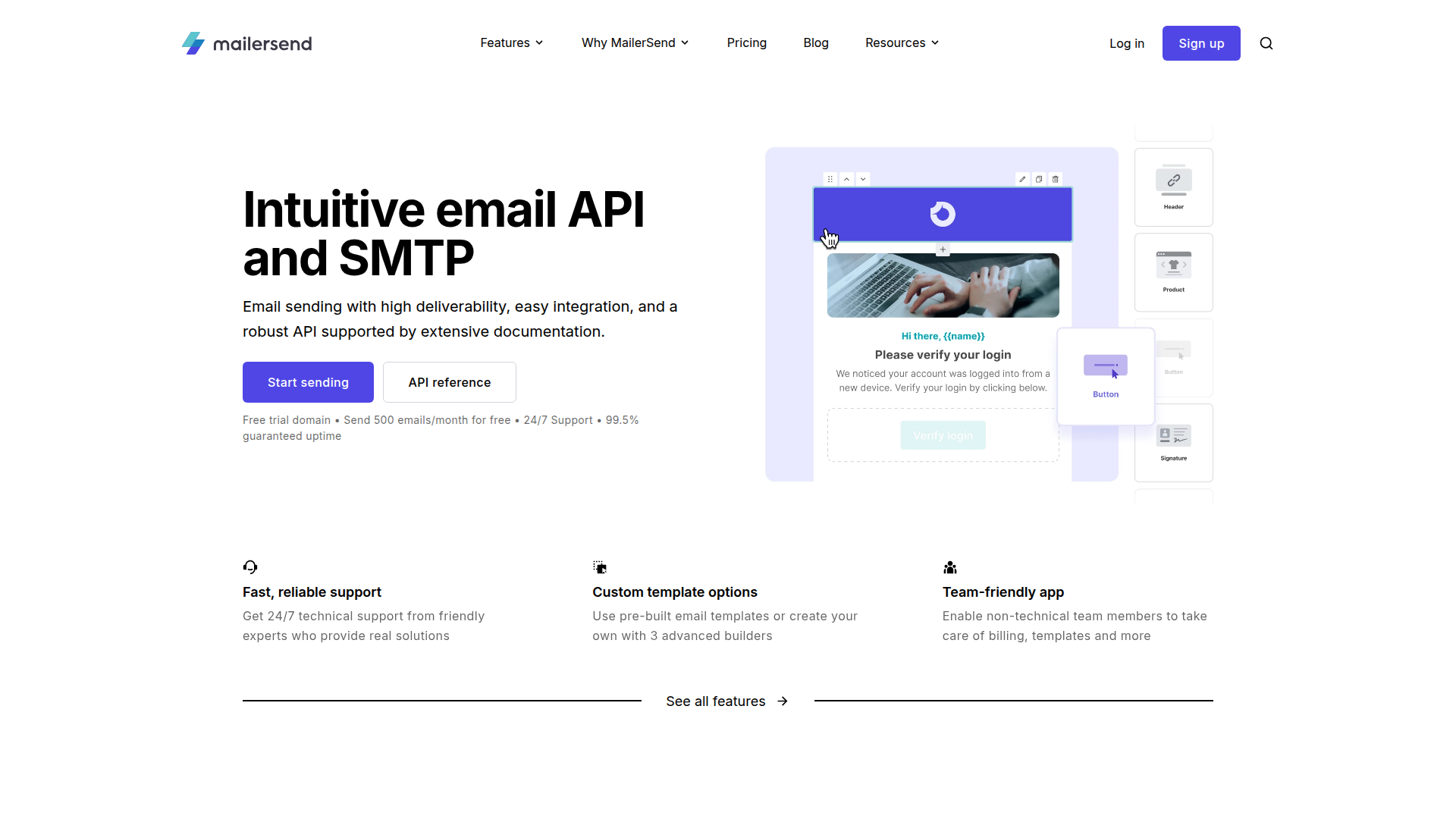
Pricing: Free for 12,000 emails/month, then $25/month for 50,000 emails
MailerSend turns transactional emails into a design experience. The drag-and-drop builder allows beautifully crafted emails without needing design skills, going beyond basic templates. It stands out with its robust email testing features that ensure perfect rendering every time.
What We Liked
- Generous free tier (12,000 emails/month) with all features
- Best-in-class drag-and-drop builder for transactional email
- Built-in email testing across 90+ clients and devices
- Dynamic content personalization with conditional logic
What Could Be Better
- Fewer third-party integrations than established competitors
- Advanced features like A/B testing require higher tiers
- Deliverability reporting is less detailed than specialized platforms
Growth Hacker Take: If your transactional emails are key to your brand, MailerSend makes them stand out. It’s great for startups eager to maintain beautiful email standards from day one.
View MailerSend pricing | See MailerSend on Product Hunt
How to Choose the Right SendGrid Alternative
The "best" email platform doesn't exist. It depends on your specific needs, technical skills, and budget. Here's how to actually decide instead of analysis paralysis.
If You're a Solo Founder or Small Team
Go with Loops or MailerSend. Both have generous free tiers, don't require engineering resources to set up, and scale affordably as you grow. Loops is better if you want marketing automation built in. MailerSend is better if you want beautiful transactional emails without hiring a designer.
If You're Developer-First
Resend is the obvious choice. The React Email workflow, clean API design, and excellent documentation make it feel like it was built by developers who actually send emails. Second choice would be Postmark if you prioritize reliability over developer experience.
If You're Sending High Volume (500k+ emails/month)
Amazon SES wins on price, but requires technical expertise. If you have a dedicated engineer for email infrastructure, the math works out. If not, SparkPost or Mailgun offer enterprise features with less operational overhead. SendGrid is still viable at this scale despite its issues.
If You Need Marketing Automation
Brevo offers the most features for the price. You get email, SMS, CRM, and automation in one platform. Alternative is Loops if you're specifically in the SaaS space and want something more focused. Avoid purely transactional platforms like Postmark or Resend — you'll end up managing two tools.
If Deliverability is Mission-Critical
Postmark has the best track record. Their 99.7% delivery rate isn't marketing — it's published quarterly with receipts. For fintech, e-commerce, or anything where a missed email means lost revenue, pay the premium. Second choice is SparkPost with their automated deliverability optimization.
Budget Considerations
- Tightest budget (under $30/month): Start with free tiers. Resend gives 3,000 emails/month, MailerSend gives 12,000, and Loops gives unlimited sends to 2,000 contacts. All genuinely free, not trial periods.
- Growth stage ($30-100/month): Loops at $29/month for unlimited sends is unbeatable value. Mailgun or MailerSend work well if you need more volume or specific features.
- Scale ($100-500/month): At this point you're choosing based on features, not price. SparkPost, Mailgun, or Postmark all work well. Consider deliverability track record and support quality over small price differences.
Red Flags to Avoid
- Platforms that charge setup fees or require annual contracts for basic features
- Email services that don't offer dedicated IPs or domain authentication above certain volumes
- Companies with consistent complaints about deliverability issues on G2 or Capterra
- Platforms without clear webhook documentation — you'll regret it when building
- Services that bundle email with unrelated products you don't need
Frequently Asked Questions
Is SendGrid still worth using in 2026?
SendGrid remains viable for enterprise companies sending millions of emails monthly who need proven infrastructure and can afford premium support. For startups and small businesses, better alternatives exist at lower prices with comparable or better deliverability. The Twilio acquisition brought enterprise focus but decreased attention to developer experience and pricing that made SendGrid popular initially.
Can I migrate from SendGrid without downtime?
Yes, with proper planning. Most alternatives offer parallel sending during migration. Set up your new provider, configure DNS records, test thoroughly with a small percentage of traffic, gradually increase volume while monitoring deliverability, then fully switch once confident. Budget 2-4 weeks for a safe migration including IP warm-up time. Tools like Resend and Postmark provide migration guides specifically for SendGrid users.
Do I need a dedicated IP address?
Not usually. Shared IP pools work fine below 100k emails/month if your provider manages reputation properly. Dedicated IPs make sense when sending 500k+ monthly, you have strict compliance requirements, or you've experienced deliverability issues on shared IPs. Dedicated IPs require warm-up periods (2-4 weeks) and consistent sending volume to maintain reputation. Postmark and SparkPost handle this automatically on higher tiers.
What's the difference between transactional and marketing email?
Transactional emails are triggered by user actions: password resets, order confirmations, receipts. They're expected, time-sensitive, and typically have 95%+ open rates. Marketing emails are bulk campaigns: newsletters, promotions, announcements. They require unsubscribe links and CAN-SPAM compliance. Tools like Resend and Postmark focus on transactional. Loops and Brevo handle both. Using the wrong tool for your use case causes deliverability problems.
How important are email analytics really?
For transactional emails, basic analytics (sent, delivered, bounced, opened) are enough. For marketing campaigns, detailed analytics (click maps, conversion tracking, cohort analysis) help optimize performance. Don't pay for enterprise analytics packages unless you have someone analyzing the data weekly. Most founders check analytics once, say "interesting," and never look again. Start basic, upgrade if you actually use the data.
About the Author
Marco Delvane
Growth Team at Vibe Growth Stack. Tested 100+ growth tools so you don't have to. Writes about what actually works for startups — no fluff, no affiliate bias.
More in this series
View full guide →MailerLite vs Mailchimp 2026: Which Email Tool Wins?
Compare MailerLite and Mailchimp in 2026. Discover which email marketing tool offers better features, pricing, and automation for your business needs.
ConvertKit vs Mailchimp 2026: Which Email Platform Wins?
Compare ConvertKit vs Mailchimp in 2026. Discover which email platform best suits creators vs businesses, pricing, automation, and features.
Best ConvertKit Alternatives 2026: 7 Email Platforms
Discover the top ConvertKit alternatives for creators in 2026. Compare 7 email marketing platforms with pricing, features, and best use cases.
Substack vs Beehiiv 2026: Which Newsletter Platform Wins?
Compare Substack and Beehiiv in 2026. Discover pricing, features, monetization, and growth tools to choose the best newsletter platform for your needs.
Best ActiveCampaign Alternatives 2026: 7 Cheaper Email Tools
Discover 7 affordable ActiveCampaign alternatives in 2026. Compare email marketing tools, automation features, and pricing to find the best fit for your team.
Related Articles
Get growth tips in your inbox
No-BS growth hacks, tool reviews, and best-value picks. Weekly.
Unsubscribe anytime. We hate spam too.