| Feature |  |  |
|---|---|---|
| Starting Price | $39/month | $134/month |
| Pricing Model | Freemium | Paid |
| Free Tier | ||
| Free Trial | ||
| Best For | Startups | Startups |
| Tool Type |
Snov.io vs Clay — Quick Summary
Who each tool is built for, what it does best, and how much effort it takes to get started.
At a Glance
What Each Tool Does
Snov.io
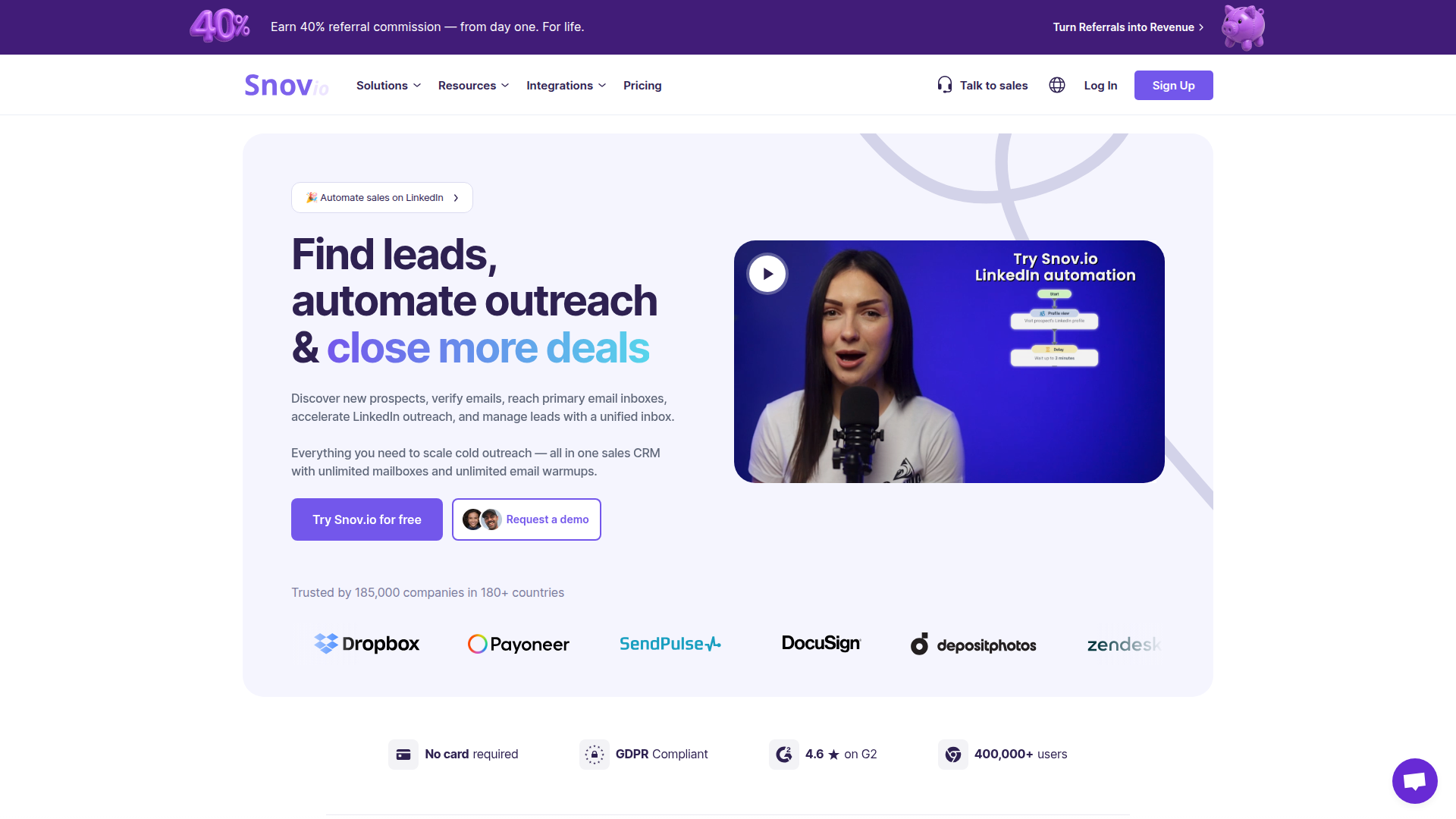
Snov.io helps you find leads, send emails, and automate sales on LinkedIn. It's a sales CRM that includes tools to verify emails and manage outreach.
Standout features:
- •Email Finder — find and verify leads fast.
- •LinkedIn Automation — run campaigns automatically.
- •Sales CRM — manage deals and sync with Google Calendar.
Limitations:
- •May be too advanced for small teams — solo users might not need all tools.
- •Setup can take time — not ideal for those looking for quick solutions.
Pricing: Free plan available, paid plans start at $39/month.
Clay
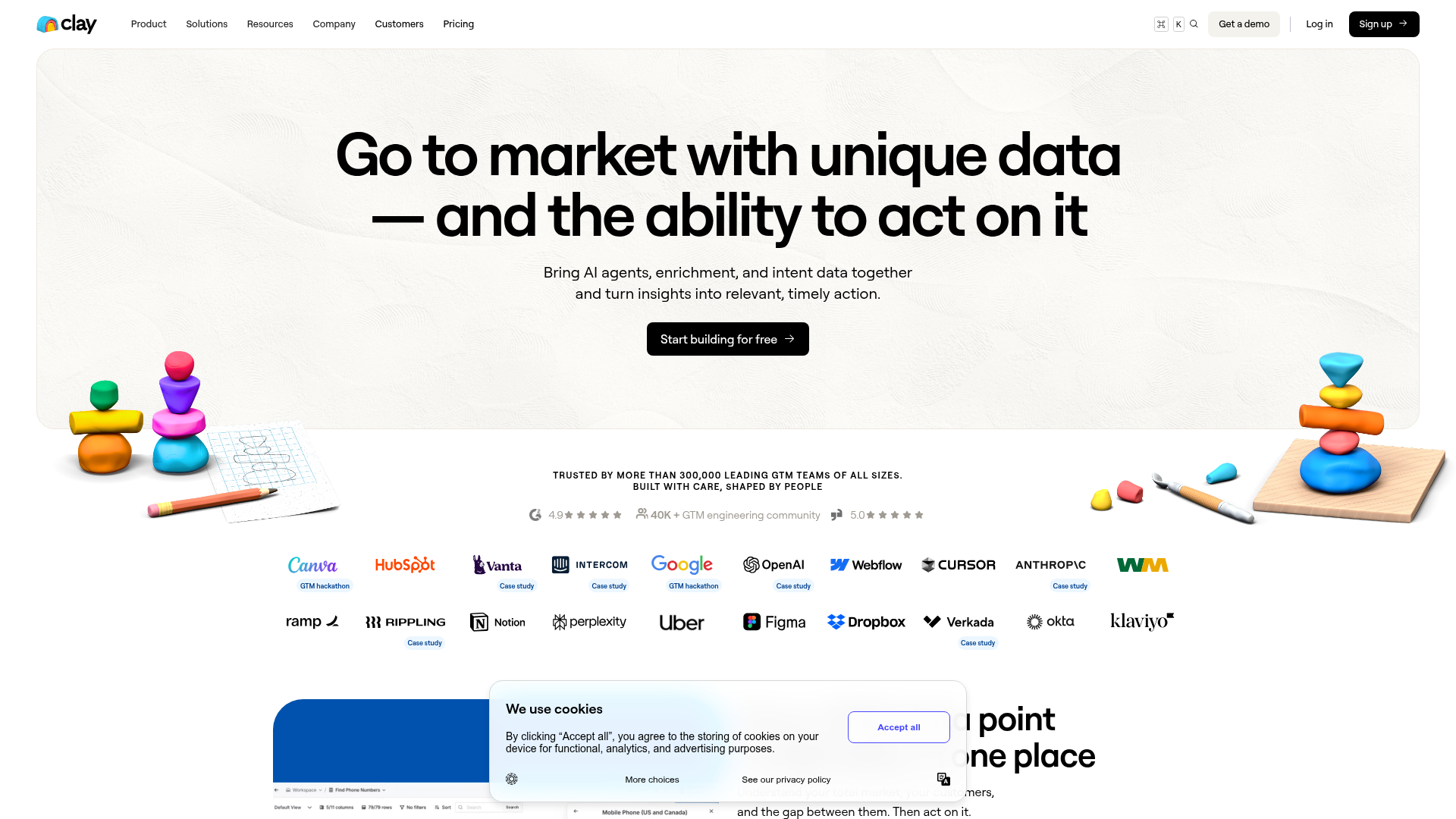
Clay helps you manage data for your go-to-market strategies. It combines AI agents, enrichment, and intent data for actionable insights.
Standout features:
- •Access data from 150+ providers — find new leads and personalize outreach.
- •AI-led research with Claygent — discover unique data points easily.
- •Automate lead enrichment and CRM updates — save time on manual tasks.
Limitations:
- •Could be complex for small teams — might be too much for basic needs.
- •Requires understanding of data tools — not beginner-friendly.
Pricing: Start building for free.
Growth Hacker Verdict
Snov.io is your play if you're running lean cold email campaigns and need email discovery + sequences in one place—skip it if you're already deep in a tech stack with Hunter/Apollo and expect seamless CRM syncing. The freemium model lets you validate outreach strategy before spending, which is smart, but the paid plans get pricey for volume ($99+/mo) and you'll quickly hit rate limits that force upgrades.
Best fit: early-stage founders doing founder sales or small teams that prioritize LinkedIn warm-up sequences over pure email volume—not for SDR shops doing 10k cold emails a week.
Clay is your data orchestration spine if you're syncing LinkedIn ads, content, and outbound into one ABM machine — Design Pickle went from <10 to 29 demos/week by automating waterfall enrichment across multiple providers instead of manual jumping. The real win is that it aggregates 100+ data sources so you can define intent signals (website visits, G2 reviews, content downloads) and trigger sequences at scale across 500+ accounts simultaneously, which is impossible with single-provider tools like Hunter.
Skip it if you're a solo founder doing first cold email tests — Extruct or Apollo will get you 80% of results for 1/3 the cost until you've proven cold outreach actually converts for your ICP. At $149/mo it feels expensive until you're running 50+ LinkedIn ads campaigns, orchestrating intent-based sequences, and your AEs are actually booked solid (not hovering at 50% calendar utilization).
Only bet on Clay once you've already won with one channel and need the infrastructure to win across all three simultaneously.
TL;DR — Snov.io vs Clay
Choose Snov.io if you want maximum value for your money — does 80% of what the big names do at a fraction of the cost. Starts at $39/month.
Choose Clay if you want maximum value for your money — does 80% of what the big names do at a fraction of the cost. Starts at $134/month. Free tier available — no credit card needed.
On price alone, Snov.io wins at $39/month. But cheaper isn't always better — check the feature breakdown above.
When to Choose Snov.io Over Clay
Snov.io is a best-value user acquisition tool built for startups, starting at $39/month. Snov.io simplifies sales outreach with tools for cold emailing, LinkedIn automation, and email discovery.
Choose Snov.io if:
- Workflow automation — This is where Snov.io shines. Strong features at a fraction of enterprise pricing.
- Setup effort: Low — You can be up and running in minutes, not days.
- Pricing starts at $39/month — That's 71% less than Clay.
- Ideal for: Bootstrapped founders + indie hackers
See all Clay alternatives or browse the User acquisition directory.
When to Choose Clay Over Snov.io
Clay is a best-value user acquisition tool built for startups, starting at $134/month. Clay empowers GTM teams with AI-driven insights and automated workflows for seamless market engagement.
Choose Clay if:
- Workflow automation — Strong features at a fraction of enterprise pricing.
- Setup effort: Low — Quick onboarding with minimal configuration needed.
- Free tier available — Test Clay risk-free before committing any budget.
- Ideal for: Bootstrapped founders + indie hackers
See all Snov.io alternatives or browse the User acquisition directory.
Snov.io vs Clay: Pricing Breakdown
Let's talk money — because that's usually what drives the decision for startups and growth teams.
Snov.io starts at $39/month with 3 pricing tiers. Priced for startups — won't wreck your runway.
Clay starts at $134/month with 5 pricing tiers. Free tier included. Startup-friendly pricing.
Our take: Snov.io is the more affordable option at $39/month vs $134/month. But cheaper isn't always better — compare what you get at each tier before deciding. We always list monthly billing rates — not the discounted annual price that makes everything look cheaper.
FAQ: Snov.io vs Clay
Is Snov.io better than Clay in 2026?
It depends on your team size, budget, and priorities. Snov.io is a best-value user acquisition tool built for startups, starting at $39/month. Clay is a best-value option aimed at startups, starting at $134/month. See the feature comparison above for a detailed side-by-side.
Which is cheaper, Snov.io or Clay?
Snov.io starts at $39/month, while Clay starts at $134/month. Snov.io is more affordable on paper. Keep in mind: the cheapest plan isn't always the best deal. Compare what you get at each tier, not just the starting price. We always list monthly billing rates, not discounted annual prices.
Can I use both Snov.io and Clay together?
Both are cold outreach tools, so most teams pick one to avoid redundancy and extra costs. That said, some teams use both for different segments or use cases — just make sure the overlap doesn't waste your budget.
Does Snov.io or Clay have a free tier?
Clay offers a free tier, while Snov.io does not. If risk-free testing matters, Clay has the edge.
How do I switch from Snov.io to Clay (or vice versa)?
Most user acquisition tools support data export. Start by exporting your data from your current tool, then check the new tool's import documentation. Many offer migration assistance or onboarding calls to help with the switch.

