Substack vs Beehiiv 2026: Which Newsletter Platform Wins?
Compare Substack and Beehiiv in 2026. Discover pricing, features, monetization, and growth tools to choose the best newsletter platform for your needs.

Marco Delvane
Growth Team
Part of our Best Email Marketing Tools for Startups 2026 guide
Key Takeaways
- Best for monetization: Substack takes 10% of paid subscriptions but handles payments and discovery. Beehiiv charges flat $99/month for unlimited revenue.
- Best for growth: Beehiiv wins with referral programs, magic links, and recommendation network. Substack relies on its internal discovery feed.
- Best for writers: Substack's dead-simple interface gets you writing immediately. Beehiiv requires setup but offers way more control.
- Best for businesses: Beehiiv's advanced segmentation, A/B testing, and 3D analytics beat Substack for serious operators.
- Pricing reality: Substack is "free" until you make money (then 10% forever). Beehiiv costs $0-$99/month but you keep 100% of revenue.
Substack turned everyone into a potential media company. Beehiiv took that concept and asked "what if we built this for operators, not just writers?"
The question isn't which platform is objectively better. It's which model fits how you think about newsletters. Substack optimizes for writing and community. Beehiiv optimizes for growth and monetization flexibility.
We tested both platforms, talked to creators running six-figure newsletters on each, and analyzed the tech stacks of top performers. Here's what actually matters when choosing between them in 2026.
Quick Comparison: Substack vs Beehiiv
| Feature | Substack | Beehiiv |
|---|---|---|
| Pricing Model | 10% of paid subscriptions | $0-$99/month (flat fee) |
| Free Tier | Unlimited subscribers | 2,500 subscribers |
| Revenue Share | 10% forever | 0% (you keep everything) |
| Setup Complexity | Start writing in 5 minutes | 15-30 min initial setup |
| Growth Tools | Discovery feed, recommendations | Referral programs, magic links, boosts |
| Monetization Options | Paid subscriptions only | Subscriptions, ads, sponsorships, premium |
| Best For | Writers, simple publishing | Operators, growth-focused creators |
Why Creators Are Switching (Both Ways)
From Substack to Beehiiv: The 10% revenue share becomes painful at scale. Making $10K/month means paying Substack $1K/month forever. At $100K/month, that's $10K. Beehiiv's $99/month cap looks really good when you're generating serious revenue. Plus, Beehiiv's growth tools (referral programs, A/B testing, advanced analytics) unlock faster audience expansion.
From Beehiiv to Substack: Fewer reasons, honestly. The main one: Substack's writer-first experience and built-in discovery. Some creators prefer the simplicity and community vibe. Substack's "recommended" network can deliver thousands of subscribers organically if your content resonates with their audience.
The reality: Both platforms have newsletters doing $100K+ annually. The tool matters less than your content and growth strategy.
1. Substack — The Writer's Platform
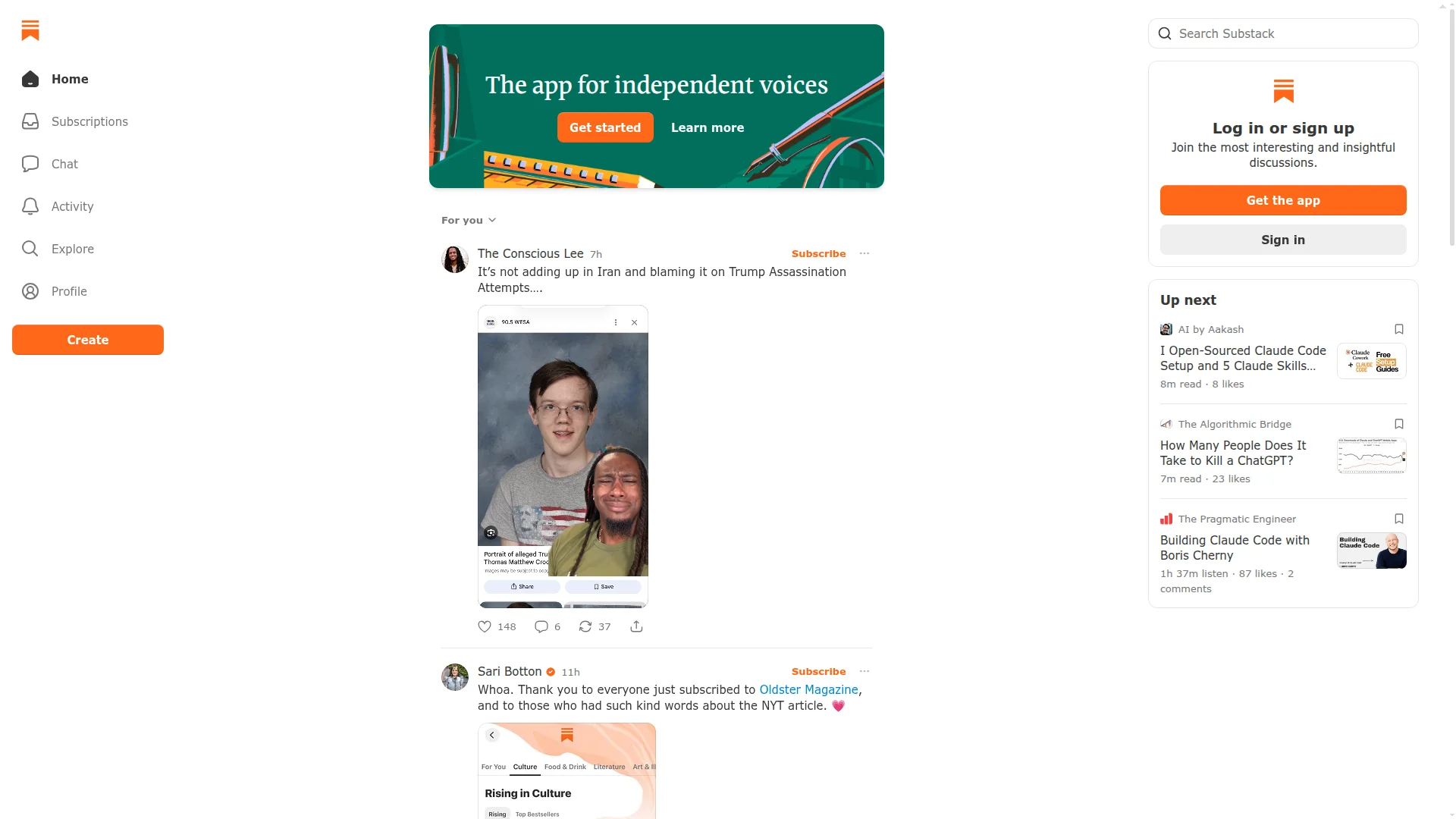
Pricing: Free to start. 10% of paid subscription revenue (Stripe takes another 2.9% + $0.30).
What We Liked
- Zero setup friction: Create account, start writing, publish. Genuinely takes under 5 minutes.
- Built-in discovery: Substack's recommendation engine surfaces your content to similar audiences. We've seen newsletters gain 2K+ subscribers from this alone.
- Clean reading experience: The mobile and web reading interface is polished. Subscribers actually enjoy reading on Substack.
- Payments handled: Substack manages subscriber billing, dunning, and payment recovery. You focus on writing.
What Could Be Better
- 10% forever: At $10K/month revenue, you're paying $12K/year. At scale, this becomes expensive compared to flat-fee platforms.
- Limited customization: You get a Substack-branded site. Can't fully white-label or deeply customize design/functionality.
- Basic analytics: Open rates, subscriber growth, that's about it. No cohort analysis, funnel tracking, or advanced segmentation.
Growth Hacker Take: Substack optimizes for one thing: getting words from your brain to readers' inboxes with zero friction. If you're a writer who wants to focus purely on content and community, Substack removes every excuse. The 10% tax is the price of not thinking about infrastructure.
Substack Review: Should You Use It in 2026?
External links: Substack Pricing | G2 Reviews (4.6/5)
2. Beehiiv — The Growth Operator's Platform
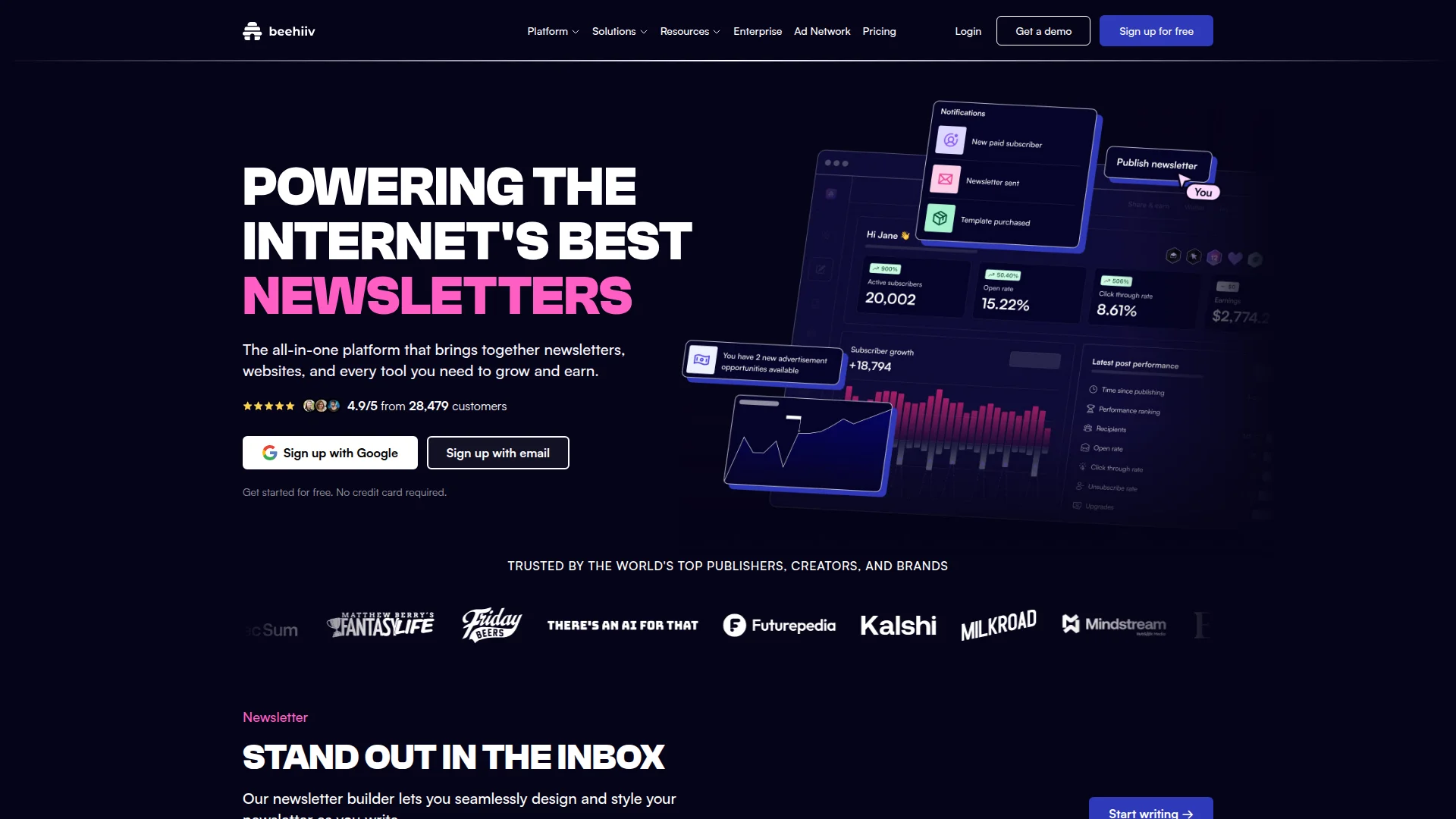
Pricing: Launch (Free, 2,500 subscribers) | Grow ($49/month, 10K subscribers) | Scale ($99/month, 100K subscribers) | Max ($199/month, unlimited)
What We Liked
- Referral programs built-in: Incentivize readers to share. Track referrals, automate rewards. Morning Brew grew to millions using this tactic.
- Advanced analytics: 3D analytics showing subscriber behavior, cohort retention, individual subscriber timelines. Actually actionable data.
- Monetization flexibility: Paid subscriptions, native ads, sponsorship marketplace (Beehiiv Boosts), premium content tiers. Multiple revenue streams in one platform.
- A/B testing everything: Subject lines, send times, content variations. Test and optimize systematically.
What Could Be Better
- Steeper learning curve: More features = more complexity. Initial setup takes longer than Substack's 5-minute start.
- No built-in discovery: You're responsible for growth. Beehiiv gives you tools, but no recommendation network like Substack's.
Growth Hacker Take: Beehiiv is for creators who think like founders. You want growth tools, monetization options, and full control over your business. The platform scales with you—$99/month stays $99/month whether you're making $10K or $100K. That math changes everything at scale.
Beehiiv Review: Is It Worth It?
External links: Beehiiv Pricing | G2 Reviews (4.6/5)
Feature-by-Feature Breakdown
Editor & Writing Experience
Substack: Minimalist editor. Markdown support. Drag-and-drop images. Inline embeds (YouTube, Twitter, Spotify). Zero distractions. You write, format lightly, publish.
Beehiiv: More robust editor. Block-based formatting. More customization options. Supports polls, content sections, premium paywalls mid-post. Slightly more complex but more powerful.
Winner: Substack for pure writing focus. Beehiiv for flexibility.
Design & Branding
Substack: Limited customization. Choose colors, upload logo, set fonts. Every Substack looks... like a Substack. Clean but homogeneous.
Beehiiv: Full website builder. Custom domains. Advanced CSS. Complete white-labeling. Build a branded media property, not just a newsletter.
Winner: Beehiiv. Not even close.
Growth Tools
Substack: Recommendations (other Substacks suggest you). "Subscribe" embeds. Basic social sharing. Discovery feed if you get featured. Mostly passive growth.
Beehiiv: Referral programs with automated rewards. Magic links (trackable share URLs). Recommendation network. Subscriber polls. Boosts (paid cross-promotion network). A/B testing subject lines. Active growth toolkit.
Winner: Beehiiv by a mile. Growth is their core differentiation.
Analytics
Substack: Open rates, clicks, subscriber count, revenue. Basic but sufficient for most writers.
Beehiiv: 3D analytics (subscriber-level behavior timelines). Cohort retention. Geographic heatmaps. Referral tracking. A/B test results. Poll responses. Revenue attribution.
Winner: Beehiiv. Substack's analytics are functional, not strategic.
Monetization Options
Substack: Paid subscriptions only. Set monthly/yearly pricing. Offer free trials. Founding member tiers. That's it. Simple but limited.
Beehiiv: Paid subscriptions. Native ad network (Beehiiv Boosts). Direct sponsorships. Premium content tiers. Tip jar. Multiple revenue streams simultaneously.
Winner: Beehiiv. More ways to monetize = more revenue potential.
Email Deliverability
Substack: Strong sender reputation (shared across all Substacks). Generally good inbox rates. Less control over technical details.
Beehiiv: Dedicated IP option on higher tiers. Full DKIM/SPF/DMARC control. Inbox placement monitoring. More technical but more control.
Winner: Tie. Both deliver well. Beehiiv offers more control for technical users.
How to Choose Between Substack and Beehiiv
The decision comes down to your goals and how you think about newsletters.
- Choose Substack if: You're a writer first, operator second. You want to start publishing today without technical setup. You value simplicity over customization. You're okay with 10% revenue share for not thinking about infrastructure. You want access to Substack's discovery network and recommendation engine.
- Choose Beehiiv if: You think like a founder building a media business. You want maximum control over branding, monetization, and growth. You plan to run referral programs, A/B tests, and optimization experiments. You prefer flat monthly pricing over percentage-based revenue share. You're willing to invest time in setup for long-term scalability.
- Choose something else if: You need advanced automation (try ConvertKit). You want e-commerce integration (try Beehiiv or custom WordPress). You're running a SaaS company newsletter (try Loops or customer.io).
Real Creator Results
Substack Success Stories
Lenny's Newsletter: 500K+ subscribers. $4M+ annual revenue. Started on Substack, stayed on Substack. Focuses purely on writing high-quality product management content. The simplicity lets Lenny focus on what matters: shipping valuable insights weekly.
The Profile: Polina Pompliano's deep-dive interview newsletter. 100K+ subscribers. Monetizes through paid subscriptions. Substack's reading experience and payment handling let her focus entirely on research and writing.
Beehiiv Success Stories
Milk Road: Crypto newsletter acquired by Bankless for 8 figures. Grew using Beehiiv's referral programs. Monetized through ads and sponsorships. Scaled to 300K+ subscribers in under 2 years. The growth tools were essential to velocity.
The Neuron: AI-focused daily newsletter. 500K+ subscribers. Runs multiple revenue streams (ads, premium, sponsorships) through Beehiiv. Advanced analytics inform content and monetization decisions weekly.
Switching Between Platforms
Substack to Beehiiv: Relatively smooth. Export subscriber list from Substack (CSV). Import to Beehiiv. Set up custom domain. Configure paid subscriptions. Hardest part: migrating existing paid subscribers requires coordination (or waiting for renewal cycles).
Beehiiv to Substack: Possible but less common. Export subscribers. Import to Substack. Lose referral program data, advanced analytics history, and monetization flexibility. Most migrations go the other direction.
Both platforms make it easy to export your list. You're not locked in. But migration mid-revenue stream is complex.
Detailed Pricing Breakdown
Substack Cost Examples
All revenue numbers are AFTER Stripe fees (2.9% + $0.30 per transaction).
- $1,000/month revenue: $100/month to Substack
- $5,000/month revenue: $500/month to Substack
- $10,000/month revenue: $1,000/month to Substack ($12K/year)
- $50,000/month revenue: $5,000/month to Substack ($60K/year)
Beehiiv Cost Examples
- 2,500 subscribers: Free
- 10,000 subscribers: $49/month ($588/year)
- 100,000 subscribers: $99/month ($1,188/year)
- Unlimited subscribers: $199/month ($2,388/year)
Break-even analysis: If you make $1K/month, Beehiiv costs $49-99 vs Substack's $100. At $5K/month, Beehiiv costs $99 vs Substack's $500. At $10K/month, Beehiiv costs $99 vs Substack's $1,000. The gap widens dramatically as revenue scales.
FAQ
Can I use my own domain on Substack?
Yes, but it's limited. You can set a custom domain, but the site still looks like Substack. No full white-labeling.
Does Beehiiv have a referral program like Morning Brew?
Yes. Built-in referral programs with automated rewards and tracking. It's one of Beehiiv's core growth features.
Which platform has better email deliverability?
Both are solid. Substack benefits from shared sender reputation. Beehiiv offers more control with dedicated IPs on higher tiers.
Can I migrate paid subscribers from Substack to Beehiiv?
Yes, but it requires coordination. Export list, import to Beehiiv, and either wait for Substack subscriptions to expire or manually transition willing subscribers.
Is Substack really free?
Free to start and run a free newsletter forever. Once you charge, Substack takes 10% of all revenue plus Stripe fees (2.9% + $0.30).
Which platform is better for SEO?
Beehiiv offers more control over meta tags, custom URLs, and site structure. Substack newsletters do rank in Google, but with less customization.
Can I run ads on Substack?
Not natively. You'd need to manually insert sponsored content. Beehiiv has a native ad network (Boosts) and sponsorship tools built-in.
Do I own my subscriber list on both platforms?
Yes. Both Substack and Beehiiv let you export your full subscriber list anytime. You're not locked in.
Bottom line: Substack wins for writers prioritizing simplicity and community. Beehiiv wins for operators building scalable media businesses. Both platforms support six-figure newsletters—the difference is philosophy, not capability.
Ready to start your newsletter? Pick the platform that matches how you think. Then ship content consistently. The tool matters less than your commitment to showing up weekly.
About the Author
Marco Delvane
Growth Team at Vibe Growth Stack. Tested 100+ growth tools so you don't have to. Writes about what actually works for startups — no fluff, no affiliate bias.
More in this series
View full guide →MailerLite vs Mailchimp 2026: Which Email Tool Wins?
Compare MailerLite and Mailchimp in 2026. Discover which email marketing tool offers better features, pricing, and automation for your business needs.
ConvertKit vs Mailchimp 2026: Which Email Platform Wins?
Compare ConvertKit vs Mailchimp in 2026. Discover which email platform best suits creators vs businesses, pricing, automation, and features.
Best ConvertKit Alternatives 2026: 7 Email Platforms
Discover the top ConvertKit alternatives for creators in 2026. Compare 7 email marketing platforms with pricing, features, and best use cases.
Best ActiveCampaign Alternatives 2026: 7 Cheaper Email Tools
Discover 7 affordable ActiveCampaign alternatives in 2026. Compare email marketing tools, automation features, and pricing to find the best fit for your team.
Best Beehiiv Alternatives 2026: 7 Newsletter Platforms
Explore top Beehiiv alternatives for newsletters. Compare Ghost, Substack, ConvertKit, and more. Find the best email platform for your needs.
Best Klaviyo Alternatives 2026: 7 Cheaper Email Tools
Related Articles
Get growth tips in your inbox
No-BS growth hacks, tool reviews, and best-value picks. Weekly.
Unsubscribe anytime. We hate spam too.